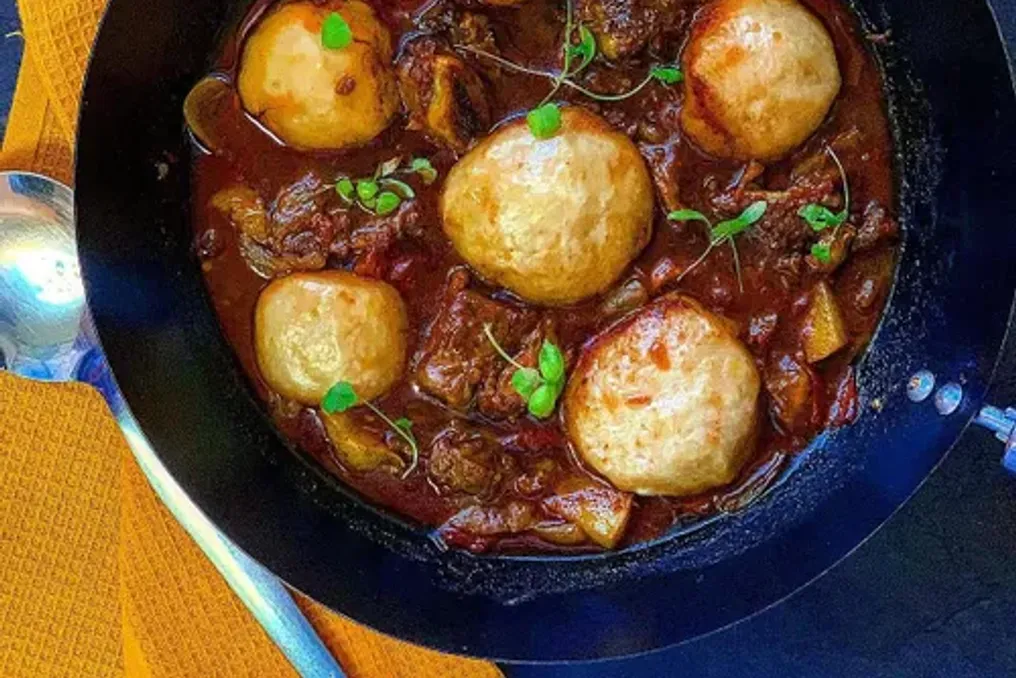
Dombolo is a traditional South African dish that pairs perfectly with hot stews or curries. These soft, steamed buns are designed to soak up the flavorful sauce, turning a simple meal into a hearty dish.
In cold weather, which affects parts of South Africa, including the Eastern Cape and KwaZulu-Natal, this recipe—best served hot—becomes particularly relevant.
These South African buns are made from a simple yeast dough, incorporating grated carrots and turmeric for color and aroma. Instead of baking in an oven, the dough is steamed until soft and fluffy.
It should be noted that the term 'dombolo' is also used to refer to South African steamed bread, and terminology can overlap depending on the specific recipe and home tradition. This recipe refers to the bun version, which can be cooked over simmering stew or curry.
Dombolo Recipe
Ingredients
The following components are required for preparation: 1½ cups of water, 1 tablespoon of sugar, ½ tablespoon of yeast, 2 cups of flour, 1 teaspoon of turmeric, ½ teaspoon of salt, and 1 grated carrot.
Instructions
First, mix the flour, turmeric, salt, and grated carrot in a large bowl, thoroughly combining the dry ingredients. In a separate mug, mix warm water, sugar, and yeast, then stir and let it sit for a few minutes.
Next, pour the yeast mixture into the dry mixture and knead until a soft, sticky dough forms. Cover the bowl with a clean kitchen towel and leave it in a warm place to rise for about 45–60 minutes, or until the dough has increased in size.
Once the dough has risen, place small portions onto the surface of simmering stew or curry, leaving enough space between portions for the dombolo to expand during cooking. Then, cover the pot tightly and cook over low heat for about 20–25 minutes, keeping the lid closed while the dombolo steams.
To check if a bun is done, insert a toothpick or skewer into the center; if it comes out clean, the dombolo is ready. Serve the finished dish hot alongside the stew or curry, generously pouring the sauce over the buns.
Why Are My Dombolo Buns Dense?
There are two points to consider. Firstly, the yeast: if the water is too hot, it can damage the yeast, so the water should feel comfortably warm, not hot.
Secondly, the rising time: do not rush the dough; it must visibly increase in size before being shaped. It is also recommended to refrain from adding excessive extra flour during kneading, as a slightly softer dough usually yields a lighter result than a stiff one.