Bangladesh asks India to expedite business visa issuance for its citizens
Read more
Aaj Tak
www.aajtak.in

Bangladesh asks India to expedite business visa issuance for its citizens

An attempt has begun to strengthen trade ties between India and Bangladesh. Bangladesh has requested India to expedite the processing of business visas for its citizens. According to the capital of Bangladesh, the easier access to each other's markets for the business communities of both countries, the greater the opportunities for trade and investment will grow.

The State Minister of Foreign Affairs of Bangladesh, Shama Obaid Islam, raised this issue during an event in Dhaka on Tuesday. She emphasized the need for India to issue business visas more quickly for Bangladeshi entrepreneurs so they can visit India more often.

She also noted the need for further strengthening of dialogue between the private sector and the business communities of the two countries. Bangladesh aims to create an economic partnership model with India that benefits both sides.

Shama Obaid Islam also mentioned other obstacles to trade, including non-tariff barriers, issues related to product quality and testing, delays in paperwork, and infrastructural difficulties. She stated that eliminating these barriers would facilitate the movement of goods and services between the countries.

Furthermore, Bangladesh invited Indian companies to invest in its country. The Minister reported that Bangladesh's large domestic market, skilled industrial workforce, and proximity to regional markets create opportunities for Indian companies. She added that Indian firms can establish production and export units in Bangladesh's economic zones, especially those that introduce new technologies, attract local suppliers, and create jobs.

Bangladesh also called on Indian companies to actively purchase products in sectors such as ready-made garments, textiles, jute, leather, footwear, pharmaceuticals, agro-processing, ceramics, plastics, and light engineering.

According to data, Bangladesh is India's largest trading partner in South Asia, and India is among Bangladesh's main Asian export markets. By February 2025-26, total bilateral trade between the two countries reached approximately $11.35 billion. Bangladesh believes that expediting business visa issuance, reducing trade barriers, and increasing investment can further strengthen economic relations between the countries, and this request from Dhaka is seen as an attempt to steer trade and investment in India-Bangladesh relations in a new direction.
Similar stories

Bangladesh Minister States Tista River Dispute Should Not Deteriorate Relations with India
Read more
timesofindia.indiatimes.com

Bangladesh Minister States Tista River Dispute Should Not Deteriorate Relations with India

Bangladesh's Minister of Water Resources, Shahidur Rahman Chowdhury Ani, emphasized that the country does not want the protracted conflict over the distribution of the Tista River's water to negatively affect relations with India.

Speaking at a seminar in Dhaka on Sunday, Ani noted that Bangladesh recognizes India as a friendly neighbor but insists that New Delhi must take Dhaka's interests into account when implementing its own plans.

He stated that the neighboring country is friendly and should consider that Bangladesh has its own interests in addition to its own. The minister added that a friend is obliged to protect the interests of a friend, and they never want their friendly ties to deteriorate.

Bangladesh Promotes Solution on Tista Issue

These statements came amid the activation of efforts by the new Bangladeshi government to find a way out of the Tista dispute. Furthermore, Dhaka is working on a broader project for integrated management and restoration of the Tista River, with China's support.

The proposed project aims to address issues related to frequent flooding, bank erosion, and dry season water scarcity in northern regions of Bangladesh, where the river is vital for agriculture and livelihoods.

Ani reported that after the February elections, the government conducted a series of seminars and consultations to gather expert opinions on this project. A detailed study based on these recommendations will help the government determine the next steps.

The minister noted that residents of five to six northern districts have high hopes for this project after many years of suffering from erosion and other river-related problems. He stressed that if the project cannot be implemented, the damage and difficulties faced by families in these regions will continue to grow, and they must overcome this challenge at all costs.

Ani also mentioned that Prime Minister Tariq Rahman regularly discusses this project, and government agencies are monitoring its progress. Calling for an agreement on the river, he stated that regardless of whether it is called a Tista treaty, a Tista master plan, or anything else necessary for the project's implementation, they will move towards its realization.

Why Tista is Important to India and Bangladesh

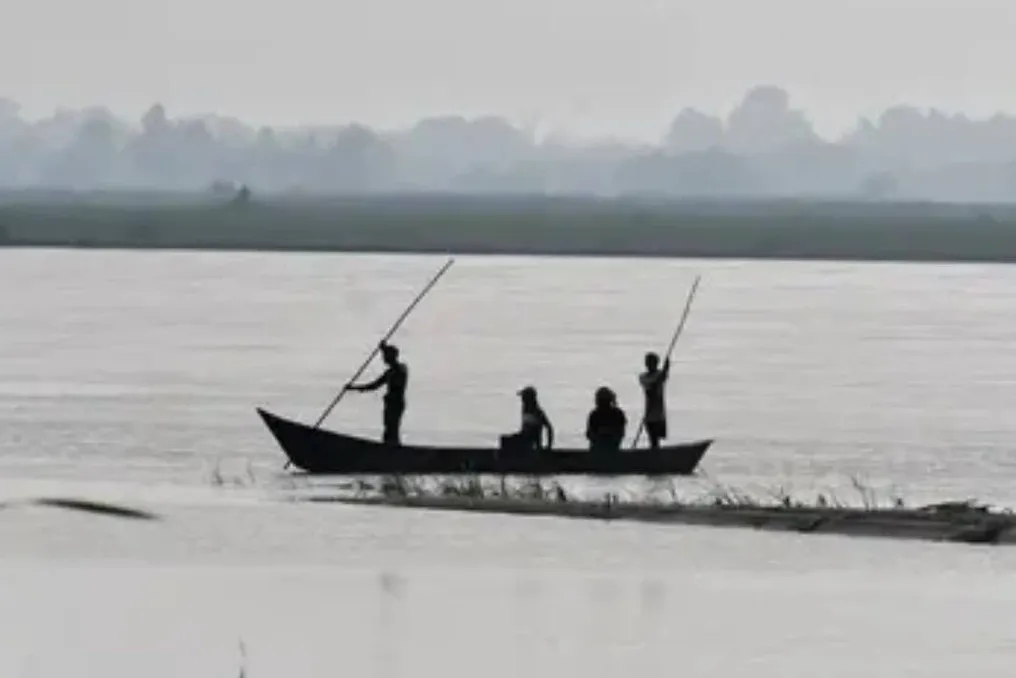
The Tista River originates in the Himalayas, flows through Sikkim and West Bengal before entering Bangladesh, where it flows into the Jamuna, known in Bangladesh as the Brahmaputra.

This river is particularly important for northern Bangladesh, where farmers depend on its water. It also plays a significant role for West Bengal in irrigation and power generation, as many districts of North Bengal use its waters.

India and Bangladesh have been discussing the issue of shared Tista waters since the 1980s. A temporary agreement reached in 1983 stipulated the allocation of 39 percent of Indian water and 36 percent of Bangladeshi water, leaving 25 percent unallocated. The parties continued negotiations but could not reach a long-term agreement. The temporary agreement project was finalized in 2011 but was not signed due to objections from the West Bengal government regarding water availability in the state.

Strategic Aspect of China's Involvement

Bangladesh's renewed push for the Tista project has taken on a broader strategic dimension due to China's involvement. During Rahman's visit to Beijing in June, he held talks with Chinese leaders and secured commitments from Beijing to accelerate the feasibility study of the proposed Tista restoration project.

Increased Chinese involvement in northern Bangladesh raises sensitivity for India, as this region is near the Siliguri corridor. This narrow corridor is a crucial land link for India between its northeastern states and the rest of the country.

India insists that the Tista issue must be discussed with all relevant stakeholders, including West Bengal. Randhir Jaiswal, a representative of the Ministry of External Affairs, stated in July that India's position on the proposed Tista project had already been conveyed to Bangladesh. He clarified that India would take into account 'all related developments' within its 'overall approach to the Tista issue.'

Tista Separate from Ganges Treaty

Negotiations on the Tista are being conducted independently of the Ganges Water Sharing Treaty between India and Bangladesh, signed in 1996. This treaty is valid for 30 years and expires in December 2026. India and Bangladesh jointly share 54 transboundary rivers and use the Joint River Commission to address issues concerning their shared water resources.

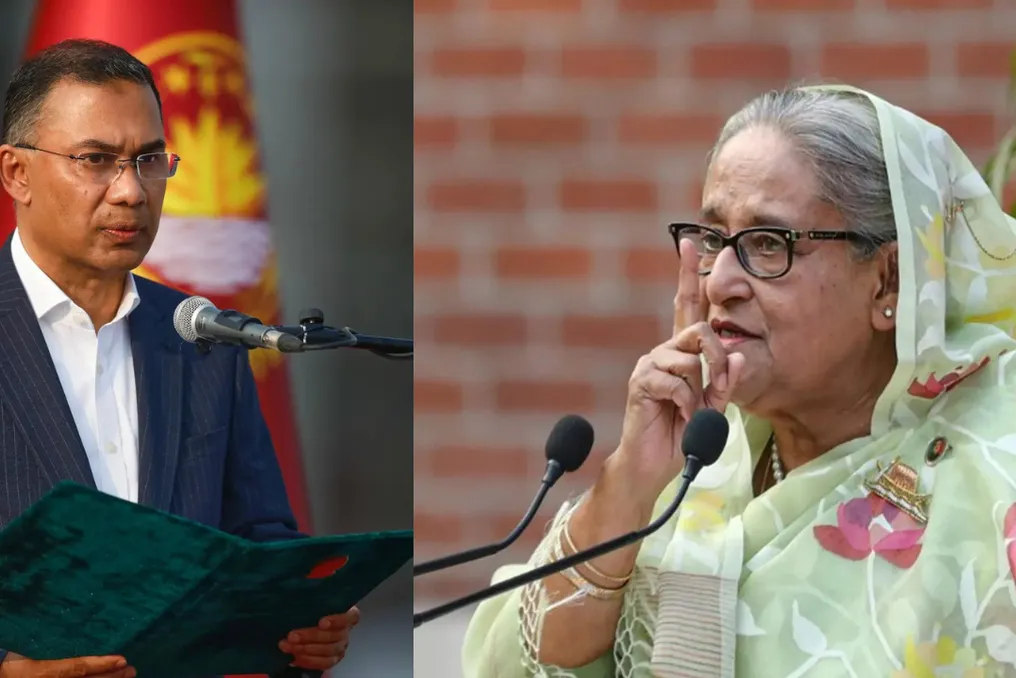
Bangladesh links Prime Minister Tarique Rahman's visit to India to demand for Sheikh Hasina's extradition
Read more
www.aajtak.in

Bangladesh links Prime Minister Tarique Rahman's visit to India to demand for Sheikh Hasina's extradition

Bangladesh has set a condition for the proposed visit of Prime Minister Tarique Rahman to India: it depends on the demand for the extradition of former Prime Minister Sheikh Hasina. The capital of Bangladesh stated that creating a favorable environment is necessary for Tarique Rahman's trip to India.

In this regard, Bangladesh insists on prompt action from India regarding the request for the extradition of Sheikh Hasina and other wanted individuals.

A representative of the Ministry of Foreign Affairs of Bangladesh, Shahidur Karim, announced this during a press briefing in Dhaka on Sunday. He specified that officials from both countries have been maintaining contact for several weeks regarding a possible bilateral visit by Prime Minister Tarique Rahman to India. However, Karim noted that the process was affected after Sheikh Hasina's open press conference in New Delhi on August 5.

The Ministry of Foreign Affairs of Bangladesh emphasized that the International Criminal Court has found Sheikh Hasina guilty in the case of crimes against humanity, and Dhaka had previously stated its position on this matter.

Shahidur Karim stated that Bangladesh deems it necessary to create favorable conditions before Tarique Rahman's visit to India. As part of this requirement, Dhaka called on Indian officials to promptly respond to the request for the extradition of Sheikh Hasina and other fugitives. Furthermore, Bangladesh demanded that India transfer individuals accused of the murder of Shahid Sharif Usman Hadi, in accordance with the bilateral extradition treaty.

Karim added: 'We have appealed to Indian officials to act quickly on our request for the extradition of Sheikh Hasina and other fugitives, as well as the transfer of alleged murderers of Shahid Sharif Usman Hadi to Bangladesh under the bilateral extradition treaty. We await India's response.' Thus, Dhaka linked Tarique Rahman's potential trip to two main demands: the extradition of Sheikh Hasina and other wanted persons, as well as the transfer of those accused of Usman Hadi's murder.

During this statement, the Ministry of Foreign Affairs of Bangladesh also reiterated its 'Bangladesh first' policy. Karim noted that Dhaka will promote friendly bilateral relations with other countries, including neighboring ones, based on sovereign equality, national dignity, non-interference in each other's internal affairs, and mutual benefit. Although contacts between New Delhi and Dhaka regarding Tarique Rahman's visit continue, Bangladesh now awaits India's reaction to its extradition demands.

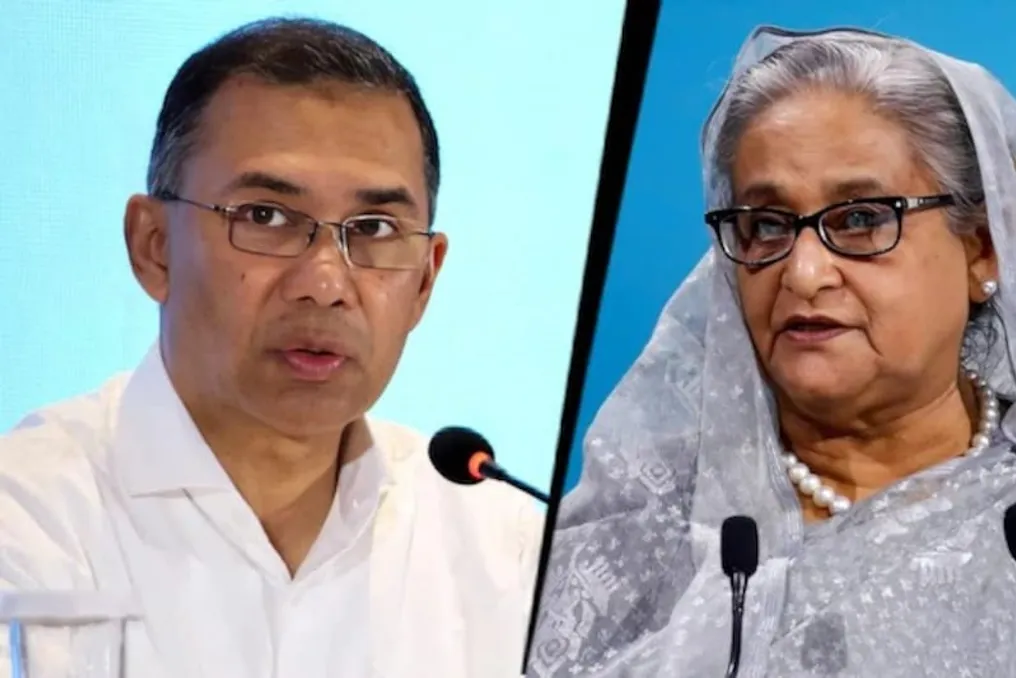
Probable visit of Bangladesh Prime Minister to India amid demands for Sheikh Hasina's return
Read more
timesofindia.indiatimes.com

Probable visit of Bangladesh Prime Minister to India amid demands for Sheikh Hasina's return

The proposed visit of Bangladesh Prime Minister Tarique Rahman to India has not yet been approved, as its timing depends on his schedule and the progress of current bilateral negotiations.

State Minister for Foreign Affairs Shoma Obaid Islam stated that the government is positive about trips to all countries, but this will depend on the Prime Minister's schedule and the degree of advancement in discussions between the two states. She added that, given the government's and the Prime Minister's commitments, visits to India and Japan will take place if everything aligns.

Previously, in April, Bangladesh's Foreign Minister Khalidur Rahman visited India as part of efforts to restore strained bilateral relations after more than eighteen months of diplomatic tension.

Furthermore, Bangladesh has sought the extradition of former Prime Minister Sheikh Hasina. A representative of the Ministry of Foreign Affairs reported on Tuesday that India sent two separate invitations to Bangladesh Prime Minister Tarique Rahman: one for a bilateral visit and another to participate in the BRICS expansion session in New Delhi in September.

Shoma noted that BRICS is still far off, and much can happen in a month. When the heads of the two states communicate, there is a chance to resolve many issues, and such an opportunity remains.

Relations between India and Bangladesh sharply deteriorated after the arrival of the transitional government led by Muhammad Yunus, which followed the overthrow of Sheikh Hasina's government in August 2024. Efforts to stabilize ties gained momentum after Lok Sabhi, accompanied by Secretary General Vikram Misri, represented India at Tarique Rahman's oath-taking ceremony in Dhaka on February 17.

Rahman assumed office after his party won a convincing victory in parliamentary elections. The current Bangladeshi government, led by Rahman's Nationalist Party of Bangladesh, insists that Sheikh Hasina must surrender and answer to the law if she returns to the country.

Recently, Hasina appeared on an audio conference for the press from New Delhi, marking her first public interaction with the media since fleeing to India on August 5, 2024, amidst mass protests. During this conference, Hasina declared her determination to return to Bangladesh in December to restore democracy and put the country on the 'right path,' despite the risk of imprisonment or death penalty. India distanced itself from this media engagement, clarifying that it played no role in organizing the event and did not endorse her remarks regarding the Bangladeshi government.

Popular