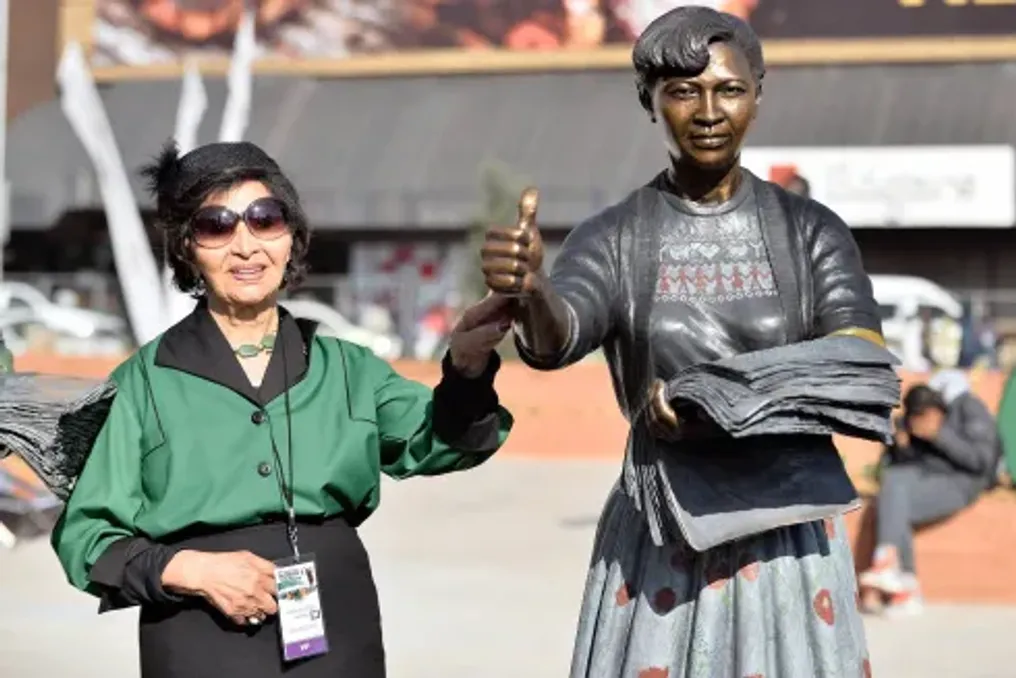
Every August in South Africa is Women's Month. During this period, the courage of women who marched to the Union building in 1956 is remembered. Topics such as dignity, equality, empowerment, and the indispensable contribution of women to the country's development are discussed. Government departments hold events, deliver speeches, and launch campaigns, praising women as mothers, leaders, professionals, workers, and builders of the nation.
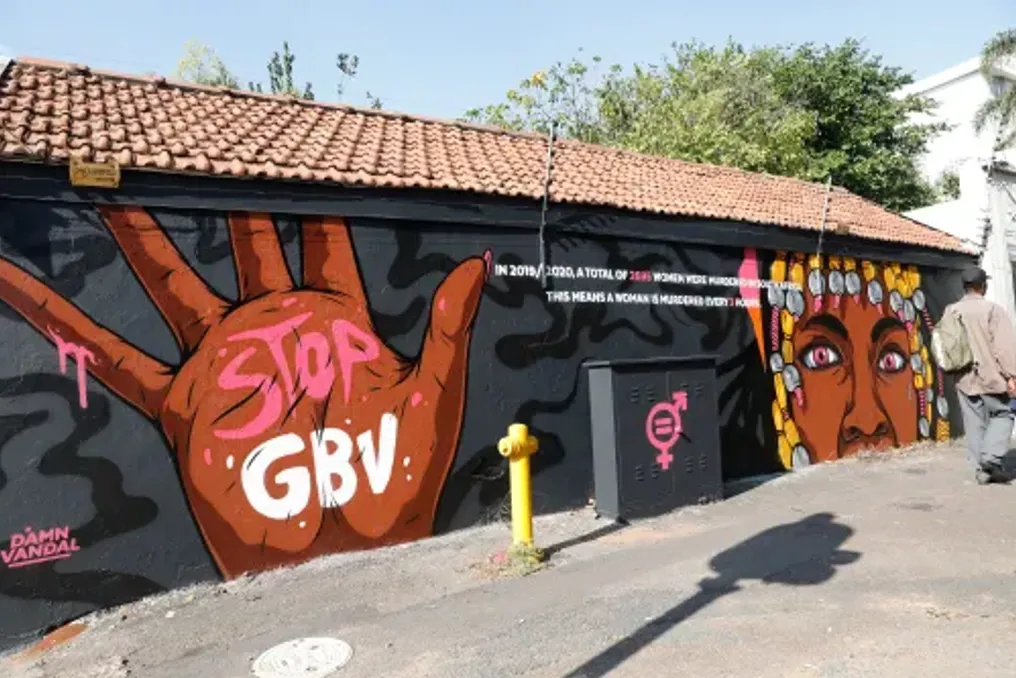
However, beneath these celebrations lies a deep and troubling contradiction: how can the country be proud of its women if so many of them are forced to live in constant fear of violence? Gender-based violence and femicide remain among the most painful problems in South African society. Women are subjected to attacks, violence, rape, and murder, often by acquaintances and in places where they should feel completely safe.
This is the terrible contradiction of Women's Month: women are publicly honored while too many of them are dehumanized in private life.
We Are Not Without Laws
South Africa cannot deny the existence of the problem, as there are legislative acts in the country concerning domestic violence and sexual crimes. The legal framework has been repeatedly strengthened: additional laws were passed in 2022 to enhance the fight against gender-based violence, including amendments to domestic violence and sexual crime legislation. Then, in 2024, the National Council on Gender-Based Violence and Femicide Act was adopted, whose goal includes strategic guidance, coordination, monitoring, and national commitment to creating a society free from GBV and femicide.
There is a National Strategic Plan, specialized police units, as well as victim-centered institutions and programs. According to the government, at the end of 2025, SAPS had 176 family violence, child protection, and sexual investigation units nationwide and 1161 dedicated victim-centered rooms in police stations and other locations. These measures are important steps and deserve recognition.
But they raise a fundamental question: if laws exist, policies are adopted, institutions function, and promises are made—why do so many women still not feel safe? The problem is no longer the existence of legislation in South Africa; it is the state's ability to translate laws into real protection.
The Gap Between Law and Life
A law passed in Parliament does not protect a woman until it works on the streets, in police stations, in courts, and critically, before violence occurs. A strategy is meaningless for a woman who fears the person waiting for her at home. Policy documents cannot comfort a family that has lost a daughter. A campaign slogan cannot replace effective policing, investigation, prosecution, and prevention.
Indeed, Parliament itself acknowledged as recently as June 2026 that despite South Africa's legislative and strategic framework, the rate of GBV remains high, and gaps in effective implementation and accountability continue to hinder the full realization of women's rights. This acknowledgment is at the heart of the problem.
South Africa does not suffer from a lack of promises to women; it suffers from the inability to make those promises a reality.
It Is Also Linked to Dehumanization
However, government failure alone is not enough to explain gender-based violence. Society must also look at itself. It is profoundly wrong when any man views a woman as an object for possession, domination, control, abuse, or discarding. A woman is not an object. She is not anyone's property. She is no less human because of physical vulnerability to a stronger person.
No relationship—be it marriage, partnership, or family—grants ownership over another person. Violence against women begins with the dehumanization of women. It begins when dignity disappears, when control is masked as love, when intimidation becomes the norm, when communities know about the violence occurring but remain silent, when boys grow into men without internalizing that strength is not dominance, and masculinity is not a right to anything.
We cannot legislate respect into the human heart. Therefore, families, schools, religious institutions, communities, and men themselves bear responsibility alongside the state. Men cannot stand aside from this crisis as mere spectators.
Women's Month Must Mean More
This is why August must cause us discomfort.
Women's Month must certainly celebrate the outstanding achievements of South African women. But celebration without ensuring protection risks becoming mere symbolism. Flowers, speeches, posters, and hashtags are insufficient.
The greatest tribute the country can pay its women is to create a society in which they can live without fear. A woman must be able to walk to her car without constantly looking over her shoulder. She must feel safe at work, on public transport, in her community, and above all, in her own home.
The State's Same Failure
This relates to a much broader issue in South Africa. A state that cannot protect its citizens from violent crime will inevitably struggle to protect its most vulnerable citizens. Women feel this failure with particular cruelty.
The government does not commit every act of gender-based violence, just as it does not commit every murder or robbery. The perpetrator remains responsible, but the government is responsible for creating a criminal justice system where criminals understand the consequences of violence. It must ensure that reports are taken seriously, investigations are conducted competently, evidence is processed properly, survivors are treated with dignity, and cases are effectively prosecuted.
Law without effective protection risks becoming a promise on paper, and a law without implementation is nothing more than an expression of good intentions.
What Does It Mean to Celebrate Women?
Perhaps this Women's Month we should ask fewer ceremonial questions and one deeply simple one: are South African women safer? Not: how many speeches were given? Not: how many campaigns were launched? Not: how many policies were announced? But: are women safer?
Can a daughter go out without parents fearing for her return? Can a woman leave an abusive relationship knowing the system will protect her? Can she report violence without humiliation or indifference? Can she be sure that the person who harmed her will face serious consequences?
As long as we cannot consistently answer these questions affirmatively, our celebration remains incomplete.
From Celebration to Accountability
South African women do not need another month where they are symbolically elevated only to be returned to the same dangerous reality on September 1st. They deserve protection 365 days a year. They deserve a state that matches its legislation with implementation. They deserve police services equipped with resources, training, and personnel for effective response. They deserve functioning investigations and judicial processes. They deserve communities that refuse to protect criminals through silence. And they deserve men who recognize that women's dignity is non-negotiable.
Thus, the fight against gender-based violence belongs to the government, the criminal justice system, and society itself. However, the government bears a special responsibility, as we have entrusted it with the power and resources of the state.
The True Measure of Women's Month
The women of 1956 did not march so that generations later women could possess constitutional equality on paper while living in fear in practice. Their courage demands more from us.
Women's Month must become more than just a commemoration. It must become a month of accountability. We must ask every department, every police service, every political leader, and every community: what have you actually done to make women safer?
Because ultimately, the measure of a society is not how beautifully it speaks about its women, but how fiercely it defends their dignity. The country cannot claim honor for women while tolerating their dehumanization. It cannot celebrate their achievements while accepting violence against them as an almost constant feature of society. And the government cannot constantly point to legislation as proof of success when women continue to fear for their safety.
South Africa has said enough about protecting women. It is time to make protection a practical reality. Not just during Women's Month, not just when another tragedy captures the nation's attention, not just when politicians stand at the podium. Every day. In every community. For every woman. Because women deserve not just celebration—they deserve safety.