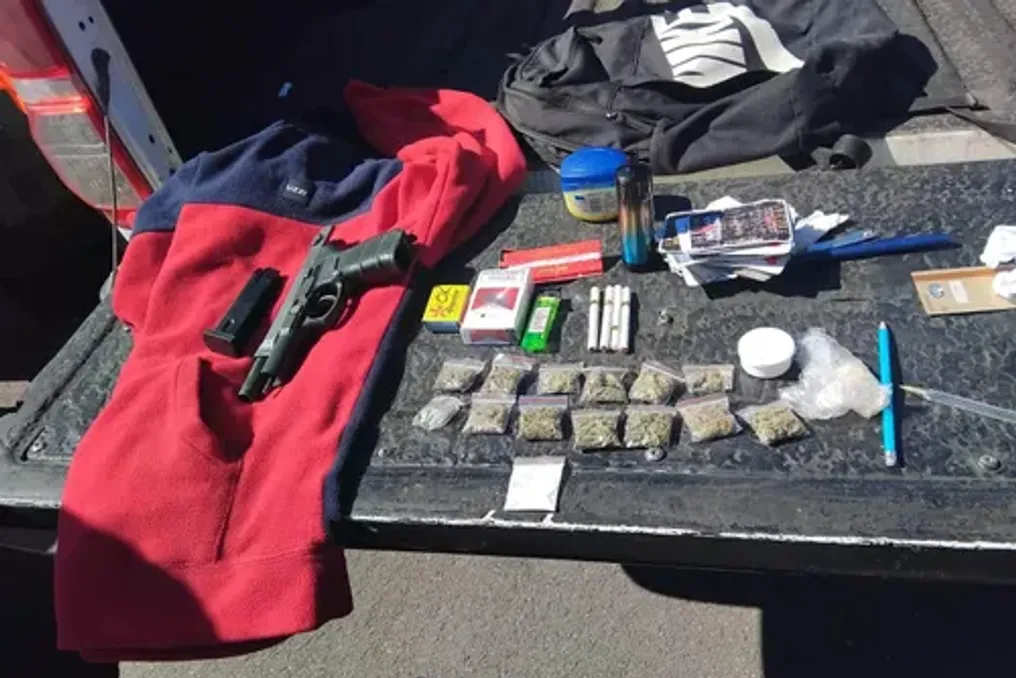
Raid conducted in schools, resulting in the discovery of weapons, drugs, and alcohol
Read more
IOL
iol.co.za

Raid conducted in schools, resulting in the discovery of weapons, drugs, and alcohol

Due to the discovery of prohibited items during police raids in schools, the KwaZulu-Natal Parents Association has demanded stricter penalties, including imprisonment for students who brought illegal items to school.

Chairman Vee Gani put forward this demand after police, in collaboration with a private security company, discovered prohibited items at a school in Pinetown. Similar checks are being conducted across the country in various educational institutions.

Discovery of prohibited substances in Durban schools

The Excellerate Security K9 unit reported that a joint operation to ensure school safety, conducted by the Pinetown Social Crime Police in collaboration with law enforcement agencies and community representatives, led to the seizure of prohibited substances and items as part of a drug awareness campaign at a local school.

According to Excellerate, this initiative is part of an ongoing program aimed at educating students about the dangers of drug abuse, crime, and possessing dangerous weapons, as well as creating a safer educational environment.

Pinetown Police stated that several classrooms were searched. Among the confiscated items were packets of dagga, cigarettes, vapes, white powder, presumed cocaine, and a replica firearm.

Operations in Gauteng

On August 4, the Orange Farms Police Station conducted an operation aimed at combating the possession of dangerous weapons, the use of psychoactive substances, banditry, and other illegal activities in schools.

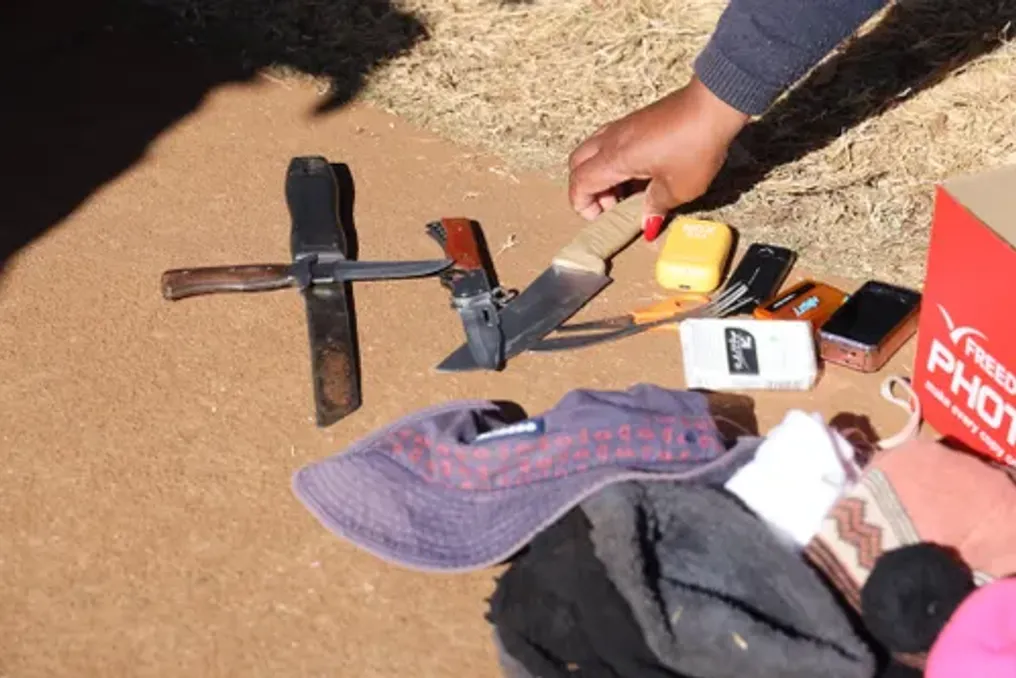
During this operation, two suspects were arrested after being detained with crystal methamphetamine. The commander of the Orange Farms station, Brigadier Mashole Manamela, reported that the police also seized dagga, sharp tools, scissors, cigarettes, dining forks, and matches.

Manamela urged community members to report suspicious or criminal activity occurring in or around schools to the police, emphasizing that community cooperation is crucial for creating a safe learning environment. The police strongly recommended that the public actively oppose drug use, school violence, vandalism, and illegal initiation schools.

Alcohol was found during a police raid at a school in Tshwane.

School inspection in Tshwane

The Tshwane District Director, Major General Samuel Thine, stated that Ekangala SAPS, together with the Community Policing Forum (CPF), Ekangala patrols, and the Department of Public Safety, visited the Specialization School on August 8.

The goal of the raid was to ensure the safety and security of students and staff in the Tshwane district schools. He noted: 'The main objective of the operation was to search the school premises for dangerous weapons, illegal drugs, and other prohibited items that could endanger the safety of students and teachers.'

During the search, the police seized dangerous weapons, cigarettes, and bottles of alcohol, including small bottles of vodka. The police proceeded to a residential house suspected of being linked to alcohol sales. Upon arrival, officers met an elderly woman who identified herself as the mother of a person allegedly involved in alcohol sales. She stated that she did not know about her son's involvement in selling alcohol and added that he was not at the house at the time,' Thine reported.

SAPS will continue to conduct intelligence operations in schools and communities to remove dangerous and prohibited items from environments where they may pose a threat to youth. Thine appealed to parents, guardians, educators, students, and community members to cooperate closely with SAPS and other relevant stakeholders to ensure a safe learning environment.

Demand for harsher punishment

Gani explained that the discovered items are expected because most schools lack budgets, funding, or resources to provide high-level security. He mentioned that each school's code of conduct is provided to parents and students, outlining rules of behavior and general norms of what is permissible and impermissible. According to him, schools across the country face the problem of prohibited items.

He emphasized: 'Contraband can easily infiltrate because there is no security. The discovered items are absolutely illegal. When they bring prohibited things into school, it endangers many other children. If you bring firearms or drugs into school, every child is in danger. We have heard stories of how drug dealers try to push drug sales through schoolchildren.'

Gani also noted that teachers will only check children's bags if there is suspicion. He stated that schools do not have the resources to solve this problem, and the police are not adequately staffed to conduct regular raids in all schools within their jurisdiction. He called on the Department of Education and SAPS to adopt a zero-tolerance policy.

'When the police come, criminal cases must be opened. We have become too lenient with children who break the law. Where there is bullying and assault, we must have a zero-tolerance policy,' said Gani. He called for the suspension of children caught with drugs, dealing them, or using them.

'We must apply the law consistently and decisively; then we will get the desired results. Make the punishment so severe that students think twice before breaking school rules. It is necessary to convey the consequences to the children. We must fight crime the way it should be done. It's not that children don't know what they can take and what they cannot. They put everyone at risk,' concluded Gani.
Similar stories

Safety in South African Schools is a Critical Issue Due to Rising Violence and Crime
Read more
iol.co.za

Safety in South African Schools is a Critical Issue Due to Rising Violence and Crime

Schools in South Africa are increasingly facing threats that extend far beyond the classroom. Violence, gang activity, bullying, sexual assault, and criminal behavior are turning places meant for learning into zones of fear.

Recent incidents in Gauteng have once again demonstrated the vulnerability of students and teachers. There have been instances where armed suspects infiltrated school grounds or operated near them, and weapons and other prohibited items were found among students during police searches.

At Iphutheng Primary School in Alexandra, armed suspects allegedly entered the premises and fired warning shots, forcing students and teachers to flee. Near Waverley Girls' High School in the Waverley area, armed individuals also reportedly fired into the air during a robbery before disappearing.

Recent concerns intensified at Badirile High School in Houghton, Carletonville, where knives, forks, scissors, and vapes were discovered among students during a check.

The Gauteng Minister of Education, Lebogang Mabile, stated: 'We condemn these senseless acts of crime in the strongest possible terms. Schools are sacred spaces dedicated to learning and teaching, and they should never become theaters of violence, fear, or intimidation.'

He noted that issues related to violence, gang activity, bullying, substance abuse, gender-based violence, vandalism, and criminal activity around schools have been repeatedly raised, leading to the implementation of stricter measures under the 'Safe Schools' program, enhanced anti-bullying measures, and improved collaboration between educational bodies, SAPS, communities, and NGOs.

Mabile emphasized that child safety cannot be solely the government's responsibility, calling for joint efforts from all citizens.

However, the crisis is not limited to Gauteng. In the Western Cape, the police recently began investigating a murder after a Grade 10 student died at Bellville South High School following an alleged attack by another student.

The province is also experiencing a problem with bullying: in February, six students from Milnerton High School were expelled following a bullying incident. The Western Cape Education Department (WCED) confirmed that eight students linked to this case face charges of assault with intent to cause grievous bodily harm, with six adults appearing in court and two minors undergoing separate procedures.

The scale of the crisis is reflected in the latest data from Statistics South Africa (Stats SA), which shows that 1,156,009 learners reported experiencing some form of violence at school.

DA Basic Education representative, Desire van der Walt, stated that these figures indicate a serious failure in protecting learners. She added that these statistics are not just numbers; behind each figure is a child whose trust has been undermined, whose confidence has been shattered, and whose educational prospects may be permanently ruined. School violence leads to decreased academic performance, increased dropout rates, mental health problems, and the normalization of violence as a means of conflict resolution.

A recent report by the South African Human Rights Commission (SAHRC) presented an even bleaker picture, extending beyond bullying and physical violence, revealing the widespread prevalence and deep-rooted nature of sexual violence in schools. The report mentioned alleged abuse affecting teachers, students, school staff, service providers, and outsiders.

The report recorded 26,855 cases of child abuse in 2024/25, including 9,857 cases of sexual violence. SAPS registered 2,826 charges related to sexual crimes against children, while the South African Teachers' Council received 826 complaints regarding sexual misconduct between 2021 and 2025.

The Commission found that only a small fraction of reported cases led to convictions, teacher suspensions, or inclusion in child protection registries. Legal experts warned that schools and provincial education departments could face costly civil lawsuits if they ignore repeated warning signs that result in harm to students.

Previously, in a report on school bullying, NAPTOSA representative Lorvika Matthews stated that schools must also be held accountable when repeated reports are ignored, but stressed that the responsibility lies with the entire education system. She insisted: 'When repeated reports are ignored or proper procedures are not followed, accountability is fully justified. Every bullying report must be taken seriously and addressed immediately.'

Matthews also noted that provincial education departments are obligated to ensure that schools have clear protocols, sufficient staffing, timely support, and access to counselors, psychologists, and social workers. She added that teachers cannot simultaneously function as educators, counselors, psychologists, and social workers without appropriate training and support.

In Matthews' view, bullying is also a reflection of broader societal issues, as students are exposed to violence, crime, poverty, inequality, family conflicts, and harmful social norms that can normalize aggression. She concluded: 'Bullying persists because it reflects wider societal challenges, rather than being an issue that starts and ends at the school gate. Schools are often mirrors of the communities they serve.'

Popular