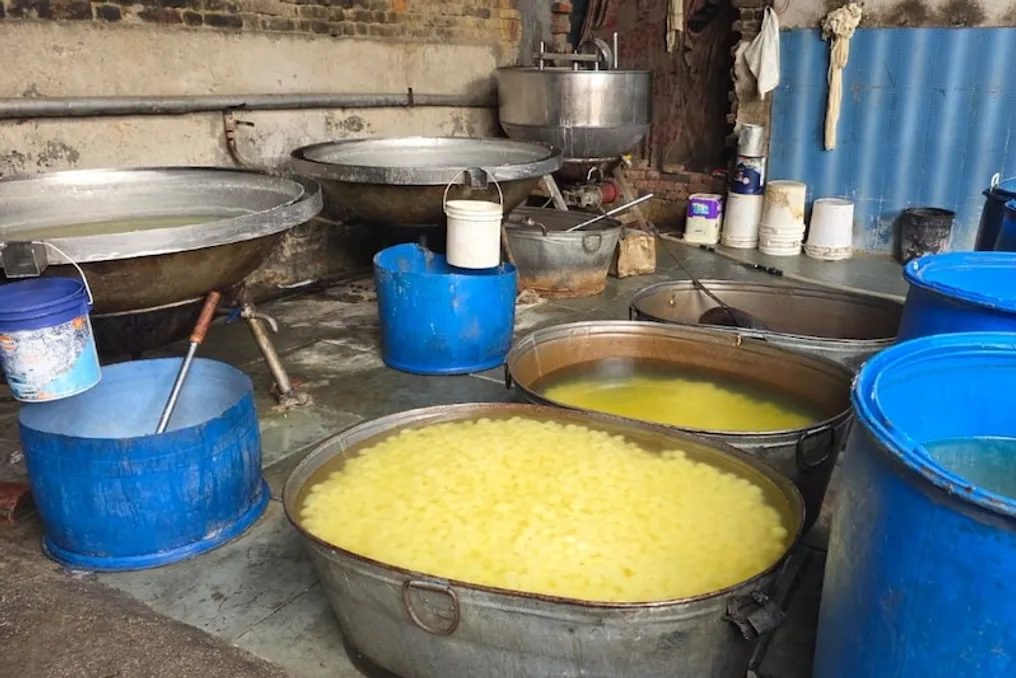
After the discovery of 4500 kilograms of finished white rasgulla in the village of Manganpur, Sambhal, the administration's attention shifted to a new question: where did such a large quantity of milk—about 20 thousand liters, needed to prepare this volume of dessert—come from?
Sudhir Kumar, an urban postgraduate student, noted that at least 20 thousand liters of milk were required to make 4500 kg of rasgulla. When asked about the purchase and source of the milk, the factory operator could not provide a clear answer.
It is reported that a large batch of finished white rasgulla, chhena, and other ingredients was found in the house of the head of Manganpur village, which is located in the Hajartangar Ghar police station area of the district. The administration has already begun the procedure of seizing the finished product and sending samples for testing. Now that the aspect of milk procurement has surfaced during these actions, the investigation has gained greater significance.
During the administrative actions, it was established that about 4500 kg of finished rasgulla was found in the head of the village's house. When officials began to ascertain the amount of milk used to produce such a large quantity of rasgulla, the question arose regarding the need for approximately 20 thousand liters of milk. On this matter, urban postgraduate student Sudhir Kumar approached the factory operator with questions about where such a large quantity of milk was purchased, from which seller or purchasing center it came, and whether there was documentation of its purchase.
However, according to the administration, no satisfactory information was obtained during the interrogations. The inspection is no longer limited only to the quality of the rasgulla; the administration is also examining where such a large quantity of raw material came from and whether there is any documentary record of it.
The administration's team and the food control department took samples of rasgulla, chhena, and other materials used on site. These samples are being sent by a special courier to the laboratory in Merat. The results of the inspection will determine whether the finished rasgulla and the components used in it met food safety standards. Further actions will depend on this report.
According to the administration's information, complaints had been received about large-scale production of white rasgulla in several houses in Manganpur village. It was also learned that this rasgulla product was supplied to various areas of Western Uttar Pradesh. Upon receiving this information, the food control department team, led by urban postgraduate student Sudhir Kumar, took appropriate action. During the inspection at the head of the village's house, 4500 kg of finished rasgulla was discovered, after which officials questioned those present.
Meanwhile, Abarar, the village head's husband, made a statement following the administration's actions, stating that his son runs the rasgulla production business. He claims to have a license and GST number to run the business. Abarar stated that their rasgulla is made from three components: milk, sugar, and powder. He also stated that previously taken samples from their production had been tested. He added that the administration took samples this time as well, and the situation will become clear after receiving the test results.
The administration had already taken measures against the production of white rasgulla in Manganpur and surrounding areas. During the Holi festival, the food control department and the administration conducted raids in several places, confiscating large quantities of finished rasgulla. Many kilograms of finished product were destroyed after inspection. With the current actions, the administration is facing not only issues of counterfeiting or quality but also the importance of accounting for the raw materials used in such large-scale production.