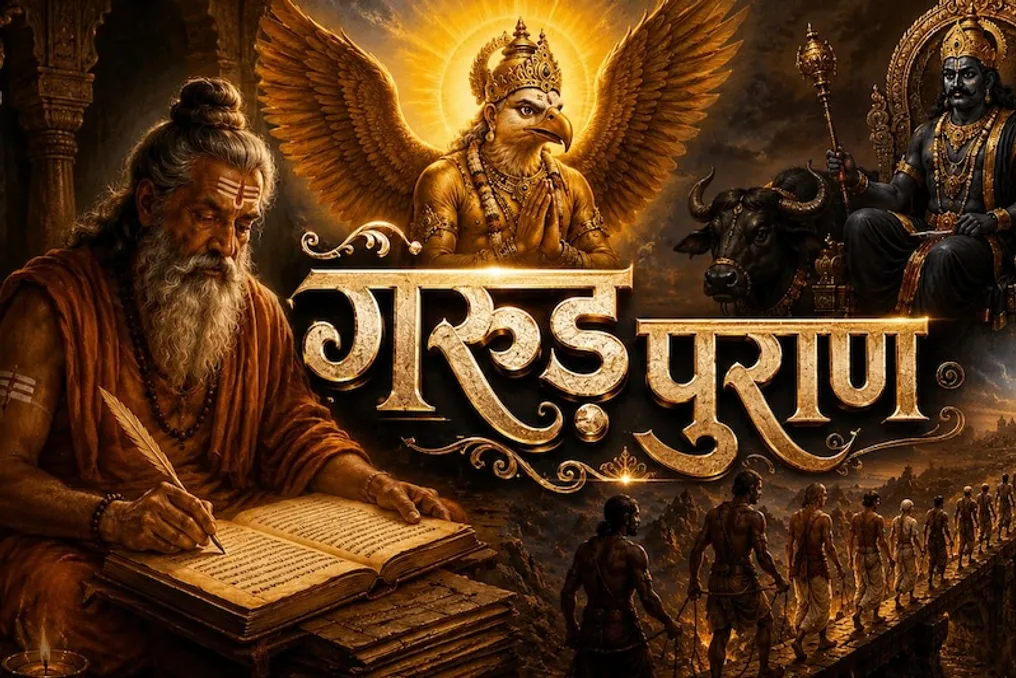
In Hinduism, various religious rites are performed after a person's death, among which Terahivi, Pindadana, and Jala Tarpan (offering of water) hold special significance. The question arises as to why Terahivi is conducted specifically on the thirteenth day after demise, and what benefit Pindadana brings to the deceased soul on its journey to Yamaloka.
The Significance of Terahivi After Death
According to Hindu beliefs, the soul's journey after death does not conclude instantly. The Garuda Purana describes in detail the state of the soul after death and its path to Yamaloka. There is a belief that the soul remains near relatives and in the home for some time, maintaining an attachment to the past life and family.
For this reason, the deceased's family performs Pindadana, Tarpan, and other religious acts in memory of the departed. The goal of these rituals is considered to be ensuring the soul's peace and assisting it on its further journey. Pindadana, performed within the first ten days after death, aids in the development of the deceased's subtle body. According to tradition, different parts of the body form in the initial days, and by the eleventh and twelfth day, flesh and skin begin to form.
Pindadana performed on the thirteenth day is considered extremely important. Religious doctrines state that through this ritual, the soul gains strength for its onward journey and departs for Yamaloka with the messengers of Yama. The Garuda Purana describes the journey from the mortal world to Yamaloka as long and arduous. According to beliefs, the soul may require about a year to complete this journey. During this time, the Pindadana and feeding provided by relatives are considered sustenance for the deceased.
This is why the tradition of performing Pindadana and Sharaddha rituals on different days after death has developed. It is believed that these actions performed by the family ease the soul's path. Furthermore, the Garuda Purana warns that if the necessary rituals are not performed, the soul may face various sufferings during its journey to Yamaloka, including hunger and thirst. Therefore, the family regularly performs Pindadana, feeding, and offering of water to alleviate the soul's plight and give it the strength to move forward.
Why is Terahivi Performed?
Now let us examine the Terahivi ritual itself. In Hindu tradition, the ritual performed on the thirteenth day after death holds immense importance. According to several religious beliefs, by conducting rituals on this day, prayers are offered for the peace of the deceased soul and wishes are made for its prosperous future journey.
On the day of Terahivi, there is also a tradition of offering food to Brahmins and needy people. In some places, it is customary to feed thirteen Brahmins, although the family performs this religious duty according to its financial capabilities. The purpose is not boasting or increasing the financial burden, but performing deeds with sincere devotion for the peace of the deceased soul.
An important point is that the family should not spend more than it can afford for religious ceremonies. If the family is not financially secure, holding a lavish feast on credit is not considered appropriate. The Garuda Purana also conveys the message that no actions should be taken in honor of the deceased that create an unnecessary financial burden for their family. If the family is forced to sell property or take large loans for a funeral feast, it is not considered right. It is said that the soul itself would wish for its family to remain safe and happy after its passing. Consequently, religious rituals must be performed according to sincerity and means, not under societal pressure.
How Does the Soul Find Peace?
Terahivi is connected not only to the deceased soul but also to the remaining family. After death, the family experiences deep grief. These gradually performed rituals help family members cope with sorrow and return to normal life. Over time, the family members' attachment to the deceased weakens, and they return to daily life, religion, and duties. From a religious perspective, the soul also gradually frees itself from worldly ties and continues its journey.
The offering of water (Jala Tarpan) along with Pindadana is also considered important. According to beliefs associated with the Garuda Purana, the soul may experience thirst during its journey to Yamaloka. Therefore, there is a tradition of offering water in memory of the deceased. Specifically, in many Hindu families, sons perform the offering of water for their father or other deceased relatives. It is believed that this brings water to the soul and eases its journey.
Thus, Terahivi, Pindadana, and Jala Tarpan are viewed not merely as religious rituals, but as elements of Hinduism related to the soul's peace and its onward path. However, all these assertions are based on religious scriptures and associated beliefs, not on scientific data.