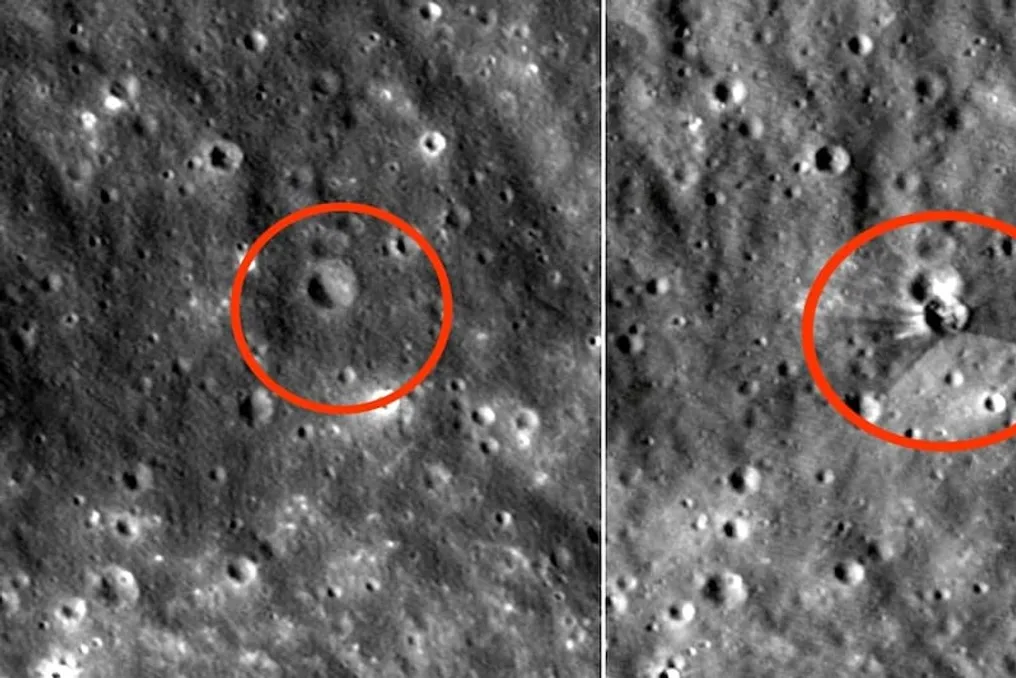
NASA has released new images of a crater that was formed as a result of a SpaceX rocket impact on the Moon. These photographs were taken by the Lunar Reconnaissance Orbiter (LRO) on August 11 and 12. According to scientists, the upper part of the Falcon 9 rocket struck the Moon on August 5, creating a crater approximately 60 feet wide and less than 10 feet deep.
This rocket was launched on January 15, 2025, and was used to deliver the Blue Ghost1 lunar lander from Firefly Aerospace to the lunar surface. After the lander landed, the upper part of the rocket remained in space, then changed direction and headed toward the Moon. The impact occurred with the lunar surface on August 5 and posed no threat to Earth.
Scientists are now using this incident to gather additional information about the lunar surface. NASA's images show traces of dust and rocks around the crater. Upon impact, dust and rocks from the lunar surface were ejected and scattered in the vicinity.
Some areas around the crater appear dark, which, according to NASA, is related to ancient lunar dust and rocks that have been exposed to sunlight, cosmic particles, and micrometeorite impacts for a long time. At the same time, some edges of the crater are brighter because they consist of new soil and rocks from beneath the lunar surface. During the collision, material located about 1.5 feet below the surface was also ejected and spread.
The LRO has been orbiting the Moon since 2009, completing a full orbit approximately every two hours. However, obtaining a clear image of the impact site required waiting for the right moment. According to NASA, it took LRO about six days to reach the correct position over the area. When LRO was at a distance of about 96 km from the Moon, its camera needed to be aimed precisely at the crater. Even a 10-second error during the capture could have placed the crater 16 kilometers away from the center of the image.
Assistance was also provided by the South Korean mission. The day after the impact, the South Korean Danuri mission also photographed the site, which helped NASA pinpoint the impact location. NASA's Near-Earth Object Study Center calculated the rocket's trajectory and hypothesized the impact site. This information was relayed to the South Korean team. Subsequently, using the data from Danuri, NASA prepared LRO to photograph the specific location.
Scientists are utilizing this event for a deeper understanding of the lunar surface. Information obtained from such impacts can be useful for ensuring the safety of future astronauts and equipment that will be placed on the Moon.