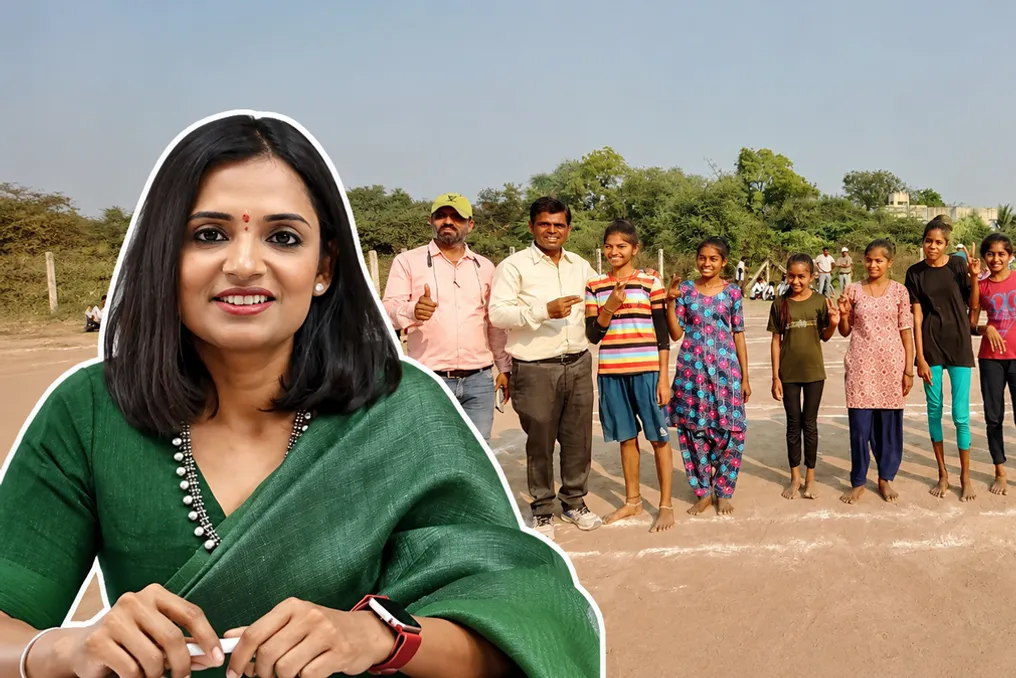
In the district of Chhota Udaipur, Gujarat state, Collector Gargi Jain moved away from the formal image of 'Madam Collector' to adopt a more familiar address, 'Collector Didi'. This shift in address became the foundation of an initiative that is changing the approach to educating girls from tribal communities in the region.
Instead of sitting in the designated visitor chair at the district administration building, Jain chose a plastic chair right inside the state school classroom. She sat next to girls who had never seen an official of her rank before, simply sitting down and listening. During these meetings, there were no inspection logs or entourage, only open conversation.
Jain, an Indian Civil Service (IAS) officer from the 2015 batch from Gujarat, began her work in Chhota Udaipur in February 2025. This district is one of the most densely populated by tribal communities in the state. It was separated from Vadodara district in 2013, and it is often the case here that girls are the first in their families to go to school. However, financial difficulties, early marriages, and the lack of visible role models force many to drop out before completing their studies.
This problem is not unique to Chhota Udaipur; poverty and early marriages have long contributed to student dropout rates in tribal areas of Gujarat. This is why sustained, trust-based work is as important as scholarships or infrastructure improvements.
Jain named her initiative 'Collector in the Classroom'. Over the past year, she has been visiting schools for girls in the tribal blocks of the district weekly, transforming ordinary classrooms into spaces where students can freely discuss their dreams, fears, and family pressures.
She stated: 'When I became the Collector of Chhota Udaipur, I regularly started visiting schools where girls in tribal areas study. I wanted these girls to know that their dreams are as valuable as anyone else's.'
Currently, the program provides direct mentorship to over 750 girls in five Kanya Vidyalaya schools, joining a number of collectors across the district whose unconventional efforts have changed local governance throughout India. Jain does not limit discussions to academic matters. She talks with the girls about life skills, communication, self-confidence, and legal rights. The girls ask questions regarding the UPSC exam, as well as engineering, medicine, and police services, similar to how other collectors revived residential campuses for tribal children in Dantewada district of Chhattisgarh to prevent their dropout.
The most significant part of each session is personal experience. Jain shares with the girls an incident from her own childhood when a fellow passenger on a bus subjected her to inappropriate touching while traveling with her mother. She kept this experience silent for a long time, telling no one. By sharing it now, she explains the difference between good and bad touch and encourages the girls to talk about problems instead of staying silent. This approach echoes how other officials used Braille-based lessons to include visually impaired tribal children in state classrooms in Chhattisgarh.
For many students in Chhota Udaipur, this is the first time an adult with authoritative power has spoken so openly with them about their own safety.
The results of this work are measurable. In 2025, approximately 9000 children dropped out of school in Chhota Udaipur. By 2026, this number decreased to approximately 5500, with nearly 4500 students returning to classes, representing an overall reduction of about 39%. Among girls, the dropout rate fell by almost 60% within a year, and this decrease was achieved through a combination of government programs and consistent work under the 'Collector in the Classroom' program.
For Jain, numbers are only part of her ambition. She stated: 'I will not stop until five tribal girls become IAS officers.' This goal recalls how AI-based learning support helped students in over 350 government schools in Tonk district, Rajasthan, gain self-confidence to keep up with their studies. Every visit to a classroom brings her closer to this goal.
Leadership is often measured by policy announcements and inaugurations, but Jain's initiative shows that it can also be measured by a chair pulled up next to a student, rather than across a table. If a girl from Chhota Udaipur eventually gets admitted to the Lal Bahadur Shastri National Academy of Administration as an IAS trainee, her journey did not start in a coaching center. It started in a tribal classroom where the collector decided to listen before leading.