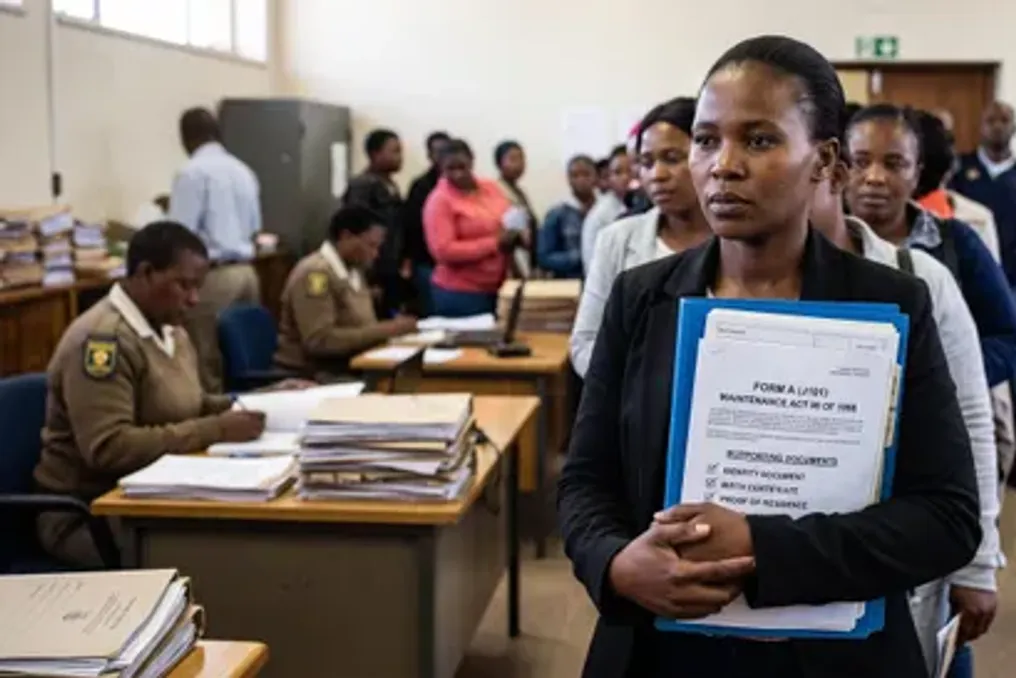
Despite seventy years since the march of 20,000 women for equal rights, mothers in South Africa continue to face challenges in obtaining legal monthly child support payments from fathers.
According to the 2024 SOSAF report, 64.5% of children in the country do not live with their biological fathers. Furthermore, the 2024 report indicates that single mothers head 42%–45% of South African households.
How to Apply for Child Support
In accordance with the Maintenance Act No. 99 of 1998, both parents are obligated to support their children proportionally to their financial means. To file an official claim for child support, applicants must first request and complete Form A (J101) to initiate a new maintenance proceeding, and then submit the following documents to the magistrate's court:
— Identification document (ID).
— Child's birth certificate.
— Proof of residence.
— Bank statements for three months.
— Proof of income (recent payslip) or a notarized declaration of unemployment.
— Detailed schedule of the child's monthly expenses with supporting receipts.
— Physical address and employer details of the non-compliant parent.
Payment Mechanism
When the magistrate issues a maintenance order, the court determines how the financial support should be provided. South African law provides for three main methods of payment:
— Direct Electronic Fund Transfer (EFT): The father transfers money directly to the primary caregiver's bank account. Courts prefer this method to reduce travel costs for women, which is particularly relevant in a country where the father might empty his account or avoid payment until the due date.
— Emolument Attachment Order: The employer deducts the child support amount directly from the father's salary.
— Court Clerk: The father hands cash to the court clerk, and the mother collects it in person. This method requires personal visits to the court.
If the father violates the terms after the court has approved the maintenance order, his non-compliance constitutes a criminal offense under South African law. In such cases, the mother can approach the maintenance officer to apply for an enforcement order for asset confiscation, debt recovery, or the initiation of criminal proceedings, which may result in a fine or imprisonment.