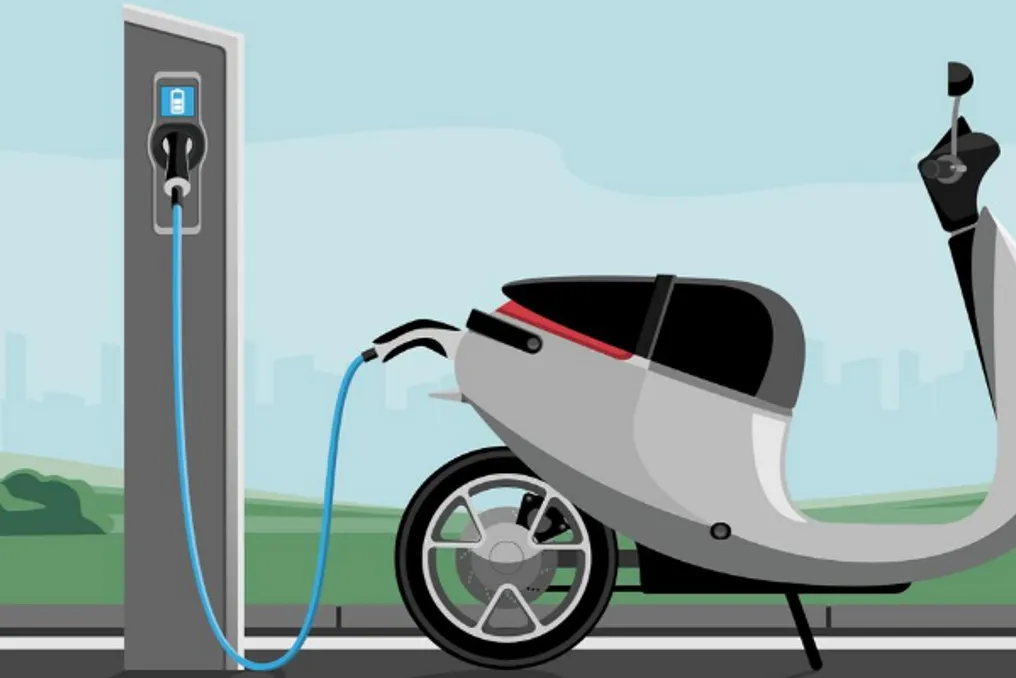
The Future of the Electric Vehicle Revolution in India: Software and New Technologies Outpace Speed
Read more
YourStory [india, en]
yourstory.com

The Future of the Electric Vehicle Revolution in India: Software and New Technologies Outpace Speed

India is one of the world's largest automotive markets, and consumer interest in two-wheeler electric vehicles (EVs) demonstrates significant potential. There is a sharp growth observed in the two-wheeler EV sector in India.

According to data from EVreporter Intelligence, collected using Vahan Dashboard and Telangana Regional Transport Authority data, 2,550,865 EVs were sold in India in the fiscal year 2025–26, representing an annual increase of 25.02%. Electric two-wheeler models led sales, accounting for 1,472,029 units, or 57.9% of total EV purchases, with sales volume growing by 22%.

A mobility operator's workday involves resolving numerous issues: vehicle deployment, reports on absent drivers, status of idle bicycles, battery swap abuse, accumulation of unpaid debts, and much more. Operators usually gather this information through calls, spreadsheets, and physical checks at hubs.

Thorough analysis of this data is necessary to determine the profitability or loss of the fleet for the day. As EV adoption accelerates, operators must manage thousands of vehicles, batteries, drivers, payments, and maintenance requirements without disrupting daily operations. In such a situation, suitable software provides a disciplined approach to assessment.

An effective operational tool is crucial because Markets and Markets forecasts that the global EV fleet management market could grow from $9.10 billion in 2025 to $32.25 billion by 2030, showing a compound annual growth rate of 22.7%. Therefore, fleet tracking, geo-fencing, battery diagnostics, analytics, and predictive maintenance features are urgently needed in the sector.

EV vehicles constantly record their location, charge level, distance traveled, battery activity, and downtime. However, collecting data without subsequent action has limited value. EV fleet management companies need a technological solution that clearly indicates daily which vehicles require maintenance, which need repair, which are stationary, and how to assign a driver.

GPS enables virtual headcount; geo-fencing identifies bicycles at a hub and units operating outside a defined zone, as well as stationary vehicles. This allows recovery teams to find exact locations without manual assistance. This convenient tool fundamentally changes the role of the fleet manager: instead of searching disparate systems, the team receives a prioritized list of tasks based on current operational signals.

The International Energy Agency reported that 1.3 million electric two-wheelers were sold in India in 2024. In its Global EV Outlook 2025, the agency also notes that swappable batteries have stimulated the growth of swap stations, especially for taxis and delivery vehicles where fast energy replenishment is highly valuable.

Battery performance monitoring will become increasingly important as demand grows. The Institute of Economics and Energy Financial Analysis asserts that India's need for advanced chemistry cells in 2025 was 28 GWh, with EVs accounting for approximately 60%. It is projected that by the 2030 fiscal year, demand will reach about 272 GWh.

The frequency of battery replacement indicates whether bicycle performance is improving or deteriorating, as well as the reliability of driver reports. A sudden drop may indicate a technical failure, absence of a driver, weakening demand in that zone, or going off-network.

Battery information is also oriented towards usage-based maintenance. An actively used bicycle may require attention sooner than another used on the same day. Service departments can reduce the probability of unexpected breakdowns based on distance, energy consumption, replacement frequency, and fault alerts.

Software immediately signals adverse changes, allowing the team to investigate before it impacts revenue. Thus, superior digital oversight helps operators track the condition, usage, and replacement needs of batteries across the entire fleet.

Overall fleet revenue can mask inefficient assets. Net profit at the end of the month might look encouraging despite the constant poor performance of some vehicles. In such a situation, the solution is unit-level accounting, where rental income, driver payments, repairs, fines, battery costs, recovery fees, and outstanding payments are linked to the corresponding bicycle and user. Operators can then analyze the daily income and expenses of individual bicycles.

This also flags repeat repairs, which indicate misuse or recurring defects, and falling revenue signals low utilization, while accumulating debts require immediate attention and action.

Similar logic applies to collections: automated reminders, payment links, restrictions, and escalation rules allow companies to apply a consistent process to hundreds or thousands of accounts. Staff can focus on complex cases instead of updating spreadsheets or making multiple calls to drivers.

The administrative team must handle traffic violation issues, such as access to government system integrations, digital tools for issuing fines, identifying the penalized driver, and initiating resolution via the app. This increases accountability and reduces paperwork.

Vehicles remain part of the fleet, but drivers often leave. Signs may manifest as missed workdays, fewer swaps, reduced kilometers, payment disputes, or irregular app activity.

By analyzing these signals, the system can identify drivers who may soon stop working. The response should not be automatic punishment but timely human support intervention. Dialogue can reveal a damaged bicycle, an earnings problem, a family emergency, or a misunderstanding about deductions.

Thus, technology works best when it helps teams respond contextually. Poorly designed automation can increase distrust; a well-thought-out system can prevent unnecessary attrition and protect livelihoods.

The choice of capable electric bicycles is growing in India. The complex task is creating an operating system that notices small problems every morning, distributes responsibilities, and prompts action before costs accumulate. The next phase of the EV transition will be determined within dispatch centers, mobile applications, and data platforms. Speed may attract attention, but robust solutions will keep commercial fleets moving.
Similar stories

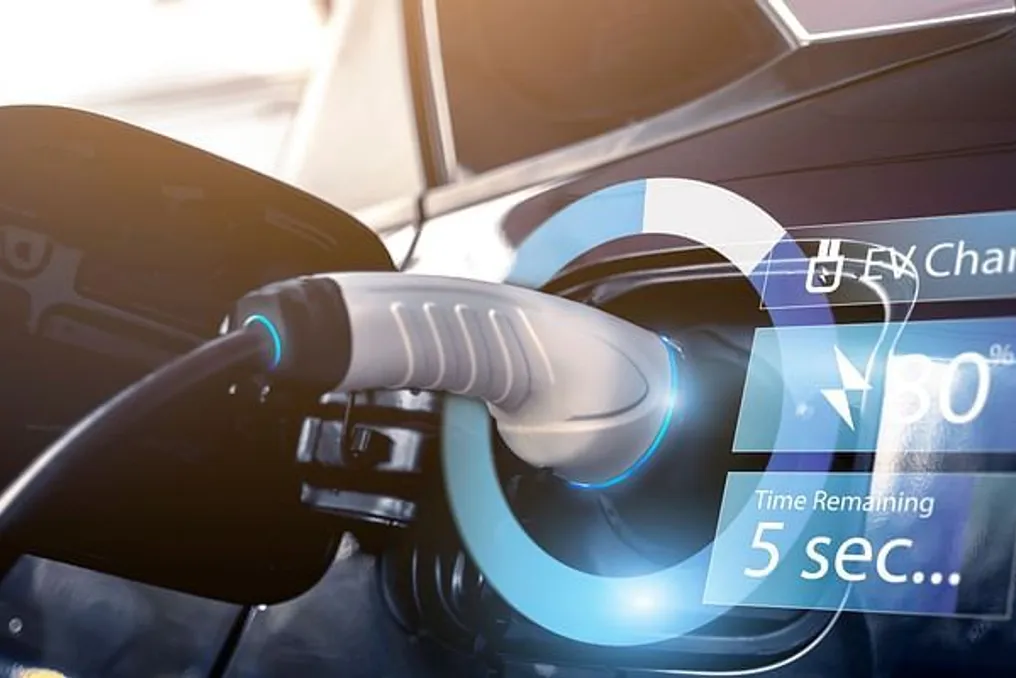
Range anxiety for electric vehicles is related to uncertainty at charging stations, not battery capacity
Read more
yourstory.com

Range anxiety for electric vehicles is related to uncertainty at charging stations, not battery capacity

In India, the discussion about electric vehicles (EVs) often boils down to the topic of 'range anxiety.' This phrase has become synonymous with everything that hinders their widespread adoption, and the premise behind this concept is the assumption that the problem lies in the size of the battery. However, this view is not entirely correct. The industry's excessive focus on range figures distracts from what actually determines a person's trust in using an electric vehicle in daily life.

The real reason for the concern is not how far the car can travel on a single charge. The problem arises when the charge level starts to drop: will there be an accessible charging station nearby? Will it be free? Or will it even be functional, and the driver will discover a non-working device without any warning? This is not range anxiety, but rather uncertainty that requires a different solution.

This can be compared to behavior around traditional fuel. A gasoline car with 40 kilometers left in the tank does not cause panic because the driver knows that many gas stations are within reach, and they all function similarly; thus, there is no ambiguity regarding availability. The anxiety associated with EVs is not in the number on the dashboard, but in the lack of this same certainty.

Charging infrastructure in India has expanded significantly in recent years, and formally, coverage in most urban corridors has ceased to be a bottleneck. Nevertheless, the level of anxiety has not decreased proportionally because the infrastructure was built with an emphasis on presence, not visibility. The mere existence of a charger on a map does not guarantee the driver knowledge of its functionality, occupancy, or expected waiting time when it is truly needed.

The EV ecosystem in India needs to rethink its approaches. The next stage of infrastructure development must pay as much attention to real-time information acquisition as it does to physical deployment. Drivers must know the status of a charging station before deciding to deviate from their route. They need a realistic estimate of waiting time, not just a marker on a map. They need transparency regarding station occupancy, similar to how passengers check traffic conditions before choosing a route.

Solving these problems does not require new equipment standards or a breakthrough in battery technology. It simply requires the implementation of connected systems that accurately and consistently transmit status, and operators must treat this data as a basic service, not a secondary function.

There is also a behavioral aspect. Uncertainty leads not only to inconvenience but also changes decisions even before the trip begins. A driver unsure about the availability of charging stations will compensate with excessive actions: charging more often than necessary, avoiding certain routes, or deciding that EVs do not fit their lifestyle. All of this is mistakenly attributed to battery range, when the true limitation was the lack of knowing what to expect at the end of the journey.

Fixing the situation does not mean that every charging point must be perfect or every station free of queues. It requires the system to be honest and up-to-date regarding its current state. A driver who is accurately informed about a station's occupancy and realistic waiting time can plan their route. A driver who arrives at a silently non-functional device without warning loses trust in the entire network, not just that specific unit. Reliable information is far more important than reliable hardware, as failures in status data accumulate quickly. One negative experience with unreliable status data colors all future decisions about relying on public charging.

As the EV ecosystem in India matures, the discussion must move beyond technical specifications of batteries and the number of charging stations. These metrics are important, but they only answer the question of infrastructure availability. They do not answer the question drivers ask at the moment they need to charge: can I trust the information about this station right now?

The solution to this problem is not laying more cables, but creating a layer of visibility that gives drivers confidence in what awaits them on site. This is the anxiety that deserves resolution, and it never concerned the battery itself.

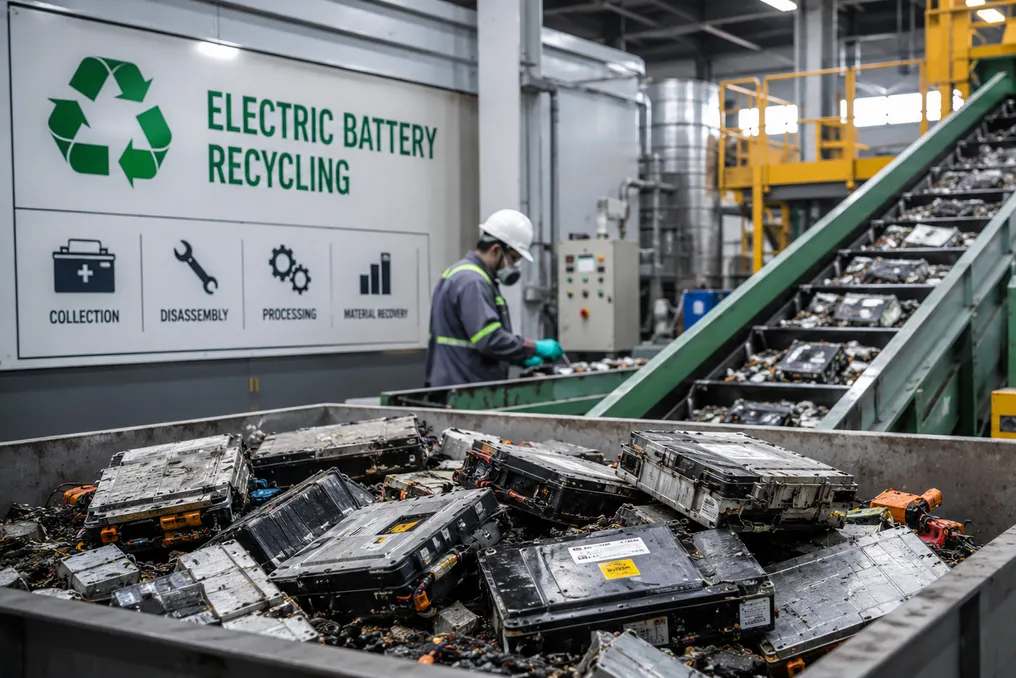
Transforming Battery Waste into Strategic Resources: A New Opportunity for India's Industry
Read more
yourstory.com

Transforming Battery Waste into Strategic Resources: A New Opportunity for India's Industry

An electric scooter battery lasts for about five years, providing daily rides. However, when the battery's health drops below 70%, most people consider it ordinary trash. Industry, on the other hand, sees it as a treasure trove of critical minerals. Currently, a spent battery ceases to be just an automotive component and becomes part of a grand industrial transition.

As the adoption of electric vehicles accelerates in the country, the fate of these batteries will determine whether India becomes a self-sufficient producer or replaces its dependence on crude oil imports with a dependence on critical mineral imports. India aims to achieve sales of 30 million electric vehicles by 2032. According to NITI Aayog estimates, approximately 128 GWh of battery waste will be generated in India by the end of the decade, with the electric vehicle segment accounting for nearly half of this volume. Thus, what appears to be waste is actually a concentrated urban mine.

End-of-life lithium-ion batteries contain all the necessary materials to create the next generation of energy storage systems. The projected 128 GWh of waste could potentially yield a colossal 17,500 tons of lithium, 22,600 tons of nickel, 2,600 tons of cobalt, and 141,800 tons of graphite.

For a country with limited domestic reserves, mining these minerals is a macroeconomic necessity. According to a Rocky Mountain Institute report, the battery circular economy represents a $9 billion market opportunity for India. By 2050, a robust domestic recycling infrastructure could meet over 40% of the country's domestic needs for lithium, nickel, and cobalt, protecting production from global commodity market volatility.

Extracting critical minerals is far more complex than simply dismantling a battery. Each battery varies in chemistry, design, physical condition, and residual charge, making safe handling the first engineering challenge. After controlled discharge, batteries are mechanically dismantled and crushed in a controlled environment to separate plastic, copper, and aluminum foil.

The result of the crushing process is a dark fine powder known as 'black mass,' which contains concentrated active metals driving the energy transition. Advanced purification methods allow for the extraction of lithium, nickel, cobalt, and graphite as metal or salts with a recovery efficiency exceeding 90%. Ultimately, the metals in the battery packs remain metals and can be transformed into various forms of these metals. Purified metals can be reused in various production streams, including batteries, through recycling.

The real economic value lies in recycling the black mass into metals or salts that industry can use, not in producing the black mass itself. Until recently, black mass was largely exported, effectively transferring significant value abroad. Domestic recycling retains value within the country's own production ecosystem and strengthens the battery manufacturing, chemical, and advanced materials industries.

Operating a recycling facility demonstrates that a metallurgical approach alone is insufficient for commercial success; process design is also crucial. Multi-stage chemical extraction technologies increase reagent consumption, waste generation, and operating costs. As Lithium Iron Phosphate (LFP) becomes the preferred chemistry, commercially viable recycling will depend on chemistry-agnostic technologies that simplify the process while operating efficiently at scale.

Despite technical success in recovering critical minerals, LFP batteries present a commercial challenge. Unlike premium Nickel-Manganese-Cobalt (NMC) batteries saturated with high-value metals, LFP batteries do not contain nickel or cobalt. Although lithium, iron, and phosphorus can be extracted, current raw material prices do not cover processing costs. The science of recycling is sound, but the economics can be harsh. If left entirely to the free market, recyclers will naturally favor NMC batteries and abandon LFP, leading to piles of untreated toxic waste.

To prevent LFP packs from becoming a devalued asset, the industry requires Viability Gap Funding (VGF) grants or chemistry-specific differentiated incentives to make processing low-value chemistries financially sustainable.

Securing feedstock is a huge hurdle. Approximately 70%–90% of India's battery waste disappears into the unregulated informal sector, where unsafe scavenging causes environmental damage and massive material loss. The Battery Waste Management Rules (BWMR) 2022 timely introduced Extended Producer Responsibility (EPR) to channel waste to recyclers, but compliance with these rules remains critical. Ensuring traceability throughout the entire life cycle of a battery until its decommissioning can guarantee that batteries remain within the formal circular economy.

Ultimately, transforming battery waste into strategic resources is the defining industrial challenge of the electric mobility era. Batteries are a source of raw materials underpinning India's transition to clean energy and its industrial competitiveness. By scaling up advanced purification, supporting economically challenging chemistries like LFP, and strengthening EPR compliance and battery traceability, battery recycling will evolve into a strategic industrial opportunity.

Popular