Preparation for WRC 2026: Robots and Staff Continue Work in Beijing Ahead of Conference
Read more
Pandaily
pandaily.com

Preparation for WRC 2026: Robots and Staff Continue Work in Beijing Ahead of Conference

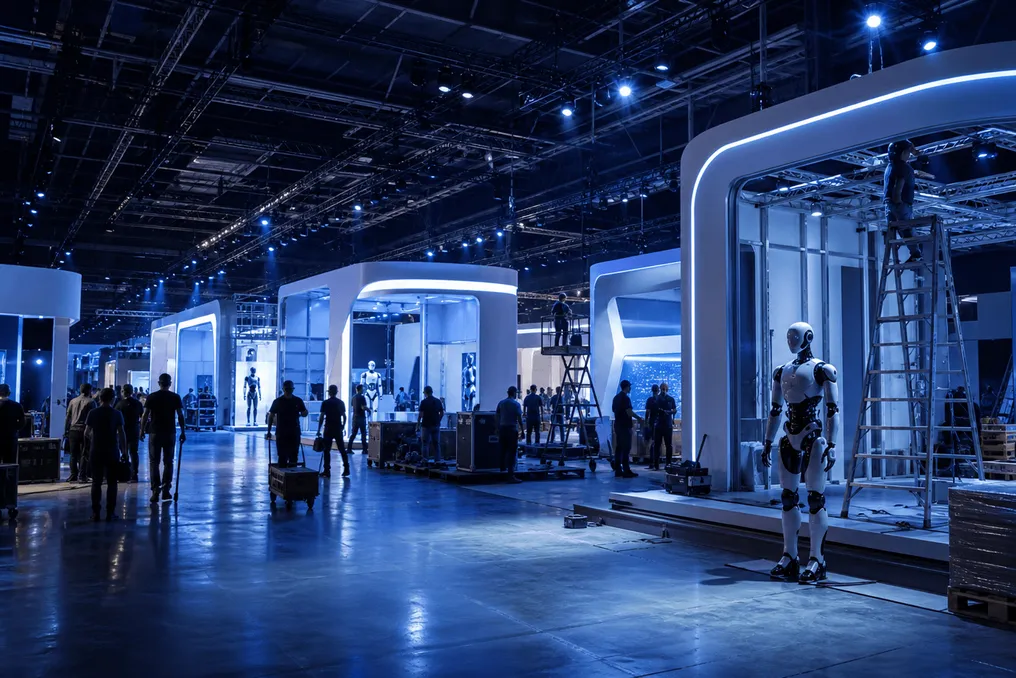
Ahead of the World Robotics Conference (WRC) on August 18th at 19:00, the team arrived at the permanent venue—the Park of Intelligent Robot Innovation in the Yizhuang district of Beijing. This event marks its 11th edition, with the old Hall C replaced, and over 500 speakers are scheduled to present.

As darkness fell, workers were still engaged in construction, and the booths remained lively: staff surrounded robots and equipment for final debugging before the opening. In the central lobby, Galaxy General will host a sub-forum the following day, while personnel ate packed lunches and made revisions to PowerPoint presentations.

In Hall C, employees from the Lumming Robot booth looked exhausted. In Hall B, the robot Zhongqing rehearsed its boxer routine, attracting attention from photographers from all sides. Even before the official opening, the booth attracted a crowd of onlookers, which was a double blessing for neighbors like Star Dynasty, whose demonstration sorting process attracted visitors but did not retain them for long.

Analyzing the overall picture, it is evident that the current WRC demonstrates shifts beyond simple performer comparison. The first change is the scale of the booths: funding is abundant, evidenced by a 138% increase in robotics funding events from January to June 2025. Nevertheless, most robotics companies are cautiously spending on media, preferring to allocate funds to events such as the Spring Festival Gala, WAIC, and WRC itself.

This year, Unitree and Starship Navigator occupied central positions, building mezzanines, while less prominent companies were placed in the tent of Hall D. The second key observation concerns the theme: almost every robot has a specific function and personality—whether it is a courier sorter, a boxer, a chef, or a barista. Nearly every company created a realistic scene: Star Dynasty presented a logistics sorting line, and DexForce presented a phone inspection line.

The industry language this year is shifting towards practical work and value creation, rather than just movement and dancing. Since AgiBot announced the creation of 15,000 embodied robots, and Unitree announced 18,000 units, old narratives can no longer sustain valuations, forcing capital to question the profitability of robots, marking a transition from breakthrough technologies to value verification. Zhongqing remains an exception to this rule.

The third focus is on hands, perception, and data. Companies specializing in dexterous hands and sensors, previously on the periphery, now occupy prominent positions: Lingxin Qiaoshou, Xinuo Future, KAI Power, Innomotion, and Zhongke Guiji. Since the most valuable economic work is performed by hands, vision, depth, force, and tactile sensing functions are divided into separate modules. Robots lack a natural internet data source; therefore, high-quality robot data still relies on teleoperation and human demonstration, which complicates standardization. As a result, the industry uses a combination of real machine data collection, simulation, and synthetic data, forming a closed loop.

At 21:00, Galaxy General's rehearsal was not yet finished, and the road outside was overloaded with taxis picking up staff who had been working past ten o'clock in the evening. The lit halls and people going out into the night speak to the heat of the industry as much as any financial indicators.
Similar stories

Humanoid Robots Pass Tests in World Robot Games in Hospitality Scenarios
Read more
pandaily.com

Humanoid Robots Pass Tests in World Robot Games in Hospitality Scenarios

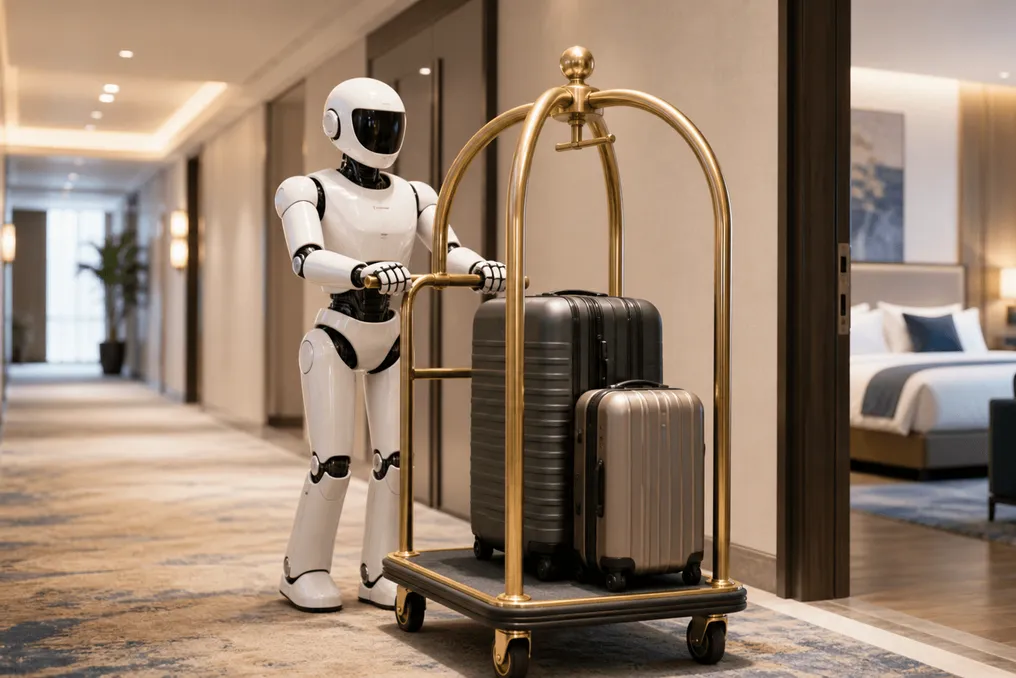
From August 16 to 17, a competition on guest services was held at the Beijing Wuzhou Hotel as part of the second World Humanoid Robot Games. The contest leader, Li Ziye, noted that each round is limited to 30 minutes, during which robots must complete tasks such as baggage handling, restocking room supplies, and room cleaning. These tests assess the robots' ability for mobile weight transfer, balancing when pushed, dexterous grasping, real-environment navigation perception, and planning complex multi-stage tasks.

The goal of this competition is to accelerate the transition from laboratory development to commercial implementation. The contest includes four main challenges: unstructured real hotel environments requiring high navigation and obstacle avoidance; soft items like bedding and towels that change shape and require flexible manipulation; pushing loaded trolleys with difficult posture balance; and a long chain of tasks under time constraints, which questions the overall stability of the machine.

Zhang Yizhou from the Renmin University of China-Beijing Humanoid Alliance-iYZhou team pointed out that the venue itself was the most difficult part: real scenes differ greatly from simulated ones, and narrow corridors test the robots' maneuverability when moving forward and backward while handling luggage.

In the baggage handling task, robots must place two suitcases and two bags on a transport trolley, drive it to the specified room, unload all the luggage, and then return the trolley. For restocking supplies, robots retrieve one towel, two pairs of slippers, and two bottles of water, hang the towel straight, place the bottles on a corner cabinet, and arrange the slippers under the bedside table. During cleaning, robots smooth the bed and place two dirty towels and one piece of trash into recycling bins.

Li Ziye emphasized that timely completion of the task does not guarantee high scores; the neatness of item placement is important. Fully autonomous mode earns 1.0 point, whereas remote control mode is only rated at 0.5.

The hospitality competition is one of the events in the Games conducted in real conditions. The Games select worker robots based on real needs across nine different scenarios: home cleaning, hotel service, industrial production, emergency rescue operations, library management, retail, office service, garden inspection, and vehicle charging, developing complex tasks that test eye-brain-hand coordination.

Li Ziye added that the hospitality competition is based on real industrial needs: after surveying sites, the team identified pain points in highly standardized repetitive work, labor shortages, rising personnel costs, and high staff turnover; such work corresponds to the current stage of humanoid robot development.

Wang Fan, director of the hospitality competition and head of the Asia-Pacific office of Beichen Group, stated that as humanoid robots improve in mechanical and process services, the efficiency of hotel operations will increase. Currently, hotels already use robots for room delivery, smart cabinets, and AI-based voice stations, and plan to introduce robots for baggage handling, guest interaction, and coffee preparation, promoting a robot-oriented hotel strategy while providing more real scenarios for robot training.

Chinese startup Unitree Robotics aims to implement its humanoid robots in factories
Read more
olhardigital.com.br

Chinese startup Unitree Robotics aims to implement its humanoid robots in factories

The Chinese startup Unitree Robotics is attempting to transform the global recognition of its humanoid robots into a large-scale commercial operation. The company gained worldwide acclaim after demonstrating machines capable of performing acrobatic stunts, but now it faces the challenge of applying this equipment practically.

This progress occurs amid international competition in the field of humanoid robot development, which is considered a strategic area for China. The company, founded by Wang Xinsing, is focusing on reducing costs, controlling component production, and integrating with artificial intelligence systems to accelerate its expansion.

Despite the achieved visibility, widespread adoption remains a distant prospect. Most of the units produced by the company are still held by universities, research centers, and developers, while industrial use constitutes a smaller portion of the business.

Unitree attracted particular attention after public presentations of its H2 and G1 models, which were shown during performances at the Spring Festival Gala, a television event by China Media Group associated with the celebration of Chinese New Year. This demonstration made the company one of the representatives of the Chinese breakthrough in robotics.

During a conference call, Elon Musk of Tesla stated that China holds a prominent position in the humanoid robot sector, noting the lack of significant competitors outside the country.

The growing public attention has also created pressure on the company. Wang Xinsing told Time magazine that the excessive expectations created by the internet amplify the demands for rapid achievements, although developing complex technologies requires longer periods of time.

Unitree's strategy is to offer robots at prices lower than many competitors and maintain control over key hardware parts. The cost of the G1 model was reduced from US$16,000 to US$13,500, while the H2 is valued at approximately US$30,000.

Even after such a reduction, the equipment has not yet captured a broad industrial market. Data provided by the company itself indicates that only a small portion of sales goes to factories and logistics operations, while the main demand is met by academic institutions and research specialists.

Experts point out that humanoid robots still have limitations in performing diverse tasks in real-world conditions. The main difficulty lies in the ability to adapt when working conditions change, such as differences in lighting, materials, or object placement.

Grace Shao, responsible for AI Proem, noted that these devices have not yet reached sufficient maturity for mass market entry. Jian Zheyuan, CEO of the startup Noetix, emphasized that an effective strategy in one specific situation may lose its effectiveness when applied in various scenarios.

Wang compares the current stage of humanoid robotics to the beginning of the popularization of personal computers, when the first users were narrowly specialized professionals. In his opinion, the evolution of software and the increase in the number of developers can gradually expand the industrial use of these machines.

Unitree has also advanced in the process of raising capital on the Shanghai Stock Exchange. Company documents indicate profits of about US$87 million in 2025 and revenue of US$250 million.

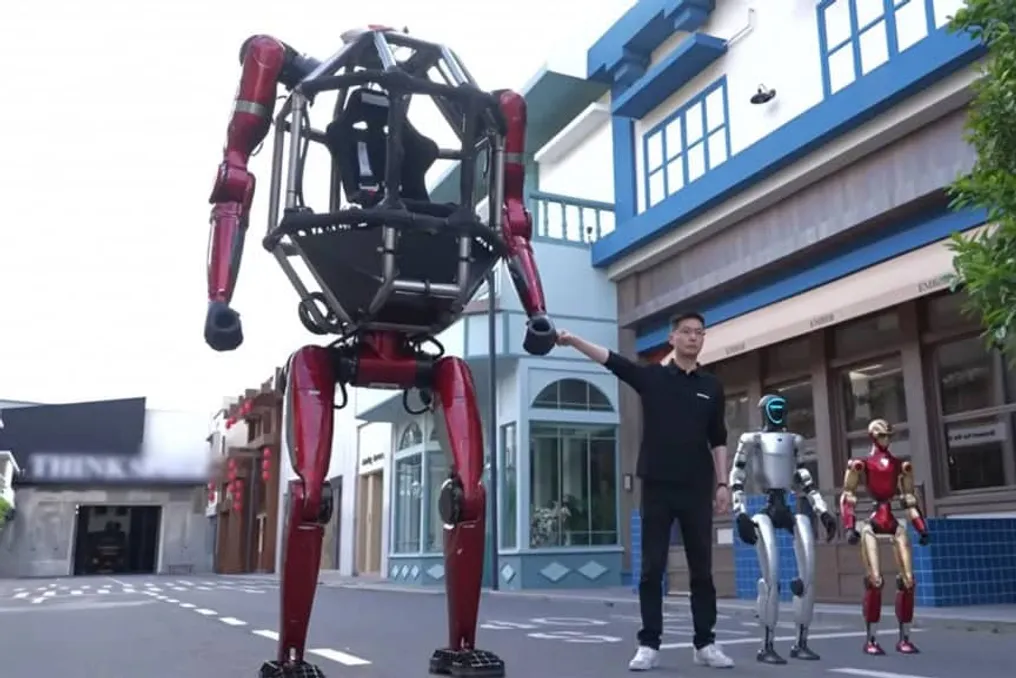
In addition to humanoid robots intended for practical tasks, the company introduced the GD01—a larger robot inspired by mechs from popular culture. This equipment was developed as a platform for testing strength and safety but is not yet a product aimed at everyday use. The project itself attracted attention due to its size and the concept of combining features of bipedal and quadrupedal robots. The company's management expressed caution regarding this equipment, stating that its operation still raises safety concerns.

The company hopes that advancements in artificial intelligence will allow for the expansion of the robots' capabilities and bring them closer to more complex actions. Nevertheless, Wang believes that the widespread adoption of humanoid robots will depend on time and technological maturity.

Popular