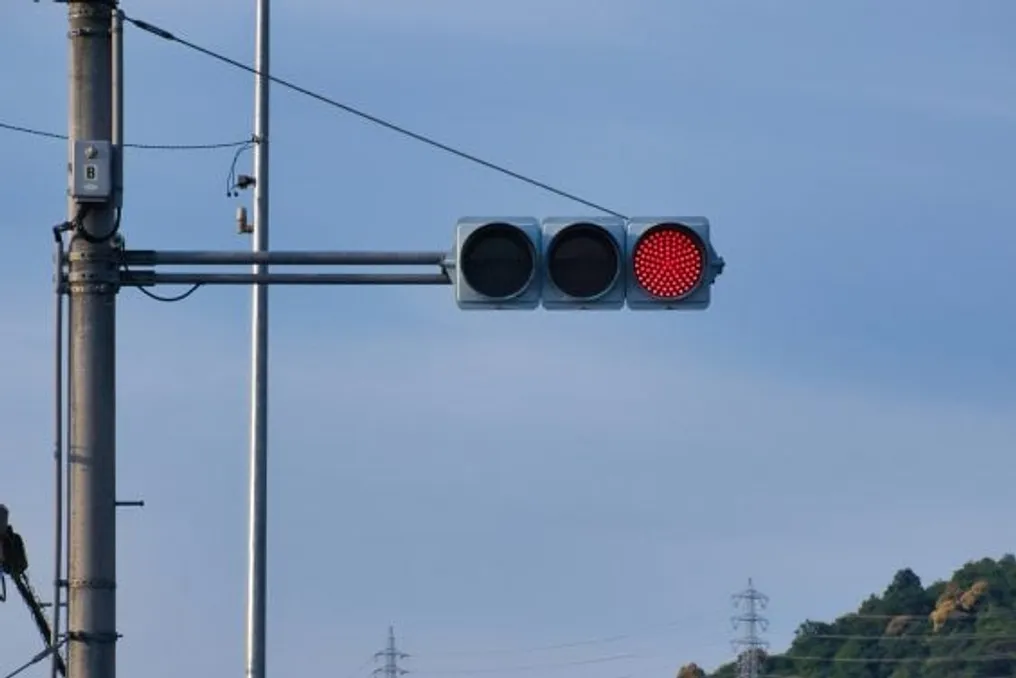
There is a traffic light located in Japan that remains flashing for 364 days of the year, operating only once annually for a group of students. This equipment is situated on Himakajima, an island smaller than 1 sq km, located in Mikawa Bay, within Aichi Prefecture, and is a short boat ride from the mainland.
Installed in 1994 at the intersection near the island's east port, the signal predominantly operates in an intermittent mode, alternating between red for those leaving the port road and yellow for those traveling along the coastal road. Essentially, it functions as a 'stop and observe' light system. Given the low population density of Himakajima, with approximately 1,600 residents, few vehicles, and a perimeter of 5.5 km that can be walked in under 90 minutes, local traffic does not justify a full signaling cycle.
On the island, the octopus holds more prominence than automobiles; there is even a police post shaped like an octopus at the port. The exception to this pattern occurs when a group of students is brought to the intersection once a year. Third and fifth-grade students from the local primary school normally use the traffic light, forming a line on the sidewalk, waiting for the light change, observing both sides, and only then crossing the crosswalk with their arms raised for better visibility.
Although it seems like a playful activity, this exercise addresses a practical need. Before 1994, the school used simple demonstration models to explain how the traffic light worked, but these did not convey crucial information, such as the signal duration, vehicle distance, or the correct direction to look. The island's traffic safety association identified that residents arriving from the mainland lacked preparation for handling intersections and motivated the installation of the real equipment.
It is worth noting that many of these students eventually leave the island after growing up to study or work in large urban centers like Nagoya, Osaka, Yokohama, or Tokyo, places where crossing the street against the signal can have serious consequences. The training also includes a peculiarity that confuses foreigners in Japan: the color that the rest of the world calls green is traditionally referred to as blue (ao), due to the heritage of old Japanese vocabulary that used the same term for both shades, and this nomenclature persists in traffic legislation, maintaining the same function.
Similar situations are not exclusive to Japan. In Brazil, Ilha Grande, located in Angra dos Reis (RJ), implemented a ban on private vehicle circulation throughout its territory, with travel being done on foot, by bicycle, or by boat. On Himakajima, the unexpected result of this nearly inoperative system was that the traffic light became a tourist attraction, appearing in the island's promotional materials and being photographed by visitors coming from the port to see the intersection blinking all year round.