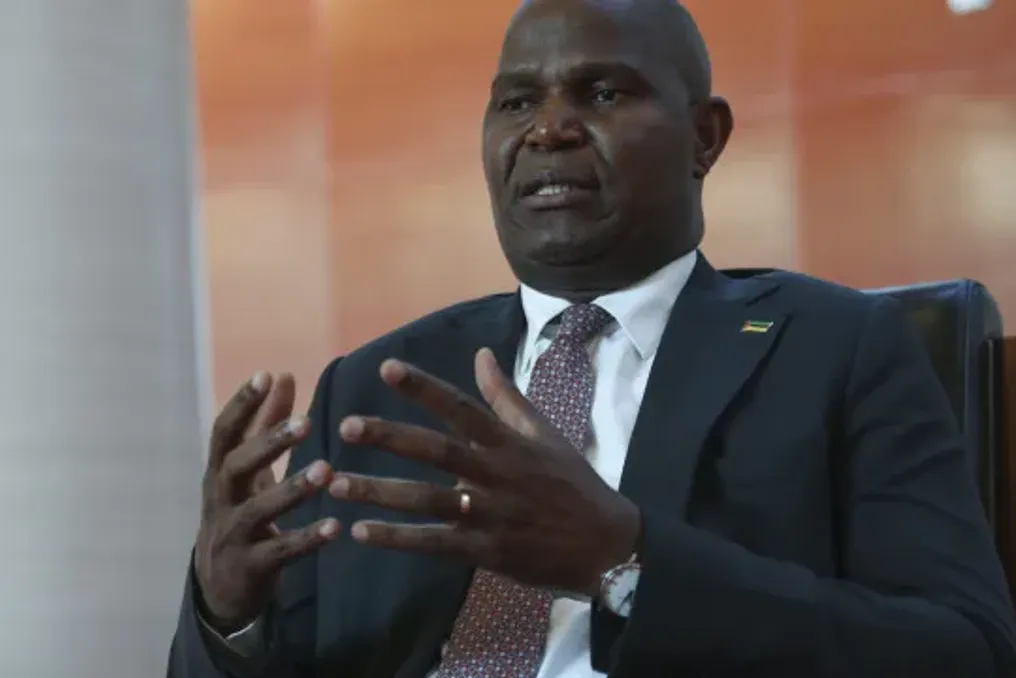
Mozambique plans to direct xenophobia victims to work in Portugal
Read more
Noticias ao Minuto
noticiasaominuto.com

Mozambique plans to direct xenophobia victims to work in Portugal

During a press conference held as part of the 46th Summit of Heads of State and Government of the Southern African Development Community (SADC) in Durban, the head of state of Mozambique explained that the executive branch has registered and selected citizens returned home to determine their professional qualifications and facilitate their reintegration.

He stated that besides the employment agreement with the United Arab Emirates, there is another similar agreement with Portugal, and they are working on enabling citizens to go to these countries as well.

According to Daniel Chapo, many returnees possess professional skills and are integrated into a database managed by the National Employment Institute, which allows them to be directed to public and private projects in Mozambique.

Among domestic opportunities, projects related to natural gas in the Rovuma Basin, Cabo Delgado, in northern Mozambique, were noted. It was mentioned that the enterprise led by TotalEnergies is currently hiring about 9,000 workers, approximately 7,000 of whom are Mozambicans.

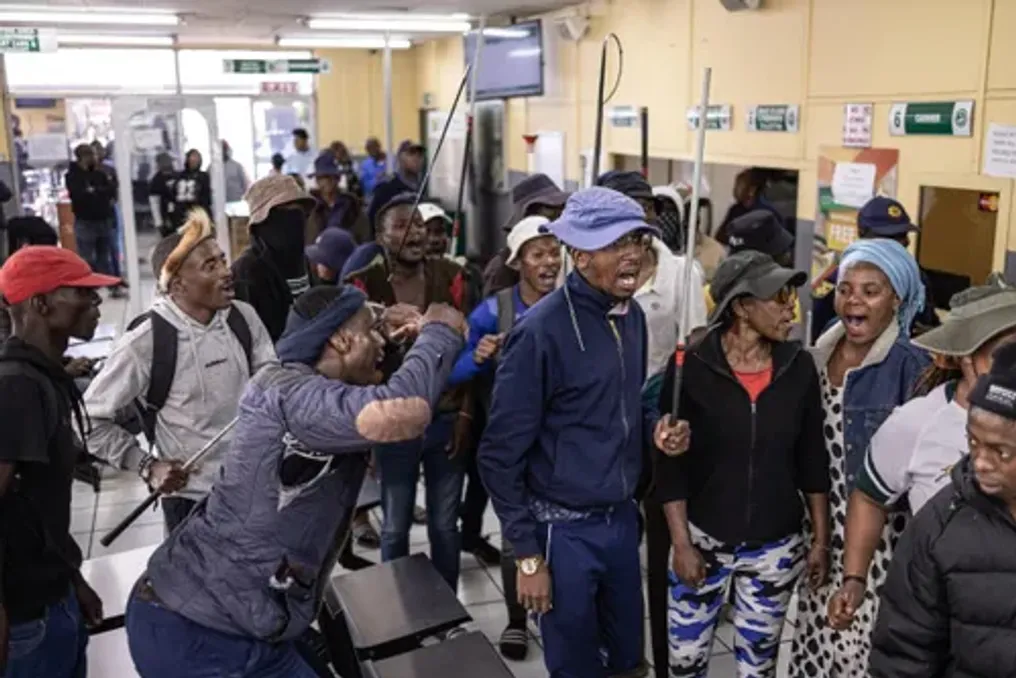
Incidents of violence against foreigners have intensified in South Africa since late May, including attacks, intimidation, looting, arson of residential buildings, and forced expulsion of citizens from various African countries.

Nevertheless, the President emphasized that the government's priority was ensuring the protection and repatriation of citizens affected by attacks on foreigners in South Africa, which officially resulted in the death of 11 Mozambicans.

This Mozambican leader noted: 'When this phenomenon of violence against our brothers in South Africa began, our focus was on saving lives.'

The head of state added that most returnees are from the provinces of Gaza and Inhambane, in the south of the country, and pointed out that many Mozambicans legally working in South African mines and agricultural sectors have not returned to the country.

During the SADC summit, the President expressed concern over acts of violence against foreigners in South Africa and called for respect for human dignity, as well as the promotion of safe and orderly migration in the region.

He also noted: 'What we are witnessing is a trend of some citizens trying to legalize their documentation status now for legal return to South Africa.'

The government insisted that Mozambicans living abroad must abide by the laws of the host countries while condemning all forms of violence against migrants.

The Minister of Foreign Affairs and Cooperation of Mozambique reported last Thursday that the country received 599 citizens last week repatriated from South Africa as victims of xenophobic violence, asserting that the issue of migration in the region should be discussed at the SADC summit.

These 599 people, in addition to the 1,472 previously announced by the government, mean that Mozambique has already accepted 2,071 citizens returned due to the wave of xenophobic violence in South Africa, which officially caused 11 Mozambicans to die.

Approximately 300,000 Mozambicans live in South Africa. The President stated in a declaration that thousands have already returned to the country due to the violence.

The 46th Ordinary Summit of Heads of State and Government of SADC took place from August 16 to 17 after a series of technical and ministerial meetings that began at the beginning of the month, bringing together leaders of 16 member states to discuss regional integration, industrialization, food security, infrastructure, as well as peace and security in the region.
Similar stories

Ubuntu Operation presents demands against xenophobia in Cape Town and Johannesburg
Read more
iol.co.za

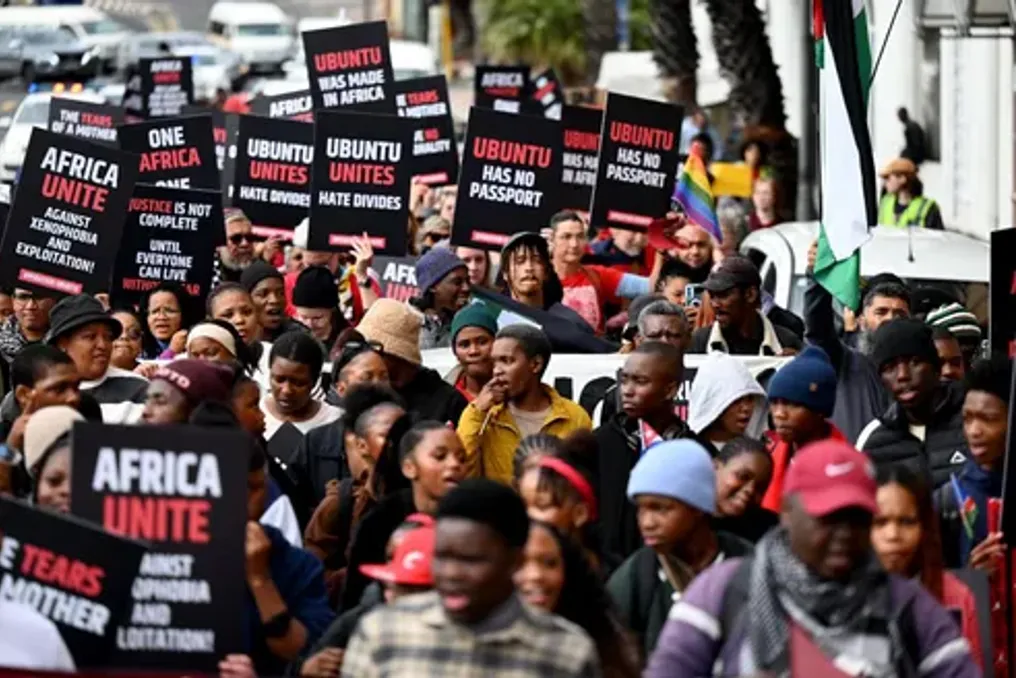
Ubuntu Operation presents demands against xenophobia in Cape Town and Johannesburg

As part of the national and continental day of action against xenophobia, organized by 'Operation Ubuntu' under the slogan 'Africa United', a list of demands was submitted to police representatives in Cape Town and Johannesburg on Saturday.

Organizers stated that the goal of this day of action was to hold the state accountable for its actions, including supporting the formation of vigilante groups. Protests took place in Johannesburg near the Durban City Council, as well as on Hanover Street in Cape Town.

'Operation Ubuntu' explained in the demands memorandum that it unites social organizations, campaigns, and movements from various levels of the struggle. They also presented a list of demands to departments such as the Department of Human Settlements, the Department of Cooperative Governance and Traditional Affairs (Cogta), the Department of Home Affairs, the Department of Education, and SAPS.

The memorandum emphasized: 'We are united in demanding an end to the crisis of xenophobia and broader conditions of deprivation affecting both migrants and South African citizens. Lack of housing, lack of jobs, and limited access to basic services such as healthcare and education are failures in the provision of public services, not the fault of migrant communities.'

The mass action was also a statement of solidarity, rejecting xenophobia and Afrophobia, and a call to protect the most vulnerable segments of society. The main points raised by 'Operation Ubuntu' concerned justice in land and housing issues, as well as preventing the looting of Africa's mineral resources.

The memorandum demanded that the state cease the persecution and deportation of people due to a dysfunctional documentation system that leaves millions without identification. Immediate reintegration of all displaced migrants and an end to inhumane conditions at the Lindela Repatriation Centre were also required.

More than 60 organizations representing communities across and outside South Africa joined under the banner of 'Operation Ubuntu'. A group in Durban held protests in front of the Durban City Council.

'Operation Ubuntu' believes that the creation of a structured high-level oversight system is necessary, one that connects decision-makers with the people they serve. Other topics included health and social rights, climate justice, local government elections in 2026, and international and pan-African solidarity.

In its memorandum addressed to SAPS, 'Operation Ubuntu' demanded the arrest and prosecution of individuals inciting violence and hatred against foreigners. Arrests should include those responsible for incitement on social media in Ekurhuleni, where viral threats using gasoline and torches were spread against the refugee community.

The memorandum also called for the 'investigation and elimination of abuse of intimidation and harassment, including by informal or patrol groups mentioned in Gauteng submissions as amapanyaza against migrant communities and urban dwellers.' Furthermore, they called on the police to arrest drug barons and take measures to stop the trend of mass shootings in communities.

In Johannesburg, at Beyer's Naude Square, 'Operation Ubuntu' demanded that the Department of Human Settlements immediately impose a moratorium on evictions until all South Africans have access to decent housing. Moreover, the adoption of an 'improvement, not eviction' adaptive approach—improving informal settlements and occupied buildings instead of evicting them—was requested.

'Operation Ubuntu' also demanded an immediate two-year moratorium on deportations (voluntary repatriations) to allow African migrants time to process their documents. It was called upon for the Department of Home Affairs to stop penalizing employers and households for hiring undocumented workers, given that the documentation system is flawed and cannot process applications promptly.

Migration crisis in Africa: why South Africa should not bear the burden alone
Read more
iol.co.za

Migration crisis in Africa: why South Africa should not bear the burden alone

The author argues that migration is a problem for all nations, not exclusively a crisis for South Africa. He uses the African proverb: 'When the roof leaks in one house, the rain wets the whole village,' to describe migration as a phenomenon affecting all borders, cities, and countries on the continent and globally.

Accusing South Africa of migration difficulties is viewed by the author as an evasion of examining the true causes of migration. The problem faces all governments—from the Mediterranean to the US-Mexico border, from the Persian Gulf to Europe, from Nairobi to Lagos and Johannesburg—regarding entry control, documentation, and the protection of both citizens and arrivals.

South Africa accepts the largest number of migrants in Africa, which is linked to the fact that after 1994, the country opened its doors to the world, creating an economy, constitution, and institutions that, despite flaws, provide shelter, employment, education, and healthcare. For many people, South Africa becomes a destination.

The author calls for an honest examination of why public outcry on this issue is so strong in one place and so quiet in others. In some parts of North Africa, migration routes are accompanied by horrors documented by IOM, the UN, and international media, including the detention of migrants, human trafficking, beatings, and exploitation, as well as mass expulsions of sub-Saharan Africans into the desert without food or water.

In some Persian Gulf countries, African workers face the 'kafala' system, passport confiscation, and conditions similar to modern slavery. The author emphasizes that this does not justify criminal acts and vigilantism in South Africa, noting that the government firmly condemns such actions and law enforcement agencies are working to apprehend those responsible.

The author criticizes the continent's silence on this discussion, pointing out that when South Africans voice legitimate concerns about crime and strain on social services, the continent responds by labeling it 'Afrophobia' or 'Xenophobia'—terms that have become associated only with South Africa. This, according to the author, is an evasion of responsibility.

South Africa cannot single-handedly bear the weight of the continent's push factors. Responsibility lies with all nations of the world, which must create favorable socio-economic conditions at home—providing jobs, security, governance, and opportunities to reduce illegal migration. If prosperity does not develop where people are born, they will endlessly pursue it at borders.

However, the author acknowledges the challenges faced by host countries like South Africa: overcrowded public clinics, schools, and long housing waiting lists, as well as resource depletion for integrating foreigners. South Africa is likely one of the few African countries that assists undocumented migrants by providing them with services in public hospitals, educating their children, and offering legal protection.

South Africans raise legitimate questions about crimes committed by undocumented migrants that are untraceable and put pressure on communities and services. However, when these concerns are voiced, they are quickly labeled 'xenophobic,' whereas similar phenomena in some of their own countries receive different names, such as 'security operations,' 'urban renewal,' or 'illegal aliens.' The author insists that this is not division, but an expression of democracy—the people's demand to their government.

In 2015, the African Union adopted a resolution to hold a continental conference on migration, which has yet to take place, confirming that this is a continental, not a country-specific, problem. The resolution clearly stated that migration must be managed jointly, with dignity and order. This dialogue occurs too infrequently, and countries remain in cycles of mutual accusation. Key obstacles include documentation, border management, data exchange, job creation, and law enforcement, and they cannot be solved by pointing to one country.

Thus, migration is the rain that falls on us all. We must stop arguing about whose roof is leaking and work together to fix it, because migration is not just a South African problem, but a global challenge requiring a global and African response.

Popular