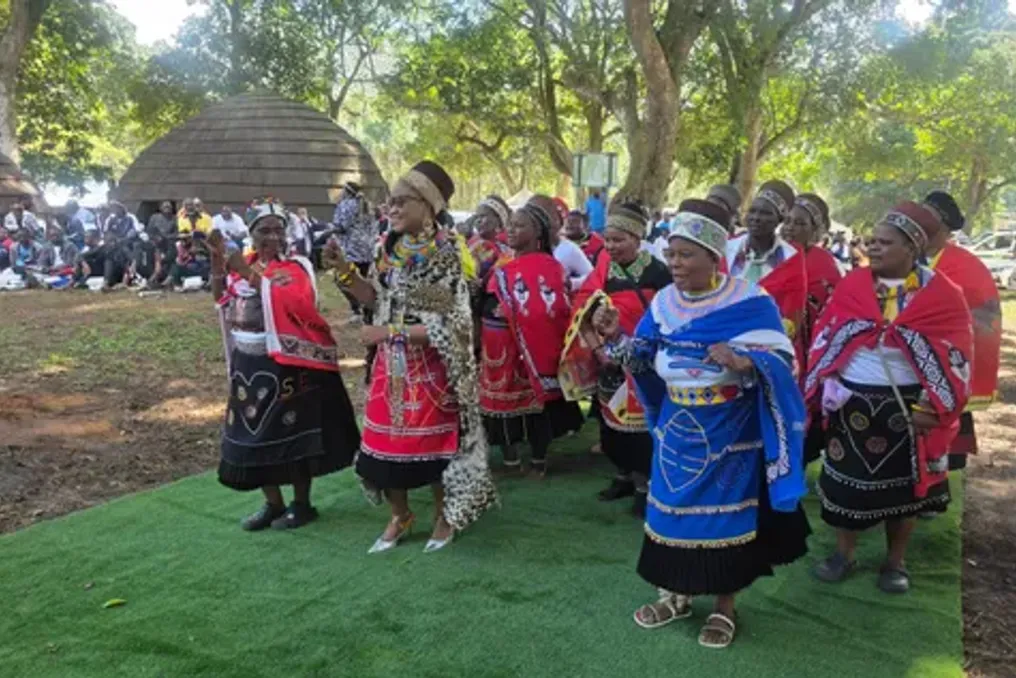
The Nomkhubuluvane Festival holds deep significance in Zulu culture as it unites communities with nature and honors its role in sustaining life. This celebration also provides an opportunity to pray for fertility, abundant harvests, the protection of the natural environment, and the nation from natural disasters. Women dressed in traditional Zulu and Swazi attire participate in the festival, which is organized by the uMfolozi municipality.
Nomkhubuluvane is a traditional Zulu ritual focused on nature, agriculture, fertility, rain, and community well-being. The central figure of the ceremony is uNomkhubuluvane, a female archetype in traditional Zulu cosmology associated with rain, nature, agriculture, and fertility. Traditionally, the ceremony coincides with the transition from winter to the planting season, when communities prepare for the upcoming rains and agricultural year.
Ancient Tradition
Historical records housed at the Alan Paton Centre and the Archives of Struggle at the University of KwaZulu-Natal indicate that the annual Nomkhubuluvane festival was held over two hundred years ago. This practice significantly declined after the spread of Christianity, which contributed to the decrease in the worship of female figures in traditional Zulu religious practices. The festival began to revive in the 1990s, with cultural expert Nomagugu Ngobese becoming one of the key figures in this revival after having a dream in 1994. A revived festival was held in the mid-1990s, during which researchers from the then University of Natal (renamed UKZN) documented the ceremonies and spoke with participants, traditional healers, and elders.
Following this, the revival spread to various communities across KwaZulu-Natal.
Prayer, Planting, and Protection
The festival places great emphasis on the relationship between people and Mother Nature. Participants can pray for rain, good harvests, fertility, prosperity, and protection, and agricultural activities such as cultivating or planting gardens are part of some modern ceremonies. For instance, the 2026 Nomkhubuluvane ceremony, supported by the uMfolozi municipality, included women going out to the fields to till the land and pray for a bountiful harvest and blessings.
How is it different from Reed Dance?
Although both ceremonies involve young women and the preservation of Zulu cultural traditions, their primary objectives differ. Nomkhubuluvane is primarily related to nature, agriculture, fertility, rain, renewal, and community well-being. The Reed Dance (uMkhosi woMhlanga) is mainly associated with unmarried young women, chastity, cultural identity, and presenting the Zulu monarch with reeds. Although these two ceremonies have different histories and cultural goals, modern celebrations may share participants, traditional leadership, and themes of cultural preservation.
For communities that continue to celebrate this festival, Nomkhubuluvane represents an enduring link between culture, spirituality, women, agriculture, and the natural environment.