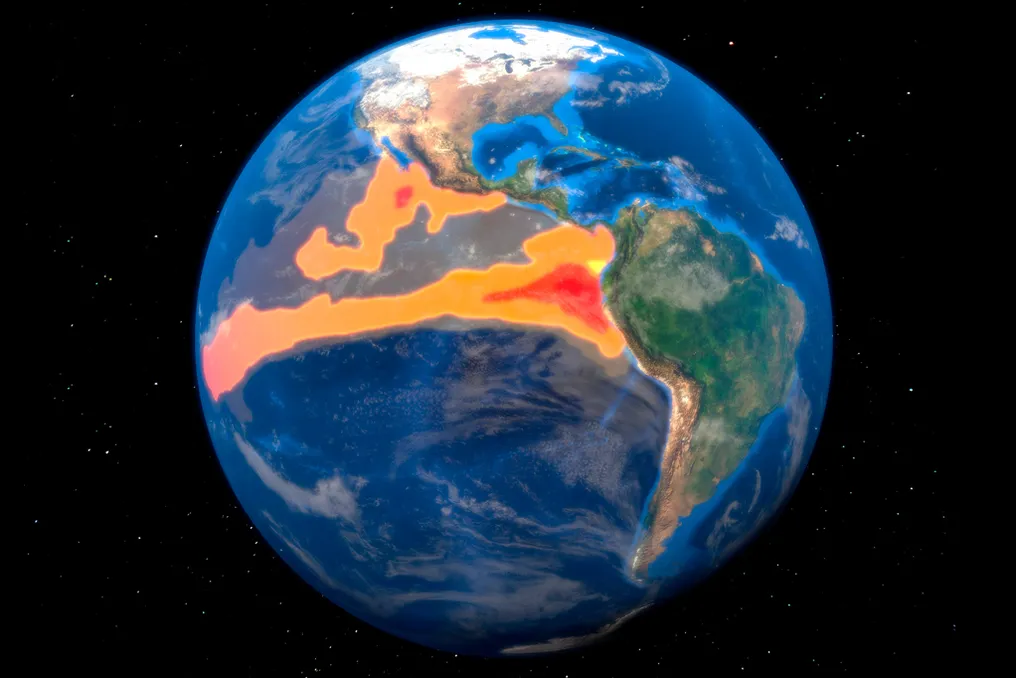
El Niño is one of the most closely monitored climatic phenomena in the world; minor changes in Pacific Ocean water temperatures can alter precipitation, drought, and temperature patterns globally.
Its opposite phase is La Niña, a phenomenon where Pacific Ocean waters cool relative to the average level. While La Niña has occurred more frequently over the decades, the strongest El Niño episodes have left a deeper mark on the global climate. In fact, the intensity of each event is more important than its frequency.
It is important to note that El Niño does not cause the same climate everywhere; it only increases the probability of extreme weather events in different regions of the world.
In Brazil, the consequences of El Niño vary significantly depending on the region. In the south of the country, this phenomenon is usually associated with above-average rainfall, as well as an increased risk of storms and floods. Meanwhile, the north and some parts of the northeast show the opposite pattern: longer periods of drought, which directly affects agriculture and water supply.