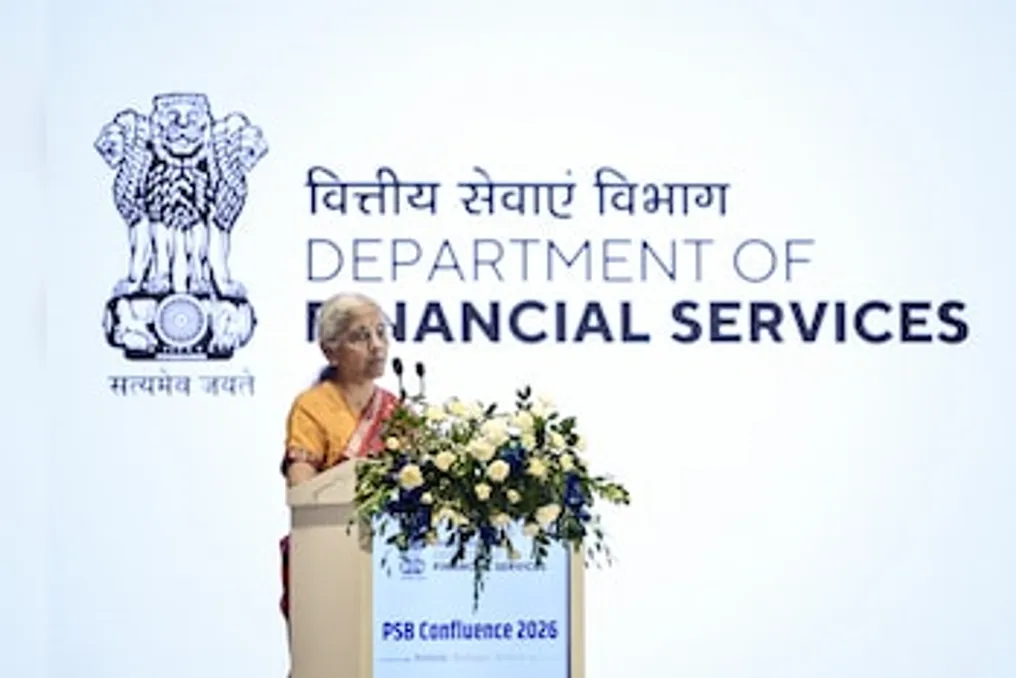
Finance Minister Nirmala Sitharaman on Tuesday appealed to Public Sector Banks (PSBs) to significantly expand lending to farmers cultivating pulses and oilseeds. These measures aim to reduce India's dependence on imports and stimulate the diversification of agricultural crops.
During the closing session of the two-day PSB Confluence brainstorming session, organized by the Department of Financial Services (DFS) in collaboration with heads of public sector banks and Public Financial Institutions (PFIs), Sitharaman emphasized that banks must transform the government's focus on agriculture and food production into 'properly designed and targeted' financing.
She specifically highlighted the need for a substantial increase in loans for farmers engaged in pulses and oilseed cultivation, as this will help decrease India's import dependency, improve soil health, and contribute to achieving Atmanirbharata (self-reliance).
Reducing India's import dependence on pulses and oilseeds is part of the recent government agenda. Previously, Sitharaman announced the launch of the Pulses Mission in the budget for the fiscal year 2025-26 (FY26) with the goal of increasing domestic production of these crops to 350 lakh tonnes and expanding cultivated area to 310 lakh hectares by FY31 to achieve self-sufficiency. In FY26, imports of pulses and oilseeds in India decreased by approximately 35 percent, amounting to $3.65 billion.
Sitharaman suggested that banks align their lending efforts with the Prime Minister's Dhan-Dhaanya Krishi Yojana scheme, especially in areas covered by this scheme. She advised improving the availability of both short-term and long-term credit in these regions to boost productivity, promote crop diversification and sustainable agriculture, and develop irrigation, post-harvest storage, and related infrastructure.
Strengthening the Priority Sector Lending Focus
Furthermore, the Finance Minister asked banks to intensify efforts to meet targets under Priority Sector Lending (PSL). Sitharaman stated: 'I have reviewed the deficit in priority sector lending more than three times. I do not need to receive this deficit again so that I can redistribute it through NABARD or SIDBI or HUDCO. Why don't you (banks) do it yourselves?' she said, adding that 'banks can do more.'
According to Sitharaman, the success of PSL should now be evaluated not only by numerical indicators but also by whether the loans are provided in a timely, adequate, and productive manner. She stressed that PSL should be viewed as an opportunity to deepen formal credit penetration, expand the customer base, create stronger enterprises, and support widespread economic growth.
She also insisted on incorporating climate resilience into agricultural lending by developing credit products that encourage high-yielding and climate-resilient varieties, chemical-free farming methods, water conservation, and micro-irrigation, including drip and sprinkler systems. Sitharaman added that credit products must reflect the crops, climate, water availability, and production conditions of each territory, and DFS should monitor PSL and agricultural lending by banks at a detailed level.
'Banking for Youth' Campaign
The Finance Minister also directed public sector banks to launch a targeted monthly campaign, 'Banking for Youth,' starting October 2nd, aimed at young citizens over 16 years of age. This campaign could be coordinated by DFS and the Indian Banks' Association (IBA). Banks could conduct this campaign in colleges, universities, and training centers by organizing account opening and financial literacy awareness events. Sitharaman also proposed setting up special 'Youth Kiosks' or 'Youth Banking Partners' in branches to assist young customers in adopting banking and credit products.
The IBA could also consider creating a web and mobile-friendly portal that provides youth with information on KYC, banking services, loans, entrepreneurship, education, and training. This portal could also direct users to the nearest PSB branches for opening basic savings deposit accounts. The Minister noted that 'excuse me, but public sector banks still give the impression of being government banks. Private banks are much more attractive. They reach out to the youth, they interact with them.'
Sitharaman emphasized that the youth campaign should be seen as the beginning of long-term banking relationships, not just a one-time account opening. She urged PSBs to build relationships with customers throughout their entire financial lifecycle—from education and employment to entrepreneurship, homeownership, investments, and wealth creation. The Finance Minister concluded that public sector banks, operating from a position of 'significantly greater strength,' must shift from scaling up to enhancing competitiveness and leadership by identifying areas where individual banks possess unique advantages.