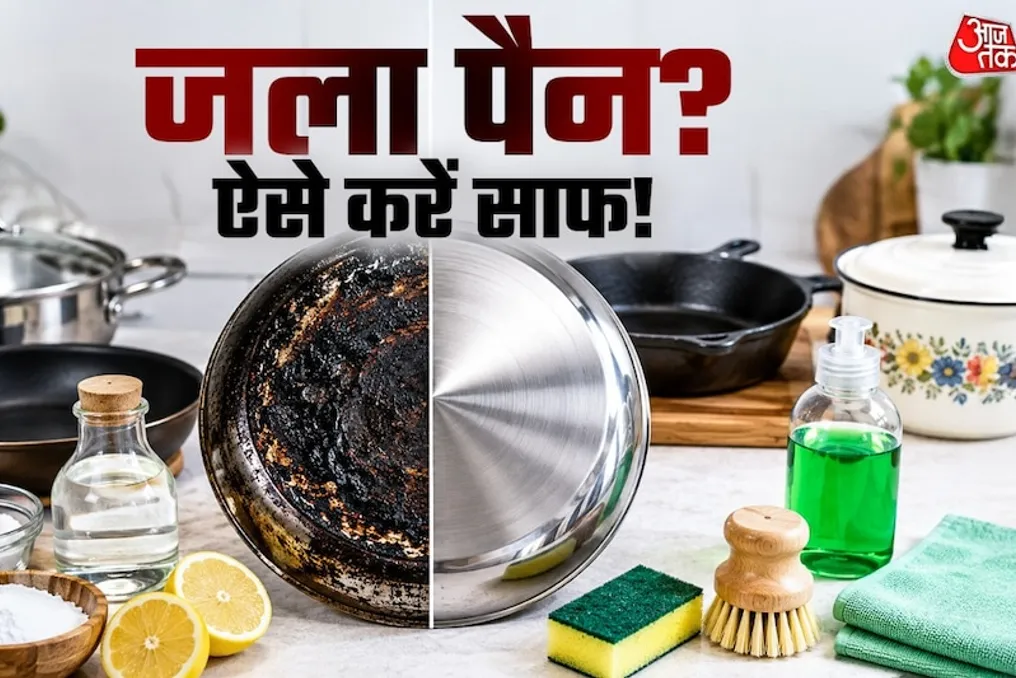
When cooking in the kitchen, it often happens that forgotten items cause pans or pots to burn. Sometimes food sticks so heavily to the bottom that cleaning it takes many hours. In such cases, people tend to consider it a problem and even think about throwing away the dishes, but this is not necessarily true.
According to culinary and cleaning experts, expensive cleaning agents are not required to clean burnt cookware. Using some household items and following the correct washing technique allows you to restore the shine of the pan. However, there is no universal method for all types of dishes.
It is necessary to determine the material of the pan
Before starting to clean burnt cookware, it is crucial to find out what material it is made of. The cleaning methods must differ for stainless steel, non-stick, cast iron, and enameled pans.
Excessive scrubbing on non-stick surfaces can damage their coating, and overly aggressive cleaning of cast iron can lead to the loss of its seasoning.
Cleaning methods depending on the type of dish
Start with baking soda: If the layer of burnt food is not too thick, you can start by using baking soda. To clean such a pan, add a little water and soda, then heat it over low heat. After heating, the burnt product will begin to flake off. Then, after cooling the pan, gently wipe it with a soft sponge. This method is especially effective for stainless steel cookware.
The help of vinegar: For more heavily burnt pans, you can heat equal parts of water and vinegar in them for some time. This helps loosen stuck grease. Afterward, wash and clean thoroughly with a soft sponge; if necessary, you can add baking soda.
What to do with stainless steel pans
If blue, yellow, or dark spots appear on stainless steel after burning, you can use a light cleaning powder. However, excessive amounts of powder or harsh scrubbing should be avoided. Mix a little powder with water to form a paste and gently rub the soiled area.
Important: Do not use intensive cleaning on non-stick pans
If burnt grease appears on non-stick cookware, do not use steel wool or rough scrapers, as this can leave scratches on the coating. In such cases, it is recommended to pour hot water with a small amount of detergent and let it sit for some time. Then, carefully clean with a soft sponge.
Salt is a simple way for cast iron
Cleaning cast iron requires a special approach. To remove burnt food, you can use coarse salt. When the cast iron is slightly heated, sprinkle coarse salt into it and add a little oil, then gently rub. If necessary, the softened dirt can be removed with a wooden spoon or spatula.
Using a metal scraper
If dirt is very heavily stuck to a cast iron pan, a metal scraper can be used. It helps remove the hardened layer and, when used correctly, does not cause much damage to the seasoning. However, it must not be used on non-stick or other fragile surfaces.
Removing stuck food with a wooden spatula
If burnt food has softened with water or soap, instead of scraping it with metal objects, use a wooden spatula or spoon. This minimizes the risk of scratching the surface.
Drying cast iron after washing
Simply washing cast iron cookware is not enough; it is critically important to dry it thoroughly. Any moisture can cause rust. After washing, wipe the cookware with a cloth, and then, if necessary, leave it on low heat to completely evaporate residual moisture. After that, it is useful to apply a thin layer of oil.
Metal mesh is not suitable for all cookware
A common mistake is using a metal mesh or a rough scraper on any burnt cookware. While this may work for durable cast iron items, it can damage non-stick, enameled, or other delicate surfaces. Therefore, the most important thing when cleaning is to first identify the surface and then choose the appropriate cleaning method.