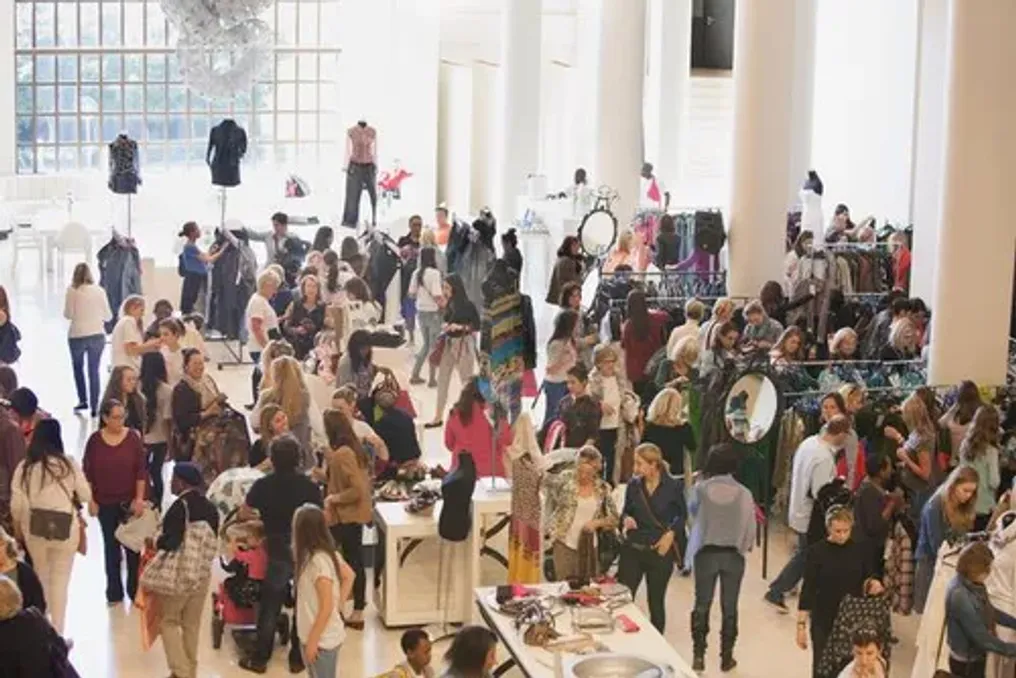
Vintage with Love hosts sustainable fashion week in Cape Town
Read more
IOL
iol.co.za

Vintage with Love hosts sustainable fashion week in Cape Town

In August, Cape Town will become a hub for discussions on sustainable fashion in South Africa with the launch of The Big Week event by the organization Vintage with Love. This initiative marks a new phase in its annual fundraising campaign, merging vintage clothing with social impact.

The event includes the popular Big Sale and an entirely new Big Show, creating a week-long celebration that demonstrates how conscious choices in fashion can drive significant change.

Vintage with Love's Week-Long Event

The Big Show will take place on Thursday, August 20th, at the Cape Town Cruise Terminal in Beluga. This will be followed by the Big Sale from August 27th to 30th, also at the Cape Town Cruise Terminal located in the V&A Waterfront.

Vintage with Love was founded over ten years ago by Lee and Jackie Meyerberg and has evolved from a community-driven initiative into a foundation that raises funds for charities focused on literacy and education across South Africa. The organization collects used clothing, extending its life, and directs the proceeds to fund programs that create educational opportunities and improve literacy.

According to Thalia du Toit, Senior Marketing Manager at Vintage with Love, the idea behind The Big Week is based on the belief that even small actions can have a huge impact. Du Toit noted: 'This year we wanted to take the big thing we do every year and make it even bigger.'

The organization hopes that the expanded event will bring together shoppers, volunteers, donors, partners, and supporters around a shared commitment to sustainable fashion and social transformation. For Vintage with Love, sustainability goes beyond reducing textile waste; by keeping clothes in circulation longer, the initiative encourages consumers to rethink their purchasing habits while generating funds for literacy and education programs.

Fashion with Purpose

The first major event of The Big Week, the Big Show, will combine fashion, entertainment, and fundraising. Starting at 6:00 PM on August 20th, the event will feature a runway show, live performances, food, a welcome drink, and a charity auction. It is organized in partnership with Bridget Pickering from Ruff Tung/Therapy Boutique and will showcase local brands, designers, and creative individuals promoting sustainability in the South African fashion industry.

The Big Show is also intended to create a platform for discussing the future of fashion, highlighting local talent and showing that style and sustainability can coexist. The second phase of the initiative—the Big Sale—returns for the annual shopping event at the Cape Town Cruise Terminal. Shoppers can find thousands of vintage items, with every purchase contributing to Vintage with Love's charitable work. Sales will begin with an exclusive opening on August 27th, followed by August 28th to 30th.

Tracy Butler, CEO of Vintage with Love, believes that The Big Week is ultimately about celebrating the community that has supported the organization over many years. She stated: 'It is a celebration of community, generosity, and a common goal that makes this work possible, and our biggest opportunity right now to raise funds for causes we care about.'

Debbie Smarts, Fundraising Manager at Vintage with Love, emphasized that the significance of the event extends beyond the retail floor. Smarts said: 'Every donated item, every ticket purchased, and every item sold helps fund literacy and education programs that change lives.'

The organization believes that an individual donation or purchase may seem small, but when thousands of people participate, these contributions can transform into tangible support for communities and educational initiatives.

An Alternative Way to Shop

The Big Week takes place as conversations about conscious consumption and the environmental impact of fashion become increasingly relevant. Instead of viewing vintage clothing merely as an affordable alternative to buying new, Vintage with Love positions secondhand fashion as an opportunity to extend the lifespan of items while supporting a social mission. This year's expanded program aims to make this message more visible by uniting fashion, fundraising, and community on one platform.

Tickets for The Big Week are currently available, offering options ranging from access to the Big Show and its runway to the opening of the Big Sale and public shopping days. A Big Show ticket costs 750 Rand, while Big Sale tickets are 50 Rand for Friday, Saturday, and Sunday.
Similar stories

Ubuntu as a Design Foundation: Exploring Cultural Influence in South African Fashion
Read more
10and5.com

Ubuntu as a Design Foundation: Exploring Cultural Influence in South African Fashion

In a guest column, author Tandekile Mkize explores how community, culture, and the sense of belonging are transforming the future of South African fashion, arguing that the concept of Ubuntu could become the next design code for the industry. The author notes that international fashion brands are increasingly creating spaces where fashion intersects with music, art, food, hospitality, and community, as people seek deeper and more meaningful ways of interaction.

Mkize recalls being invited to contribute to the G-Star sponsored series The Art of Style to examine the growing shift of fashion from mere products to experiences. This request proved timely, as the author himself is working on a new project that challenges him to create a people- and culture-centric retail experience for clothing.

Fashion as a Medium of Connection

The fashion industry has become highly eloquent in the language of connection. Concepts such as collaboration, belonging, creative ecosystems, and cultural exchange are discussed. There is a growing realization that consumers are looking for something more than just beautiful things; they are seeking places where they can gather and feel part of something larger.

The brand G-Star embraced this shift by positioning fashion as a tool for cultural exchange. The company uses collaborations with South African creatives to integrate the global denim brand into the local cultural context. Examples include a limited collection with Cape Town artist Russel Abrahams, known as Yay Abe, and the Fuata Moyo (Re)Love exhibition. These events have catalyzed discussions, bringing together artists, designers, cultural figures, and fashion enthusiasts.

The author questions what it would look like if community became not just a campaign or a buzzword, but a design practice. He raises the question: what happens if we move beyond intentions and start designing based on the values we so easily proclaim? South African fashion must ask itself not how it talks about community, but how it designs it.

There is already an established language for understanding relationships and reciprocity—this is Ubuntu. Often reduced to a well-known proverb, Ubuntu is more useful when understood as a way of practice rather than merely a description of community. It prompts us to ask different questions about how fashion is produced and what relationships it allows to be established.

This global shift towards experimental fashion is becoming not just a trend report, but an opportunity to view the role of fashion in our social and cultural lives differently. South African fashion has a chance to offer its own model where community is intentionally designed and sustained.

Lessons from Local Initiatives

The author does not need to invent how this should look, as designers and creative workers across the country are already pointing in this direction. For instance, the Mamakashakain space in Braamfontein, while not exclusively a fashion venue, offers one of the most telling lessons for the industry. In the author's view, Mamakashaka founder Nandi Dlepu understands that culture is shaped through regular gatherings.

Various events can take place in this space: one week might feature a fashion show to introduce young designers, the next might host a lecture or discussion with cultural figures about self-identity or creative practice, and another might host a dance party. People return there because they trust that significant events can happen in the right setting.

Fashion needs to learn from such places. While not every brand needs to become a cultural hub, brands can more consciously create conditions for connection—places where discoveries happen naturally, and belonging develops over time, rather than being promised within an advertising campaign.

The collaboration between Thebe Magugu and Wanda Lephoto titled Everyday Resistance demonstrates another example of this practice. For the author, this is one of the most significant events in South African fashion in recent years. In an industry that often rewards a singular creative vision, Everyday Resistance offers a different approach: solidarity can be a creative force.

The collaboration shows that fashion is enriched when it embraces dialogue. Wanda Lephoto noted that this partnership means a great deal to her because she gets to work with Thebe, whom she loves, respects, and admires, and they are working toward freedom, which is very important to both of them.

If community is a design practice, then one manifestation of this can be how designers support each other. Everyday Resistance serves as a vivid example that solidarity among designers is not only possible but necessary, as meaningful cultural work is created not in isolation, but in interconnectedness.

Designer Onesimo Bam poses a completely different question: who has the right to the fashion experience? His works constantly blur the lines between fashion and everyday life, creating accessible and vibrant encounters. His pieces, from the streets of Langa and Bree Street to the majestic St George's Cathedral, argue that fashion does not lose its value when it leaves exclusive spaces; on the contrary, it gains cultural significance by becoming part of daily life, rather than an object of distant observation.

These examples differ in form and intent, yet they share a common instinct: to bring people together around shared values and cultural participation. They remind us that fashion is most meaningful when it creates conditions for people not just to consume culture, but to actively participate in its creation.

The author is interested in what will happen if we stop viewing these examples as isolated instances of good practice and start seeing them as signs of something bigger. What if designing community becomes more than just ethics adopted by individual designers or creative spaces? What if Ubuntu is adopted as one of the guiding principles for imagining the future of South African fashion?

Perhaps this is the next frontier—the formation of a fashion ecosystem intentionally designed around care and participation.

Popular