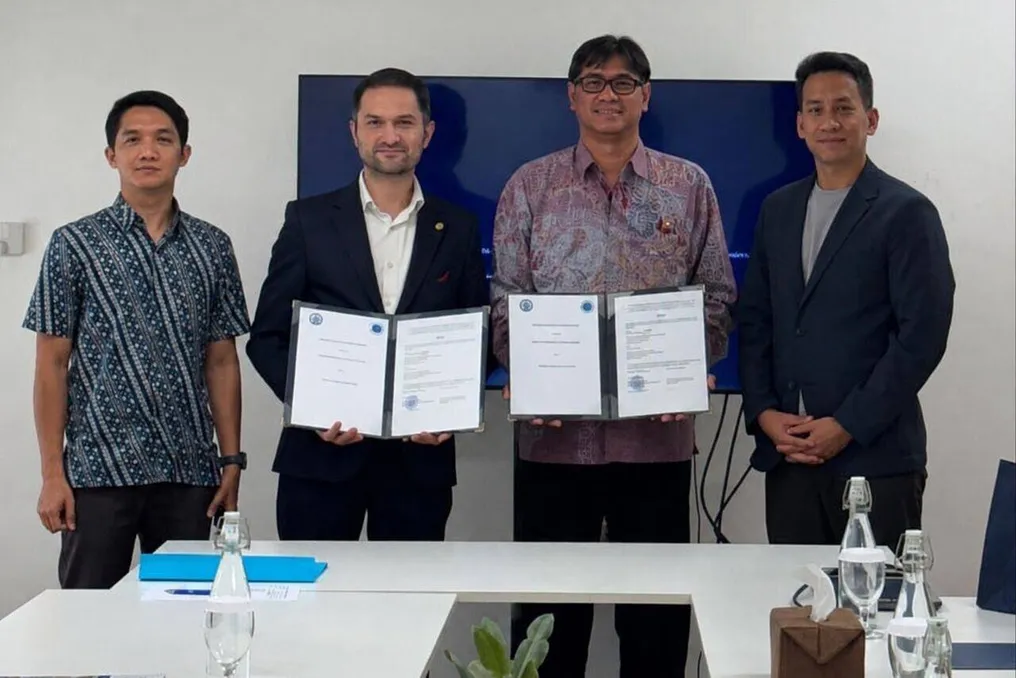
Sharif University of Technology and the Bandung Institute of Technology from Indonesia have signed a Memorandum of Understanding (MOU) to deepen scientific, research, and educational cooperation. This agreement provides for the exchange of faculty, researchers, and students, as well as the implementation of joint research projects.
The main goal of the MOU is to strengthen academic and scientific exchange between the two institutions, as well as to explore opportunities for technological partnership and technology commercialization. According to IRNA, faculties and teaching staff of both universities will be able to determine areas of common scientific interest and work together on specific projects.
The agreement focuses on the exchange of scientific information and resources, holding joint conferences, educational seminars and symposiums, conducting short-term scientific visits, and developing joint curricula and courses. Furthermore, it allows postgraduate students to study abroad, utilize the library funds of partner universities, and conduct field research.
On the sidelines of the 13th BRICS Education Ministers' Meeting, held from August 5 to 7 in Odisha, India, Iran's Acting Minister of Science, Research, and Technology, Masoud Shams-Bakhsh, and Indonesia's Minister of Higher Education, Science, and Technology, Brian Yuliarto, met to discuss ways to develop scientific and technological cooperation.
The parties discussed methods for developing scientific collaborations, with a particular focus on new technologies. Yuliarto elaborated on Indonesia's scientific capabilities, especially in the fields of science, technology, engineering, and mathematics, expressing Jakarta's readiness to implement joint research, faculty and postgraduate exchanges, provide unpaid leave, and organize short-term courses in partnership with Tehran.
The Indonesian official invited Minister of Science, Research, and Technology Hossein Simai-Sarraf and Shams-Bakhsh to visit Indonesia. For his part, Shams-Bakhsh emphasized that the long-standing cultural, historical, and religious ties between the two countries have created a natural, deep, and long-term foundation for expanding educational and research cooperation.
Key areas of negotiation included increasing the number of scholarships, expanding scholarship exchange programs, developing joint educational courses, conducting research on climate change, food security, renewable energy, and agriculture. The parties also discussed including more Iranian universities in the BRICS University Network, drawing on Indonesia's experience, and noted the signing of the MOU for the prompt realization of the agreements reached.
On July 15, the Iranian National Science Foundation (INSF) and the Indonesian National Research and Innovation Agency (BRIN) held a joint webinar titled 'Developing Scientific and Research Cooperation between Iran and Indonesia: Strategic Opportunities Ahead.' The webinar, which began with statements from INSF President Morteza Hormozinejad and Deputy Chairman for Research and Innovation Agus Harino, featured experts and professors from both countries giving lectures on the sectors of health, water security, and environment.
This event provided an important opportunity to advance scientific ties, expand research cooperation, and develop joint projects between Iran and Indonesia. In December 2025, the Indonesian Ambassador to Tehran, Rolliansya Soimirat, stated that the new Indonesian government intends to develop scientific and technological ties with Iran, noting Iran's extensive capabilities in science and technology.
According to Soimirat, 'the administration expects to expand international cooperation, especially in the fields of science and technology, which opens up new opportunities for interaction between the two countries. The main focus of the interaction will be on technology and new development exchange, as well as stimulating technological cooperation,' IRNA quotes Soimirat. He made these remarks during a meeting with Hossein Rouzbakhsh, head of the Organization for the Development of International Cooperation in Science and Technology.
Referring to his visit to the exhibition at the Iran House of Innovation and Technology (iHiT), the ambassador noted that the exposition only demonstrates a part of Iran's potential in science and technology. He added that 'these achievements demonstrate Iran's status in the global ecosystem of science and innovation.' He also highlighted that Iran, with a population of over 90 million, and Indonesia, with a population of about 280 million, represent a large market for technological products and services, which is an important factor for advancing bilateral relations. Expressing approval of the opening of an iHiT branch in Jakarta, Soimirat stated that this center could become the basis for future technological partnerships.