Systemic problems in the financial management of South African municipalities
Read more
IOL
iol.co.za

Systemic problems in the financial management of South African municipalities

People often quickly assign blame for failures but less frequently consider the reasons why the system continues to lead to the same mistakes. The recent decision to suspend equivalent participation transfers for 69 municipalities has sparked legitimate discussions regarding municipal financial management, accountability, and the consequences of being unable to pay creditors.

Municipalities have billions in debt to Eskom, water utilities, and other creditors, while they themselves owe even more to households, businesses, and, in some cases, other state entities. There is also serious concern about what the suspension of equivalent participation means for the provision of basic services.

We tend to characterize inefficient municipalities as corrupt, incompetent, or underfunded. While all these explanations may apply in individual cases, they might be masking something more fundamental. South Africa has created a system where everyone owes money to everyone else, cash flows stop, and ultimately the system itself begins to struggle to function.

The 69 municipalities illustrate this problem. They are owed R217.9 billion, yet they owe R97.4 billion to creditors, mainly Eskom and water utilities. On paper, the municipalities appear to be net creditors worth over R120 billion. However, this apparent position says little about their ability to meet immediate obligations.

Of the R217.9 billion owed to the municipalities, only 4.8% falls within the 30-day payment term, while 72% is older than one year. Nearly 90% exceeds 90 days, and R133.8 billion has already been written off this year as uncollectible. Thus, the balance sheet may show an asset, but most of that asset does not convert into cash.

The obligation remains real. Over R60 billion of the municipalities' debt relates to wholesale electricity and water supply, where creditors cannot indefinitely carry unpaid debt. The money the municipalities expect to receive is often outdated, disputed, or uncollectible, whereas the obligations they must meet are immediate and enforceable. This is why the problem cannot simply be characterized as the municipalities' inability to collect revenue.

Households represent R158 billion, and a significant portion of this reflects social and economic difficulties. But commercial enterprises still owe R46 billion, representing clients who can often pay but are not compelled to do so. More importantly, state bodies themselves owe municipalities R11.6 billion, almost 90% of which is older than 90 days.

The issue is not just that poor households cannot pay their municipal bills. It is also that payment discipline has weakened throughout the entire system, including among institutions that possess the resources and responsibility to pay.

The 30-day payment rule exists for a reason. It is intended to maintain the flow of money through the public sector and prevent a chain reaction of unpaid liabilities that undermines the financial stability of state institutions. However, this discipline has been applied inconsistently for many years. Therefore, suspending equivalent participation funding resolves one point of failure in the system, where the core payment problem is much broader.

Of course, there must be consequences when municipalities fail to pay their creditors. Financial discipline is necessary, and municipalities cannot afford to accumulate debt indefinitely, expecting other parts of government to absorb the consequences. But if national and provincial departments do not adhere to the same 30-day rule, we must question whether we are applying accountability to strengthen the system or merely shifting pressure from one part to another.

This is especially important because public finances differ from private ones. When a private company fails to pay its creditors, the consequences primarily fall on the company and those responsible for its management. In public finance, the consequences can spread much further, reaching people who played no role in creating the financial crisis.

When people hear that the government has suspended funding to municipalities, the instinctive reaction is often that consequences should finally follow poor financial management. This instinct is understandable. But equivalent participation is not just another line item in the municipal budget. It supports the provision of basic services, including free basic water, electricity, sanitation, and waste removal for needy households.

In these 69 municipalities, 3.7 million needy households depend on this funding. The danger is that a sanction intended to correct institutional failure may ultimately be felt by the resident waiting for clean water, electricity, or waste collection, rather than the official whose decisions contributed to the failure.

Given that Eskom and water utilities have debts exceeding R60 billion, the risk of power outages and water restrictions could directly transfer from municipal balances to households. The question is not whether consequences are necessary, but how carefully we monitor where they land.

When payment obligations have accumulated across various sectors of government over many years, stricter enforcement in one part of the system alone cannot restore the system as a whole. The Committee on Finance and Fiscal Policy raised this concern specifically with the government, pointing out that the 30-day payment rule is systemic but violated by others. Encouragingly, there is now movement towards eliminating this asymmetry, as national and provincial departments have been instructed to settle undisputed municipal debt, finalize payment agreements, and resolve disputed accounts.

This is a step in the right direction, as financial discipline cannot be sustainable if it is applied selectively. If municipalities are expected to pay Eskom and water utilities within 30 days, then the national and provincial government must also pay municipalities within 30 days. If consequences are needed to ensure this discipline, they must be capable of applying to the entire system, not concentrated in its weakest point.

The lesson from the 69 municipalities must be broader than just whether municipalities should pay their creditors. Of course, they should. A more important conversation is whether we are willing to admit that the public finance system is interconnected, and that a failure in one part to pay another ultimately creates pressure somewhere else.

A system where municipalities cannot collect what they are owed, cannot pay what they owe, and are then sanctioned for inability to pay, is not a functioning system. Similarly unsustainable is a system where the government demands financial discipline from municipalities while the government itself accumulates billions in unpaid municipal bills.

Thus, South Africa's task is not simply to force municipalities to pay their bills. The task is to restore a culture of payment and accountability across the entire public sector so that money can circulate in the system as intended, and institutions can fulfill obligations upon which other institutions depend.
Similar stories

Water crisis in South Africa characterized by leaking pipes, faulty pumps, and reliance on tankers
Read more
iol.co.za

Water crisis in South Africa characterized by leaking pipes, faulty pumps, and reliance on tankers

The issue of water became a central topic of discussion at conferences and public meetings in South Africa in August 2026. This problem overshadowed the Women's Month theme, which traditionally commemorates the march of over 20,000 women in Pretoria on August 9, 1956, against the adoption of laws.

Residents of the Mpumalanga province presented the challenges they face during public hearings on the proposed amendments to the Municipal Services Act at the Grasskop City Council building. Leon Basson, chairperson of the Water Resources and Sanitation Portfolio Committee, noted that the public hearings aim to resolve long-standing difficulties in South Africa's water supply sector, including unreliable water and sanitation services.

The committee held its first meeting in the Mpumalanga province as part of a nationwide public participation process that took place from August 14 to 16. Basson stated that the proposed amendments are intended to address inadequate management and maintenance of water infrastructure, deteriorating water quality, gaps in accountability, and weak enforcement mechanisms.

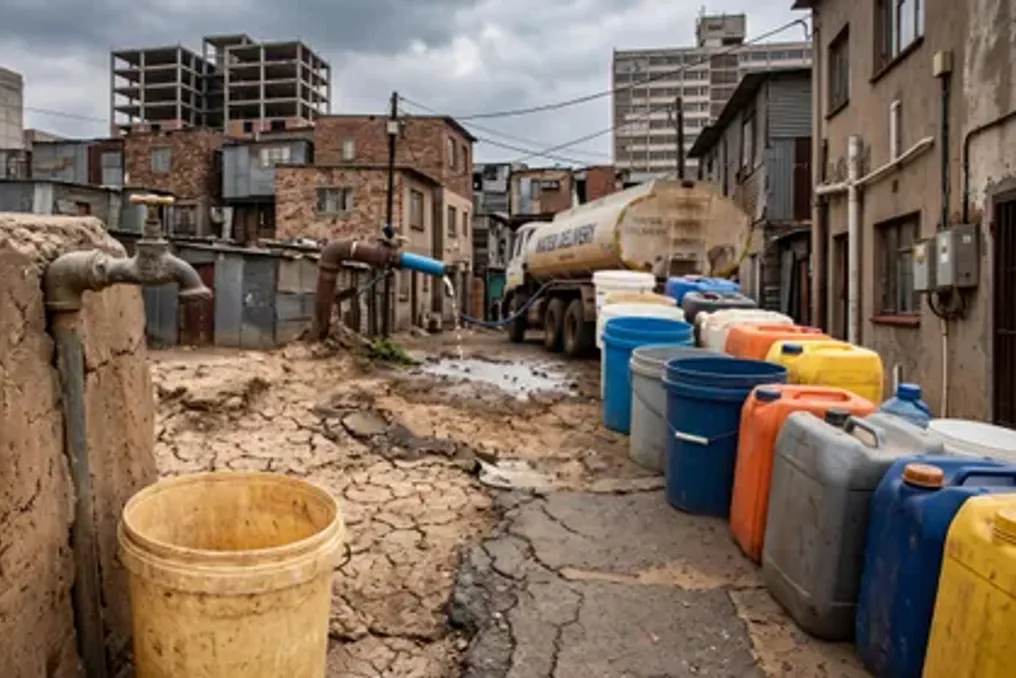
Participants reported receiving water via tankers on weekends, malfunctioning pumps, insufficient number of tankers, pipe leaks, slow project implementation, improperly functioning boreholes, and the disregard of their repeated complaints by government officials.

Attention was also drawn to the Department of Water and Sanitation's (DWS) intention to amend the National Water Act to hold officials personally accountable for service failures and pollution. The South African Local Government Association (Salga) warns that this step may be short-sighted, as it overlooks systemic issues such as historical lags, funding shortages, and aging infrastructure.

The DWS amendment, among other things, proposes adding a section to the Water Services Amendment Bill (WSA Bill) that stipulates the distribution of responsibility and, where possible, the personal liability of firm or company directors.

On Thursday, the DWS held an industry consultation on raw water usage charges for the 2027/2028 financial year in Pretoria. Department representative Visane Mavasa stated that this consultation is an important part of the DWS's annual process for setting raw water usage tariffs.

Mavasa explained that this allows water user sectors to voice concerns, raise issues, and share their views on the proposed charges before they are finally approved and implemented. He added: 'The consultation provides a dedicated platform for representatives of various water user sectors to discuss the proposed charges and related matters, and to present their position before recommendations are finalized and submitted to the Minister of Water and Sanitation for consideration and approval.'

The following organizations presented their positions regarding raw water tariffs: uMngeni-uThukela Water, AgriCulture South Africa (AgriSA), African Farmers' Association of South Africa (AFASA), South African Association for Water User Associations (SAAFWUA), Forestry South Africa (Forestry SA), and South African Local Government Association (SALGA).

On Wednesday, David Makhlobo, Deputy Minister of Water and Sanitation, spoke at the IV International Conference on Water Challenges and Solutions (ICWCS) 2026, held in Richards Bay. The conference gathered scientists, researchers, government representatives, politicians, and industry experts from South Africa and around the world.

Makhlobo sought to frame South Africa's experience within the context of the global water challenge to examine what the world is learning about water security, consider the financing problem, and study interconnected issues of climate change, technology, science, and international cooperation.

He stated that South Africa has allocated over 156 billion rand in government funding for water supply and sanitation infrastructure over the next three years, but state investment alone is insufficient to meet all long-term needs.

Makhlobo emphasized the need to improve planning and project preparation, strengthen institutions, optimize operation and maintenance, reduce losses, improve water quality, enhance municipal capacity, and seek additional capital sources. He also noted that water reuse can reduce the strain on freshwater sources, advanced treatment can support industrial needs, resource restoration can generate economic value, and better wastewater management protects rivers, groundwater, estuaries, and oceans.

He added that digital transformation of water systems should not replace institutional transformation. In his words, a municipality cannot solve management problems simply by buying new software, and a water utility cannot solve maintenance problems just by installing sensors, and the country cannot solve the skilled labor shortage just by importing technology.

Makhlobo concluded: 'We need people who understand the science, institutions capable of applying it, and systems that turn data into solutions. Let us build water systems that are climate-resilient, financially viable, technologically intelligent, environmentally responsible, and socially equitable.'

The death of Selani Zungu (39) in Adams Mission, south of Durban, who was hit by a water tanker, was a subject of discussion concerning tankers, 'tanker mafias,' and allegations that some municipal workers sell water in certain communities. Several organizations criticized this practice, stating that communities should not depend on tankers for water supply.

Transformation of Municipalities into Engines of South Africa's Economic Growth
Read more
iol.co.za

Transformation of Municipalities into Engines of South Africa's Economic Growth

Ahead of the local government elections on November 4, 2026, South Africa faces a fundamental question: what type of municipalities are needed for the country's next stage of development? The authors argue that the mission of municipalities extends far beyond waste collection, road repair, or permit administration; they must become an active developing state at the local level, acting as an engine for investment, production, employment, and social transformation.

This is particularly relevant as South Africa urgently needs to boost economic growth, fixed investments, and job creation. Globally, cities already account for about 80% of GDP and 88% of private sector job creation, meaning municipalities cannot exist in isolation from the national economic project.

Five Pillars of the New Developing Municipality

After November 4, economic development must become an integral part of local self-government's DNA, based on five core principles. The first is financial transformation. Municipalities must stop viewing themselves solely as recipients of targeted grants, equitable allocations, and other fiscal transfers from the state. While state support will remain necessary, especially for poor municipalities with limited tax bases, it is critical to avoid fostering a culture of dependency.

A developing municipality must ask questions about existing economic assets, methods for their development, and ways to expand its own revenue base. International experience demonstrates the effectiveness of such measures: municipal programs supported by the World Bank in Ethiopia doubled local revenues from $68 million in FY 2020 to $156 million in FY 2023. Meanwhile, participating Ugandan municipalities recorded a cumulative increase in own-source revenues of 83%, while Ghanaian municipalities involved in the secondary cities program achieved an increase of 148%.

South African municipalities should similarly innovate regarding municipal property, development levies, properly managed municipal structures, infrastructure partnerships, land value capture, investment partnerships, and, where financially viable, access to responsible long-term capital. The goal is for the municipality to cease being merely a consumer of public funds and become a producer of local economic value.

Secondly, every municipality must treat investment as its core business. An investor wishing to build a factory should not have to spend eighteen months moving between municipal departments to obtain planning permits, electricity connections, water supply, environmental approvals, and building licenses. Municipal 'war rooms' for investment are needed, capable of guiding strategic projects from conception to operation.

The example of Shenzhen in Southern China is cited, whose transformation serves as a prime example of urban economic restructuring. The government acquired land for industrial development, adjusted land relations to attract industry, and invested in supporting infrastructure such as roads and water supply. Municipalities must understand the economic value of speed, infrastructure, planning certainty, and institutional coordination.

Each municipality must know its comparative advantage: Buffalo City must understand its potential in automotive manufacturing and ocean economy, while Nelson Mandela Bay should leverage its ports, production base, and industrial infrastructure. Johannesburg must strengthen its position as Africa's great commercial metropolis. Rural municipalities should seek opportunities in agriculture, tourism, renewable energy, agro-processing, and logistics. Economic development should not be confined to one under-resourced local government department; it must become the responsibility of the entire municipal administration.

The third point is that municipalities must declare war on unemployment. Every mayor must know the unemployment rate in their municipality with the same urgency as they know the state of the municipal budget. Local government must actively create local economic ecosystems around enterprises in settlements, cooperatives, informal traders, tourism businesses, small and medium-sized manufacturers, tech companies, and young entrepreneurs.

Barcelona offers a telling lesson: its district economic development plans are specifically targeted at areas with weaker socio-economic indicators, integrating employment, business development, markets, social economy, and neighborhood revitalization. For instance, Barcelona's Sants-Montjuïc District Economic Development Plan for 2024–2027 includes four strategic pillars, 15 objectives, and 39 actions, including increasing employment and strengthening the local socio-economic structure. This is the kind of thinking required.

Municipal procurement itself must become a tool for productive localization within the Constitution and procurement legislation, helping viable local businesses enter sustainable value chains rather than creating tender intermediaries linked to political connections. The task is to transform settlements into productive economies, not permanent unemployment dormitories.

The fourth aspect is that municipalities must recognize urban food insecurity as a development emergency. Hunger is no longer exclusively a rural issue. Studies of the Cape Town food system revealed alarmingly high levels of urban food insecurity, exacerbated by spatial inequality. Researchers from the University of Cape Town argue that the central problem often lies not in the absence of food in the system, but in the inability of poor residents to access nutritious food due to income, distance, and transport costs.

This requires a new municipal response. Every municipality must identify unused municipal land that can support community gardens, commercial urban farming, food cooperatives, and youth agricultural enterprises. Municipal fresh produce markets must be modernized and more purposefully linked to emerging farmers. Barcelona has already implemented the Urban Agriculture Strategy until 2030, integrating agriculture, ecological sustainability, and citizen participation in urban planning. Its network of municipal markets is viewed not just as retail infrastructure, but as a driver for district economic development, employment, and access to fresh food. Similar thinking can be applied in Soweto, Mdantsane, Haielitsha, Maserveille, Thembis, and Umlazi.

Urban agriculture alone will not eliminate hunger, but combined with functioning food markets, logistics, social protection, and employment, it can become part of a comprehensive municipal food security economy.

Finally, none of this will happen without competent institutions. A developing municipality needs engineers, economists, planners, accountants, investment specialists, project managers, and qualified municipal leaders. Political leadership must set the direction without undermining professional administration.

Medellín in Colombia provided an important lesson: its municipal leadership revived long-term strategic planning at the metropolitan level, developed mechanisms like the Quality of Life Index to track poverty, and deliberately built an internal analytical base, including scenario planning and city-level economic analysis. Municipalities also need economic intelligence. Every council must know what its economy produces, where investments are happening, which sectors are declining, where jobs are being created, where poverty is concentrated, and what infrastructural constraints are hindering private investment.

Thus, Integrated Municipal Development Plans must become genuine programs of economic transformation, not merely voluminous compliance documents prepared primarily to satisfy legislative requirements. The municipality is where the citizen meets the state; it is where the entrepreneur opens a business, where the worker seeks employment, where the child needs water and sanitation, where the investor demands electricity, and where the hungry household seeks affordable food. Consequently, the battle for South Africa's economic recovery will ultimately be won or lost partially in our municipalities.

Water crisis observed in Durban: districts face severe water shortage
Read more
iol.co.za

Water crisis observed in Durban: districts face severe water shortage

Significant parts of the city of Durban are experiencing prolonged water shortages, forcing residents to rely on water tankers. The most affected areas are the western and southern parts of the city.

City advisor Tabani Ndlovu reported that in the southern districts, such as Umbumbulu, Folweni, Mfumme, eKhahleni, and Umgababa, residents have lived for years without access to water and are heavily dependent on cisterns. He noted that in central areas, water may appear for a day or two before disappearing again. In places like Umlazi and parts of Ntuzuma, water is available, but frequent interruptions can last for several days.

The municipality presented information on steps being taken to resolve the water supply issues. Work on modernizing the R1.2 billion Southern Aqueduct in Chatsworth has been announced. Upon completion, the construction of a 24-kilometer main pipeline will significantly improve and stabilize water supply in the city's southern districts.

Furthermore, the modernization of the Ogunjini Water Treatment Plant will increase water availability for approximately 3,000 households in Ogunjini, including Osindisweni Hospital. Mduduzi Nkosi, head of the trade services department overseeing water supply, confirmed the existence of difficulties but assured that work is underway to resolve the problem.

Nkosi explained that the southern aqueduct required replacement due to its age and potential danger to residents; a leak could damage homes. This single pipeline supplies nearly one million people, and after commissioning, expected by the end of the year, pressure on the supply system will ease.

The scale of the water problems was highlighted by the Department of Cooperation and Traditional Affairs, which announced the dispatch of water tankers to seven municipalities in the province. It was reported that yesterday, Minister of Water and Sanitation Tulasize Butelezi held a meeting with district mayors at the Department of Water and Sanitation offices in Durban. At this strategic meeting, an operational plan was approved to deploy over 20 provincial water tankers to provide immediate assistance to communities suffering from acute water shortages.

The targeted intervention aims to support seven key district municipalities that are currently facing serious service delivery constraints: eMbe District Municipality, uGu District Municipality, Amajuba District Municipality, uThukela District Municipality, Zululand District Municipality, uMzinyathi District Municipality, and uMkhanyakude District Municipality.

Popular