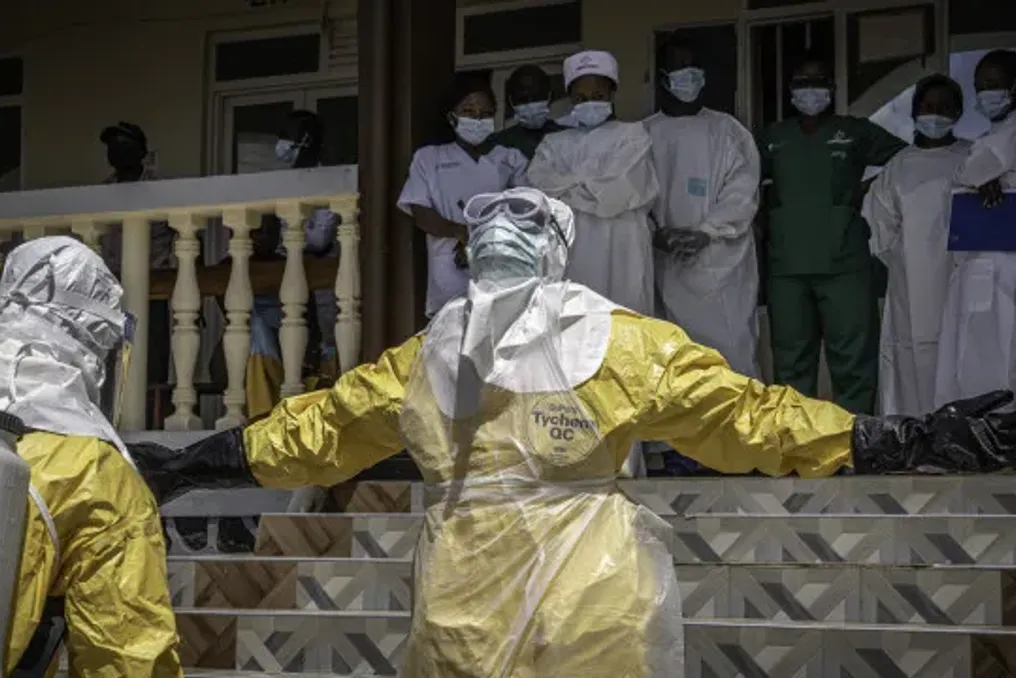
The European Commission is donating diagnostic tests to the African Centre for Disease Control and Prevention to assist in controlling Ebola in the Democratic Republic of Congo, with the first shipments expected this month.
Additionally, the community executive announced that a new agreement is being drawn up in partnership with the World Health Organization (WHO) to ensure the supply of more tests.
European Commissioner for Crisis Management, Hadja Lahbib, highlighted that this assistance was determined after her visit to the Ituri province in the Democratic Republic of Congo. During this visit, she received urgent reports about the need to strengthen and expedite Ebola diagnostic capacity.
Lahbib emphasized the importance of these tests during an Ebola outbreak, stating that they will contribute to the early identification of cases, allowing for the rapid referral of patients for medical care and helping to prevent wider spread of the virus.
According to data from the European Centre for Disease Prevention and Control, the Ebola epidemic in the Democratic Republic of Congo has already resulted in 1,489 deaths and accounts for 3,381 confirmed cases. Furthermore, 20 confirmed cases and two deaths have been recorded in Uganda.
The community executive also mentioned that it has already allocated a total of 493 million euros in emergency aid, vaccines, and treatments for the Great Lakes region and Uganda.
Recent WHO information indicates that the Ebola virus began circulating in eastern Democratic Republic of Congo in February, although research published in the journal 'Science' at the end of July suggested that the first infections might have occurred as early as January.
After the declaration of the epidemic in Ituri, the virus spread to neighboring Uganda. Uganda declared itself Ebola-free on July 28, after recording 20 confirmed cases, 15 of which were classified as imported from the Democratic Republic of Congo, including two fatalities.
This epidemic is linked to the Bundibugyo strain, which has a fatality rate ranging between 30% and 50%. The WHO stresses that there is no approved vaccine or specific treatment for this strain.
The Ebola virus is transmitted through direct contact with the body fluids of infected people or animals and causes a severe hemorrhagic fever accompanied by vomiting, diarrhea, and internal bleeding.