The Contradiction of Women's Month: Celebrating Achievements Amidst Women's Fear of Violence
Read more
IOL
iol.co.za

The Contradiction of Women's Month: Celebrating Achievements Amidst Women's Fear of Violence

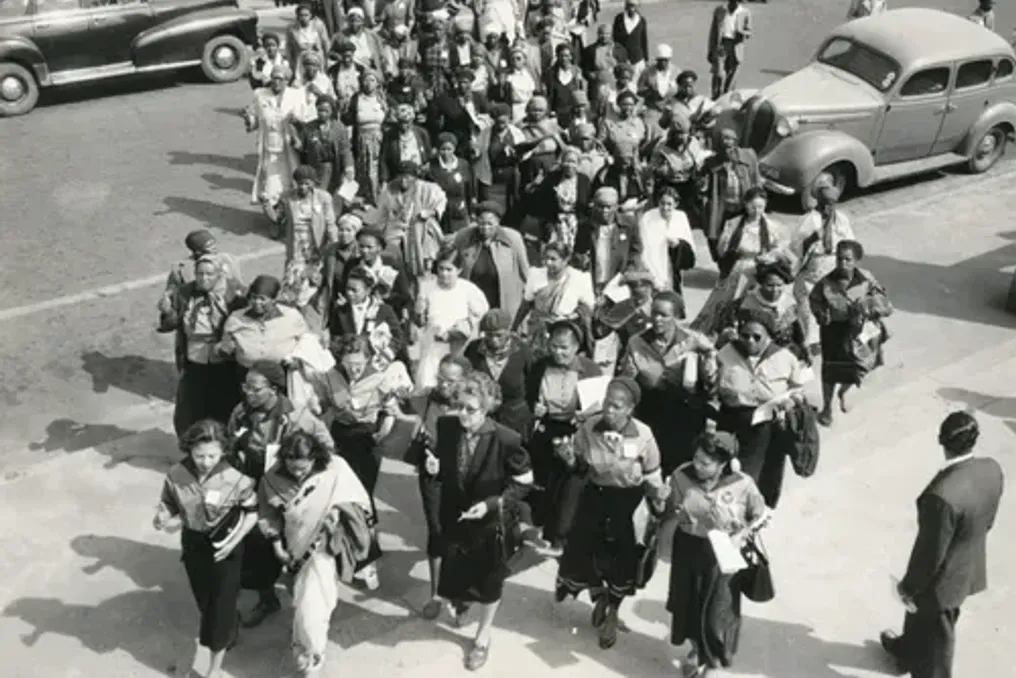
Every August in South Africa is Women's Month. During this period, the courage of women who marched to the Union building in 1956 is remembered. Topics such as dignity, equality, empowerment, and the indispensable contribution of women to the country's development are discussed. Government departments hold events, deliver speeches, and launch campaigns, praising women as mothers, leaders, professionals, workers, and builders of the nation.

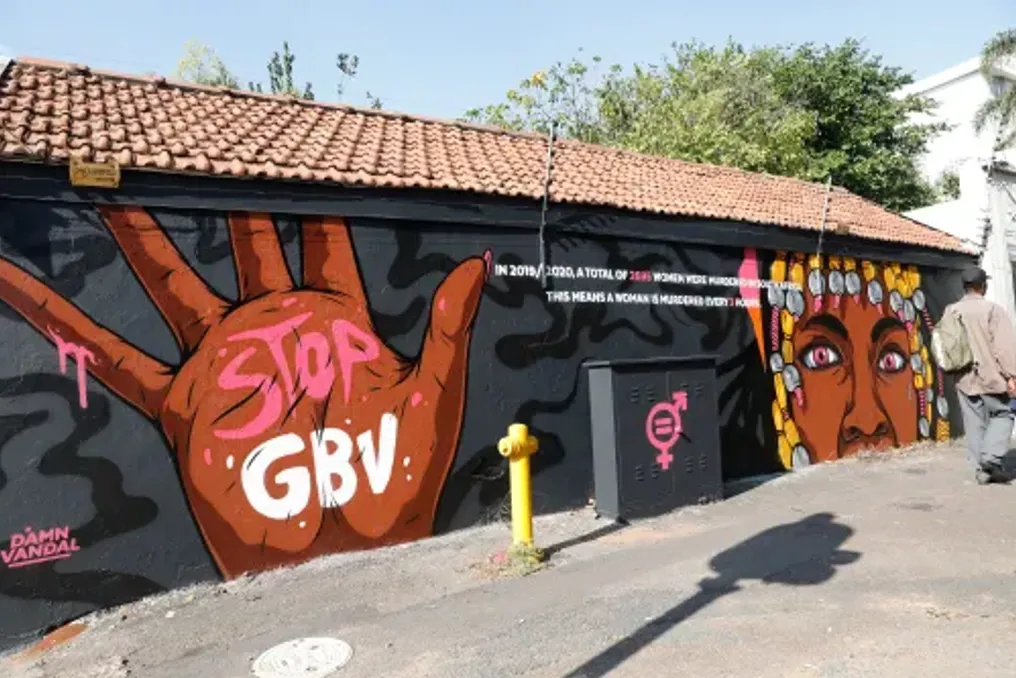
However, beneath these celebrations lies a deep and troubling contradiction: how can the country be proud of its women if so many of them are forced to live in constant fear of violence? Gender-based violence and femicide remain among the most painful problems in South African society. Women are subjected to attacks, violence, rape, and murder, often by acquaintances and in places where they should feel completely safe.

This is the terrible contradiction of Women's Month: women are publicly honored while too many of them are dehumanized in private life.

We Are Not Without Laws

South Africa cannot deny the existence of the problem, as there are legislative acts in the country concerning domestic violence and sexual crimes. The legal framework has been repeatedly strengthened: additional laws were passed in 2022 to enhance the fight against gender-based violence, including amendments to domestic violence and sexual crime legislation. Then, in 2024, the National Council on Gender-Based Violence and Femicide Act was adopted, whose goal includes strategic guidance, coordination, monitoring, and national commitment to creating a society free from GBV and femicide.

There is a National Strategic Plan, specialized police units, as well as victim-centered institutions and programs. According to the government, at the end of 2025, SAPS had 176 family violence, child protection, and sexual investigation units nationwide and 1161 dedicated victim-centered rooms in police stations and other locations. These measures are important steps and deserve recognition.

But they raise a fundamental question: if laws exist, policies are adopted, institutions function, and promises are made—why do so many women still not feel safe? The problem is no longer the existence of legislation in South Africa; it is the state's ability to translate laws into real protection.

The Gap Between Law and Life

A law passed in Parliament does not protect a woman until it works on the streets, in police stations, in courts, and critically, before violence occurs. A strategy is meaningless for a woman who fears the person waiting for her at home. Policy documents cannot comfort a family that has lost a daughter. A campaign slogan cannot replace effective policing, investigation, prosecution, and prevention.

Indeed, Parliament itself acknowledged as recently as June 2026 that despite South Africa's legislative and strategic framework, the rate of GBV remains high, and gaps in effective implementation and accountability continue to hinder the full realization of women's rights. This acknowledgment is at the heart of the problem.

South Africa does not suffer from a lack of promises to women; it suffers from the inability to make those promises a reality.

It Is Also Linked to Dehumanization

However, government failure alone is not enough to explain gender-based violence. Society must also look at itself. It is profoundly wrong when any man views a woman as an object for possession, domination, control, abuse, or discarding. A woman is not an object. She is not anyone's property. She is no less human because of physical vulnerability to a stronger person.

No relationship—be it marriage, partnership, or family—grants ownership over another person. Violence against women begins with the dehumanization of women. It begins when dignity disappears, when control is masked as love, when intimidation becomes the norm, when communities know about the violence occurring but remain silent, when boys grow into men without internalizing that strength is not dominance, and masculinity is not a right to anything.

We cannot legislate respect into the human heart. Therefore, families, schools, religious institutions, communities, and men themselves bear responsibility alongside the state. Men cannot stand aside from this crisis as mere spectators.

Women's Month Must Mean More

This is why August must cause us discomfort.

Women's Month must certainly celebrate the outstanding achievements of South African women. But celebration without ensuring protection risks becoming mere symbolism. Flowers, speeches, posters, and hashtags are insufficient.

The greatest tribute the country can pay its women is to create a society in which they can live without fear. A woman must be able to walk to her car without constantly looking over her shoulder. She must feel safe at work, on public transport, in her community, and above all, in her own home.

The State's Same Failure

This relates to a much broader issue in South Africa. A state that cannot protect its citizens from violent crime will inevitably struggle to protect its most vulnerable citizens. Women feel this failure with particular cruelty.

The government does not commit every act of gender-based violence, just as it does not commit every murder or robbery. The perpetrator remains responsible, but the government is responsible for creating a criminal justice system where criminals understand the consequences of violence. It must ensure that reports are taken seriously, investigations are conducted competently, evidence is processed properly, survivors are treated with dignity, and cases are effectively prosecuted.

Law without effective protection risks becoming a promise on paper, and a law without implementation is nothing more than an expression of good intentions.

What Does It Mean to Celebrate Women?

Perhaps this Women's Month we should ask fewer ceremonial questions and one deeply simple one: are South African women safer? Not: how many speeches were given? Not: how many campaigns were launched? Not: how many policies were announced? But: are women safer?

Can a daughter go out without parents fearing for her return? Can a woman leave an abusive relationship knowing the system will protect her? Can she report violence without humiliation or indifference? Can she be sure that the person who harmed her will face serious consequences?

As long as we cannot consistently answer these questions affirmatively, our celebration remains incomplete.

From Celebration to Accountability

South African women do not need another month where they are symbolically elevated only to be returned to the same dangerous reality on September 1st. They deserve protection 365 days a year. They deserve a state that matches its legislation with implementation. They deserve police services equipped with resources, training, and personnel for effective response. They deserve functioning investigations and judicial processes. They deserve communities that refuse to protect criminals through silence. And they deserve men who recognize that women's dignity is non-negotiable.

Thus, the fight against gender-based violence belongs to the government, the criminal justice system, and society itself. However, the government bears a special responsibility, as we have entrusted it with the power and resources of the state.

The True Measure of Women's Month

The women of 1956 did not march so that generations later women could possess constitutional equality on paper while living in fear in practice. Their courage demands more from us.

Women's Month must become more than just a commemoration. It must become a month of accountability. We must ask every department, every police service, every political leader, and every community: what have you actually done to make women safer?

Because ultimately, the measure of a society is not how beautifully it speaks about its women, but how fiercely it defends their dignity. The country cannot claim honor for women while tolerating their dehumanization. It cannot celebrate their achievements while accepting violence against them as an almost constant feature of society. And the government cannot constantly point to legislation as proof of success when women continue to fear for their safety.

South Africa has said enough about protecting women. It is time to make protection a practical reality. Not just during Women's Month, not just when another tragedy captures the nation's attention, not just when politicians stand at the podium. Every day. In every community. For every woman. Because women deserve not just celebration—they deserve safety.

Similar stories

African Women: Vulnerability in the Face of Crises, Conflicts, and Systemic Poverty
Read more
iol.co.za

African Women: Vulnerability in the Face of Crises, Conflicts, and Systemic Poverty

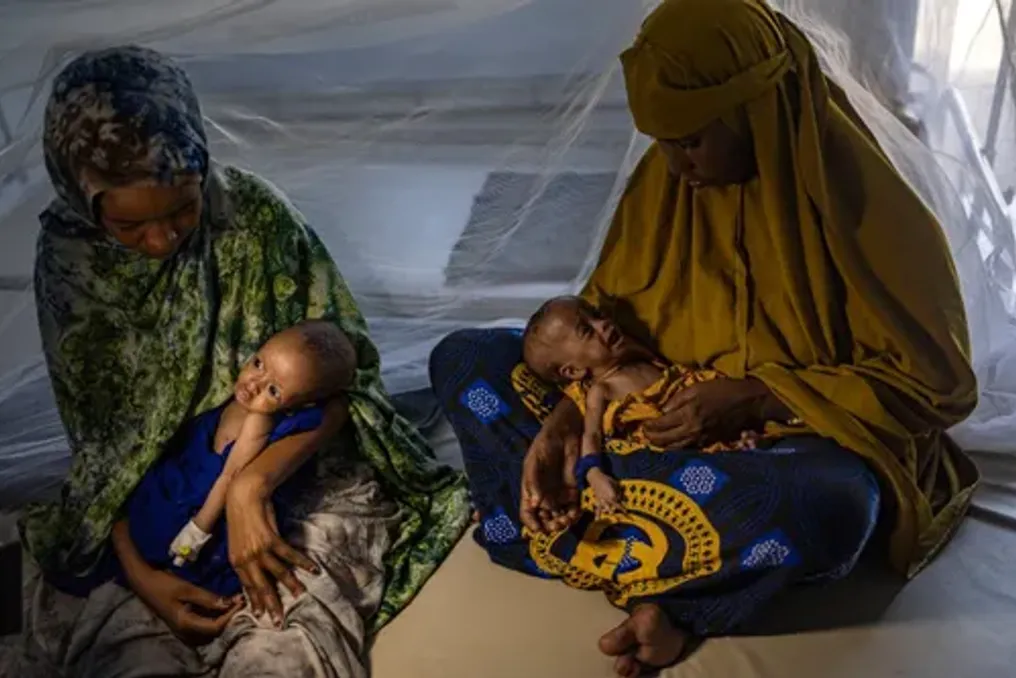
According to the author, women and girls across Africa remain in a difficult situation caused by a combination of armed conflicts, forced displacement, food shortages, climate shocks, and deep systemic poverty.

The Dialogue in Bujumbura discussed the role of women and youth in conflict prevention, crisis management, peacebuilding, and resource allocation. This three-day gathering was held under the theme 'Water, Peace, and Inclusive Leadership in Africa.'

The author emphasizes that every major crisis on the continent has a gendered nature. Girls bear the greatest losses: when families flee due to conflicts, they are at high risk of sexual exploitation; during food scarcity, they are often pulled out of school or married off prematurely; and when water sources dry up, young girls are forced to travel long and dangerous distances to obtain it.

Violence does not cease after wars end. Poverty, displacement, patriarchy, and structural isolation continue to worsen the lives of millions of women and girls even long after hostilities have ceased. The female body has become a battlefield both during and in peacetime.

Dialogue in Bujumbura

More than three years of continuous conflict in Sudan have led to horrific consequences. The UN Human Rights Office confirmed 546 cases of conflict-related sexual violence between April 2023 and mid-April 2026. Two hundred eighty-four girls were affected by this violence, some as young as nine years old. Women and girls have been victims of rape, gang rape, sexual slavery, and forced marriage.

In the Democratic Republic of Congo, UNICEF recorded over 35,000 cases of sexual violence against children in the first nine months of 2025. Anna Mutavati from the UN Women states that such attacks on women and children are not merely residual effects of war but deliberate tools used for intimidation and control.

The African Union is holding its Fifth Continental Dialogue on Youth, Peace and Security, as well as Women, Peace and Security, which is key in this context. Water is viewed as an issue related to peace, security, and gender, as the burden of providing water in households across most of Africa falls predominantly on women and girls when water security confronts conflict, poverty, and displacement.

The continent has several legal frameworks, including the Women, Peace and Security agenda, the Maputo Protocol, and the African Union Convention on Preventing and Combating Violence Against Women, which affirm women's right to peace, participation in conflict prevention and resolution, and protection from war. Despite all impressive declarations and measures, women remain sidelined, excluded from key decision-making, and unprotected from violence.

The AU Envoy on Women, Peace and Security, Ambassador Liberata Mulamula, insisted on the necessity of women's participation and protection, warning that Africa cannot afford to exclude 'half of humanity from decisions shaping the future of nations,' and cautioned against empty symbolism.

The author notes that peace processes that do not pay due attention to women are structurally flawed and inevitably reproduce the same patterns of exclusion and violence. Women must have the authority to make decisions in peace processes, water resource management, and climate change adaptation.

A strategic necessity is significant and sustainable funding for organizations led by women. Accountability for conflict-related sexual violence must move from mere condemnation to real consequences. While the Dialogue in Bujumbura, like many other initiatives, may invigorate institutional commitments, it may not lead to a complete change in gender relations of power and protection. A girl whose present and future are distorted by a war she did not start will likely remain vulnerable and unprotected.

Nevertheless, while loud statements are made in towers of privilege, Africa lacks another declaration on the importance of women's lives. It needs leaders willing to treat this statement as mandatory, ensuring it through concrete budgets, measurable mandates, and redistribution of power. This commitment must be based on a political decision to make the cost of harming women higher than the cost of protecting them.

On International Women's Day, Mulamula stated: 'No culture, religion, government, or ideology can justify reducing women to lower beings. Women's freedom is indivisible.'

The women of 1956 did not wait for permission; they organized, marched, and confronted the state. This could be the most viable option if states and continental bodies continue to ensure the full safety and participation of women.

Activists criticize observance of Women's Month in South Africa amid ongoing violence against women
Read more
iol.co.za

Activists criticize observance of Women's Month in South Africa amid ongoing violence against women

As Women's Month is celebrated in South Africa, activists state that there is little to celebrate because women continue to face gender-based violence, femicide, poverty, and insecurity, nearly nine months after gender-based violence was classified as a national disaster.

The organization Abahlali baseMjondolo emphasized that poor women, especially those living in slum camps, are forced to support their families independently despite the lack of adequate housing, basic services, and a sense of security. The organization stated: 'This is not a month of celebration. No woman in South Africa is free. All women are at risk of violence. Poor women remain deeply oppressed.'

Abahlali reported that women in informal settlements can be in danger simply trying to access basic services, with some having to go to communal taps after dark. The movement noted that 'for millions of poor women in shacks, tin houses, and backyards, every day is a struggle for survival.'

Sabrina Walter, founder of Women For Change, also criticized the government's response to gender-based violence, noting that the urgency promised to women upon declaring a national disaster on December 19, 2025, has not led to tangible action. Walter stated: 'Nine months. Nine months since South African women were promised urgency. Nine months since families believed that perhaps finally, women and children would receive attention.'

She added that Women For Change had received no significant public updates on what had been implemented since the disaster declaration, with the only national acknowledgment being a 27-second mention during the State Address. Walter's concern intensified after visiting the national conference on gender-based violence, which was supposed to be opened by the Minister of Women, Youth, and Persons with Disabilities. 'She never showed up, and I couldn't help but wonder: if the minister responsible for leading the response to a national disaster cannot even speak to those working on the front lines, then where are we as a country?' she said.

These statements came as Abahlali uses Women's Month to honor the memory of activists killed while fighting for land, housing, justice, and dignity. Among them is 17-year-old Ngobile Nzusa, who was killed by a police officer during a road blockade in Cato Crest on September 30, 2013. According to Abahlali, Nzusa, a high school student, joined a protest against attacks on land occupation in Marikana in Cato Manor and was dedicated to the fight for land.

The movement also paid tribute to Thuli Ndlovu, an Abahlali leader in KwaNdengezi, who fought for her community's land, housing, and dignity before being killed on September 27, 2014. Nokutula Mabaso, mother, organizer, and leader of the eKhenana commune and the Abahlali Women's League, who was killed on May 5, 2022, while her community was under attack, was also remembered. Abahlali noted: 'Thuli and Nokutula were leaders. We also honor other women who gave their lives in the fight for justice.'

The organization also expressed respect for Fikile Ntshangase, a leading member of the Mfolozi Environmental Justice Organization, who campaigned against coal mining and was killed on October 22, 2020. Furthermore, Babita Deokaran, a whistleblower from the Gauteng Department of Health who exposed corruption and alleged theft of public funds intended for hospitals and clinics, was killed in 2021.

Walter stated that the deaths of women and girls continue to demonstrate the devastating consequences of a system that, according to activists, fails to protect vulnerable people. 'Meanwhile, women keep dying. Nomzila. Palesa. Entle. Chilkana. On the first day of Women's Month—Timing. A woman who could live today if the system hadn't let her down,' she said.

Walter mentioned Timing, who had previously reported violence and against whom a case was filed against the alleged aggressor, who was later granted bail. She was allegedly killed a few days later. 'How many more names must we name before action replaces promises?' Walter asked.

Abahlali insists that meaningful recognition for women must go beyond political speeches and flowers, instead demanding safe access to land and decent housing, basic services, an end to political killings and intimidation, and more decisive action against gender-based violence. The organization also called for decent work, healthcare and education, reproductive health and contraception, guaranteed income recognizing unpaid care, measures to reduce food prices, and accountability for activist murders.

Abahlali stressed: 'We are not interested in politics that come with speeches and flowers and say nothing about the oppression we live in, and nothing about our leaders who gave their lives fighting this oppression.'

Walter warned that Women's Day should not become another symbolic event while families mourn. 'Women's Day cannot be another day of flowers, hashtags, and speeches while women continue to bury their daughters, mothers, sisters, and friends.'

Abahlali also cautioned against attempts to pit poor women in South Africa against migrants and refugees, asserting that the real problems for poor communities are lack of land, unemployment, and state neglect. The movement stated that cases related to activist murders must not be forgotten or closed without holding perpetrators accountable. 'Poor women are not asking to be celebrated. We demand safety, housing, to be heard, to live,' Abahlali concluded.

Despite the concerns, Walter maintained hope through the women she met throughout her life who continue to fight violence and oppression. 'No matter how heavy my heart is today, I refuse to lose hope,' she said. She noted that the strength of women lies not in being 'indestructible,' but in their ability to recover and support each other.

Abahlali concluded that Women's Month should be a period of remembrance, organization, and struggle until women can live safely and with dignity. 'Until that happens, August cannot be a month of celebration. It must be a month of remembrance, a month of organization, a month of struggle,' the organization stated.

Call to Restore the Meaning of Women's Month: Emphasis on Resilience, Strength, and Self-Determination
Read more
iol.co.za

Call to Restore the Meaning of Women's Month: Emphasis on Resilience, Strength, and Self-Determination

The article's authors note that every August, attention in South Africa focuses on women, as billboards change color, and the government, NGOs, and corporations hold discussions and seminars. However, the authors argue that during the first week of this month, the focus inevitably narrows down to one topic—Gender-Based Violence and Femicide (GBVF).

Researchers and activists who participated in marches emphasize that daily attention to GBVF is necessary, and they support this focus. Nevertheless, they believe something important has been lost in the process. They remind us that Women's Month was never intended to be a monthly watch documenting human rights violations, crimes, and violence against women.

Originally, August should have been a month of celebrating defiance, strength, capability, and the victories of women in all their diversity. This contrasts with what is happening now, where the month turns into an illumination of trauma.

On August 9, 1956, over 20,000 women marched to the Union Buildings in Pretoria to protest the expansion of pass laws for women. They were led by Lillian Ngoyi, Helen Joseph, Rahima Musa, and Sophia Williams-De Bruyn. Women from different racial groups, under apartheid rule, united in a single act of civil disobedience.

These women were not victims needing pity; they acted as strategists, organizers, and societal leaders who executed one of the most disciplined mass actions. This is the memory August should preserve—a memory of self-determination, not just suffering, pain, and hopelessness.

Sixty-two years later, on August 1, 2018, another large group of women marched to the same Union Buildings. The #TotalShutdown march was, by some estimates, the largest coordinated women's protest in South Africa since 1994. Thousands of women, girls, and gender non-conforming people from all walks of life gathered in Pretoria to march to the Union Buildings. This march was organized in response to a wave of femicide cases dominating headlines at the time.

Both marches share a common route and destination, and both reflect women's refusal to remain unnoticed. Although their motives were opposite—the 1956 march was an assertion of power against the state before it could tighten control over freedom of movement, and the 2018 march was a demand for protection after accumulated abuses and deaths of women—both demonstrate the same thing: when South African women organize, the state reacts.

The Total Shutdown movement arose partly from frustration with society and the government, which annually marked August as 'Women's Month' but failed to ensure women's protection from violence at other times. The authors call this fair and accurate criticism of empty symbolism. However, the response to a month that celebrated women but did not act should never be a month that mourns without celebrating anything in return. They believe they have not eliminated the void in commemoration, but merely replaced one unfinished story with another.

It would be dishonest to pretend that the shift to focusing on GBVF happened accidentally or improperly. It happened because South African women continued to die, and civil society rightly refused to let the month intended to honor women pass in silence while violence against these same women remained unaddressed.

Unfortunately, at some point, urgency becomes a standard program, and the celebratory aspect of Women's Month quietly disappears from programs in many sectors. In recent years, there has been a rise in requests from experts and GBV activists to participate in Women's Month interviews, panels, and events, which are increasingly focused on GBVF.

These events and discussions have not taken their rightful place in August, displacing the legacy of the marches; instead, they have filled the vacuum created when the rest of South African women's history ceased to be actively curated. The result is a strange inversion: a month named after collective female strength and achievement is slowly transforming in practice into a month defined by crisis discourse about collective female vulnerability.

When a month created to celebrate supremacy gradually transforms into a month dedicated to illuminating trauma, we lose the radical meaning of August 9, reducing it to a general month of 'women's issues' and erasing the political sharpness of what actually happened. Three things happen quietly in this process:

  1. Women's achievements remain uncaptured in the single window created to celebrate their defiance and victories;
  2. Girls are forced to internalize the narrative of danger before they internalize the narrative of possibility and potential. A ten-year-old girl watching Women's Month content should hear and see stories of figures like Kaster Semena, Thuli Madonsela, Miriam Makeba, Mandisa Maja, Professor Lizel Tsulke from UCT, Mary Vilakazi, the success of the Banyan Banyan team, Zozibini Tunzi, and many others;
  3. The messages about GBV become less effective due to repetition without renewal. When the same crisis framing is repeated every August, and then repeated during the 16 days of activism against violence against women and children without a new strategy, the audience tires. True urgency begins to sound like background noise.

This is not a call to abandon the discussion of GBV in August; that would be self-erasure. It is a call to stop reducing the month to a single narrative and a set of 'symbolic' actions that create the impression of universal societal response, while women still do not feel safe in their homes, workplaces, churches, and communities.

The authors argue that constantly repeating that women are unsafe and presenting statistics to demonstrate harm is not equivalent to ensuring their safety. Restoring the meaning of the month means emphasizing the celebration of women, highlighting their successes, defiance, strength, and capabilities, while simultaneously demanding accountability from every sector for steps taken to combat GBVF.

These discussions should not be separated; a woman cannot advance at work, in politics, or in her own home while her safety remains temporary. This is not a new request. Government, business, labor relations, and civil society already agreed to this at the second Presidential Summit on GBVF in November 2022 under the theme 'Accountability, Acceleration, and Amplification, IMMEDIATELY!'

The summit's resolution included tracking and reporting progress on six pillars of the National Strategic Plan on GBVF. Restoring the meaning of August means finally holding this commitment accountable and treating 'acceleration' and the advancement of women as measurable goals, not just slogans. This will lead to fewer public relations and conversations without measurable impact, and more public reporting on sustainable actions accompanied by real celebration and recognition of the unseen women (often volunteers and unpaid) who are the actual mechanism of women's movements and civil activism.

Herein lies the difference between a month that talks about women and a month that makes institutions answer to them. They call for honoring the legacy of August 9, 1956, and August 1, 2018, holding both truths simultaneously: naming the violence women still face, but not allowing it to become the whole story, and providing equal, uncompromising space for women's resilience, brilliance, and leadership in this country every day, not despite what August 1956 represented, but because of it.

Popular