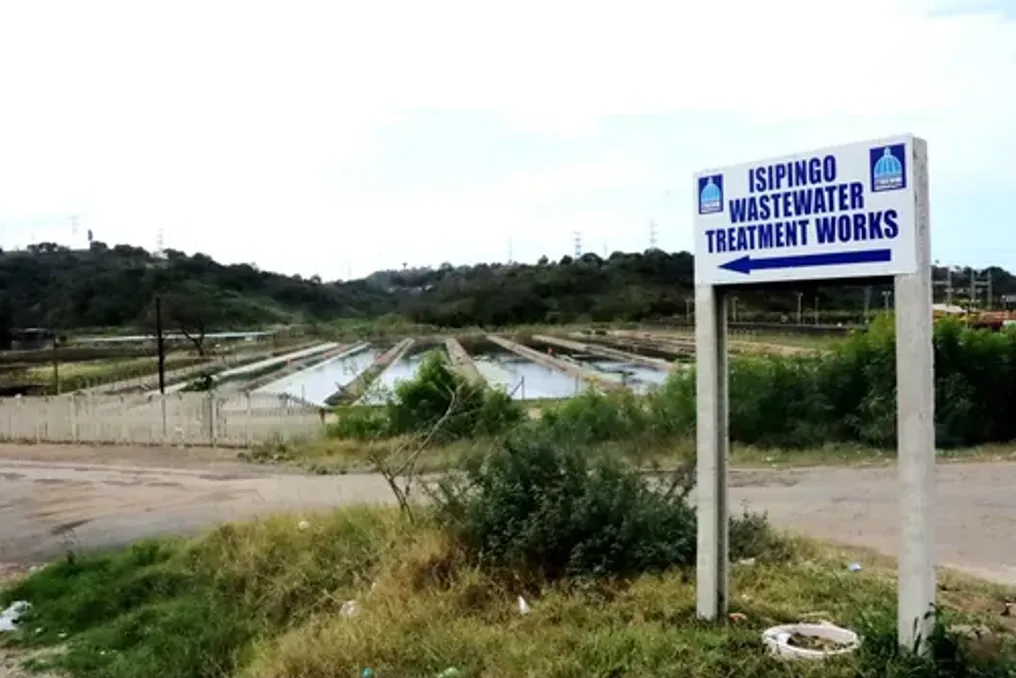
According to data from the eThekwini municipality, there is a decrease in the average daily wastewater flow at the Isipingo treatment plants, located south of Durban, which is attributed to pipeline leaks. The municipality requires approximately R4.6 billion for the major overhaul of all wastewater treatment facilities to meet Green Drop standards.
During a recent meeting of the eThekwini executive committee, the acting Director of Water and Sanitation, Sibusiso Vilane, presented a report on the state of sanitation services. He reported that by the end of June 2026, the department had achieved 46% compliance with Green Drop requirements in wastewater, against a target of 90% for the year.
The Green Drop certification program, managed by the Department of Water and Sanitation, assesses municipal wastewater treatment stations, networks, and pumping stations based on wastewater management. Vilane also noted that as of the end of June 2026, 235 out of 261 pumping stations were operational, although these figures may change in July and August.
Explaining the Green Drop requirements, he emphasized that operating facilities past their service life negatively affects the city's compliance with regulations. He added that 'the rehabilitation of Mahatma Gandhi pumping station remains a priority. It was noted that funding constraints, vandalism, theft, and flood damage further contributed to the decline in compliance levels.'
The municipality explained that Green Drop assessments are based on the actual condition and performance of facilities on the ground, regardless of the operational and financial difficulties the municipality faces. Vilane clarified that low Green Drop scores have serious consequences, including negative impacts on the environment and public health, reputational damage to the city and its tourism sector, and potential criminal liability for responsible officials due to non-compliance with regulations.
The city provides piped sanitation in urban areas, while rural and suburban areas have VIP and urine diversion toilets, and informal settlements have containerized sanitary units. Vilane also noted that 'in traditional authority areas, VIP and urine diversion toilets with limited water supply are mainly provided due to the lack of main water infrastructure. The city also provides chemical toilets and alternative sanitation services as part of its program to replace pit latrines.'
He pointed to the aging of wastewater treatment infrastructure as one of the municipality's problems. Furthermore, municipal teams had limited access to rural and informal settlements for maintenance, which was exacerbated by the poor condition of urine diversion toilets, public dissatisfaction, vandalism, theft, and high maintenance costs.
The municipality faces several obstacles hindering Green Drop compliance. These issues include population growth exceeding the design capacity of the treatment plants, insufficient capital investment, inadequate treatment plant capacity, power supply interruptions, complex terrain, financial constraints, as well as vandalism, misuse, and abuse of sewage systems.
Despite all these difficulties, Vilane reported that there are programs for sewer rehabilitation and an active maintenance program.