The capital of Kazakhstan, Astana, will host the IX Astana Finance Days 2026: Delivering Impact. Capital in Action forum on September 9–10, 2026, according to the organizer, Astana International Financial Centre (AIFC).
The capital of Kazakhstan, Astana, will host the IX Astana Finance Days 2026: Delivering Impact. Capital in Action forum on September 9–10, 2026, according to the organizer, Astana International Financial Centre (AIFC).
The event is expected to gather over 5500 participants from more than 80 countries, including foreign investors, regulators, technology company executives, government officials, and international corporate delegations.
This annual forum, established in 2018, functions as a regional platform for developing capital markets and establishing investment partnerships in Eurasia. The 2026 program will focus on capital market products and markets, legal and regulatory frameworks, institutional innovations, real sector financing, and cross-border financial cooperation.
Among the speakers at the upcoming forum are Jasan Madiev from the Ministry of Digital Development, Innovations and Aerospace Industry of Kazakhstan, head of the National Bank of Kazakhstan Timur Suleimenov, Secretary General of the Organization of Turkic States Kubanyshbek Omuraliev, and CEO of Freedom Holding Corp. Timur Turlov. Representatives of international organizations and firms, including BlackRock, Goldman Sachs, Brookfield, Binance, Mastercard, Bloomberg, FTSE Russell, and the Shanghai Stock Exchange, are planned to participate.
The forum will also feature an AFD exhibition, which will serve as a platform for showcasing financial institutions, banks, asset management firms, and fintech companies. The event is supported by various commercial and institutional partners; Freedom will act as a Gold level partner, while Solidcore Resources, KAZ Minerals, and ITS will be Silver level partners.
Five years ago, the United Arab Emirates decided not to wait for the results of the multilateral trading system but to create its own. The first step was the launch of the Comprehensive Economic Partnership Agreement (CEPA) program in September 2021. Subsequent actions marked one of the most active campaigns in trade diplomacy over the last decade.
By mid-2026, the UAE had concluded 37 CEPA agreements, a number later updated to 38; 18 of these have already entered into force, with several others scheduled for activation in the coming months. The geography of these agreements demonstrates wide coverage: they stretch from India to Indonesia, from Kenya to Chile, and also from Ukraine to Malaysia, forming a trade network that covers almost all major regions of the global economy.
The figures resulting from this program are impressive. In the first half of 2026, the volume of non-resource foreign trade turnover in the UAE reached approximately $527.4 billion, and non-resource exports amounted to about $123.2 billion. Notably, non-resource exports increased by more than 45% in 2025 alone, highlighting the UAE's commitment to linking its trade agreements with the expansion of production capacities in the industrial sector. These indicators reflect a targeted policy of using market access as a lever to enhance the internal value chain.
The CEPA agreements are part of a broader strategy aimed at strengthening the UAE's position in global trade and supply chains. The Emirates leverage their developed logistics infrastructure, ports, free zones, and the ability to connect Asian, African, and European markets. Dubai and Abu Dhabi position themselves as an indispensable hub between hemispheres, through which goods, capital, and services move between the Global South and the industrialized world.
The partnership with India serves as the most obvious confirmation of this concept. The CEPA agreement between the UAE and India has significantly promoted trade development: bilateral exchange grew from $73 billion to $84 billion annually, representing a 16% increase. In the first half of 2026 alone, non-resource trade between the two countries reached approximately $29.3 billion. What started as a bold experiment has turned into a model to be emulated, and now the question is the speed at which the UAE can replicate this model.
The most significant example of replicating this model is Africa. In 2026, the UAE's CEPA program in Africa ceased to be merely a headline of trade policy; it is becoming a practical tool for changing economic relations, deepening supply chains, and establishing long-term investment pathways in strategic sectors, including logistics, agriculture, aviation, clean energy, and services.
Kenya, whose parliament ratified the CEPA agreement, is viewed as a serious economic instrument, not just a symbolic handshake. Kenya's strategic value lies in its role as a regional logistics and aviation hub, a major service economy in East Africa, and a gateway to wider regional markets. The Gulfood360 Africa platform, based on the CEPA agreement between Kenya and the UAE, aims to directly connect Kenyan and African food producers with global buyers, indicating that the agreement is already creating a commercial architecture, not just a political arrangement.
This approach reflects a conscious effort to avoid excessive dependence on a small number of trading partners by concluding agreements with large consumer markets, production centers, agricultural exporters, and developing economies. In July 2026, the UAE and Canada concluded negotiations in record time under the program, with bilateral trade between the two countries reaching approximately $4.2 billion in 2025, representing a 21% increase compared to 2024.
Not everyone welcomes this trend without reservations. Analysts note that African governments must approach these agreements with clear industrial strategies. As one industry leader quoted in a recent assessment of investment dynamics in the Persian Gulf and Africa region stated, there is a risk that these agreements will turn into import-export platforms rather than genuine catalysts for industrialization, with African raw materials continuing to be processed elsewhere.
This tension is the central issue hidden beneath the impressive figures. The UAE built this machine. A more important question for Africa, Asia, and the small economies joining the network is whether preferential access will lead to productive potential or simply change the direction of dependency. The answer will be written not in the text of the agreements, but on the factories, logistics corridors, and value chains that arise from them or fail to arise.
The Amazon Leo satellite internet service is nearing its commercial launch in Brazil: the router to be used by customers received certification from Anatel on Friday (08/14).
This certification was obtained in time, as the commercial start is scheduled to take place in Brazil before the 29th of this month, unless the company requests a new extension from Anatel. Previously, the service underwent testing in two Brazilian cities last year.
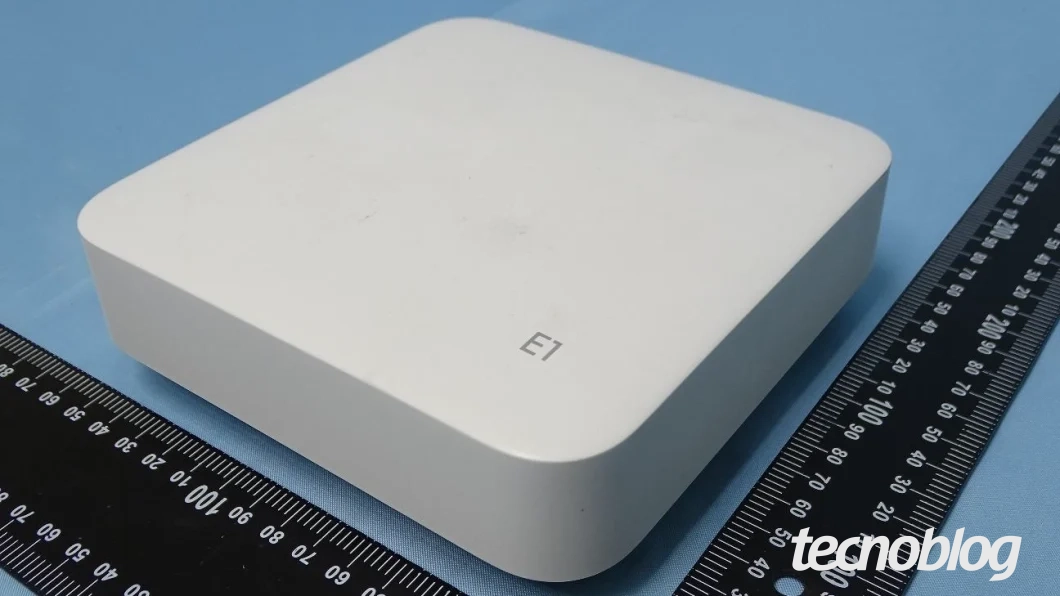
The device has model L1LA10 and supports Zigbee, Bluetooth LE (likely for app communication), and dual-band Wi-Fi 6. Three ports are located on the back panel: one RJ45 for connecting to the satellite antenna, a second RJ45 for wired internet access, and a C6 input for power connection.
According to FCC (Federal Communications Commission of the USA) certification photos, the L1LA10 measures about 17 centimeters in width and depth, making it quite large for a router. It is also quite heavy, as almost half of the internal volume is occupied by a 140W power supply unit, and the internal structure is made of metal.
The equipment uses various chips from Qualcomm: QCA8081 for Ethernet ports, QCN6112 as the 5 GHz radio, and the IPQ5018 SoC, which is the product's 'brain' and contains two ARM Cortex-A53 cores.
Certification of the antenna, which Amazon calls ODU in its documentation, has not yet been completed, and the company does not disclose the meaning of this abbreviation.
Amazon Leo is entering a market that is set to become more competitive. Currently, Starlink virtually dominates the low Earth orbit (LEO) satellite internet segment, especially for private individuals, although Eutelsat OneWeb also provides its services in Brazil, but only for corporate clients. The Chinese company SpaceSail has also received permission to operate in the country, which is expected before 2028.
Starlink holds a leading position in the Brazilian satellite internet market, possessing the largest customer base in this segment and being the 12th fixed broadband provider in the country. Soon, the company also plans to offer direct services for smartphones in remote areas in partnership with Vivo.
This is another market segment where Amazon intends to compete. To achieve this, the company acquired Globalstar for US$11.5 billion (about 57 billion Brazilian reais), gaining access to an existing constellation of satellites, as well as existing spectrum and usage rights.
Fixed satellite broadband services in Brazil will be sold through Sky, as both companies signed a corresponding agreement back in 2024.
NeoGeoInfo Technologies (NeoGeo), a company specializing in geospatial technologies, has raised $20 million in a Series A funding round. The round was led by Neev II Fund and Aavishkaar Capital, which is an investment arm of Aavishkaar Group.
According to NeoGeo, the funds will be used to deepen its platform and expand its product portfolio through investments in research and technical development. Furthermore, the company plans to enter international markets in the Middle East and America, as well as strengthen its team to handle the growing flow of large, technically complex projects.
The startup, based in Gurugram, was founded in 2019 by Sreeramam and Brahmanam. It provides government and corporate clients with comprehensive spatial analytics solutions in areas such as natural resource management, disaster response, urban planning, utilities, infrastructure, and smart cities.
NeoGeo's founder and CEO, Sreeramam G V, noted that the team spent nearly a decade creating end-to-end geospatial capabilities—from high-precision positioning infrastructure and enterprise geospatial platforms to AI-based intelligent analysis systems. He emphasized that the true value of geospatial technology lies not in data collection, but in transforming that data into actionable information.
NeoGeo operates across the entire geospatial value chain: from acquiring data using satellite imagery, LiDAR, drones, and ground surveys to data processing, AI/ML analytics, and developing specialized industry software. The company has developed several proprietary platforms, including OptiFleet (fleet and network optimization), GeoBalance (natural resource management), UrbanVista (urban planning visualization and smart cities), and InfraSync (infrastructure asset management).
Through spatial planning optimization, NeoGeo contributes to mitigating climate change via measurable resource efficiency and carbon emission reduction. Simultaneously, the company supports climate change adaptation and development through proactive mapping of vulnerabilities and hazards.
Anurag Agrawal, a partner at Aavishkaar Capital, stated that land and public asset records are often fragmented, inaccurate, and do not reflect the actual situation. NeoGeo transforms these records into a unified, highly accurate spatial reference system, which helps reduce disputes, increase transparency, and promote financial integration, climate resilience, and effective governance on a large scale.