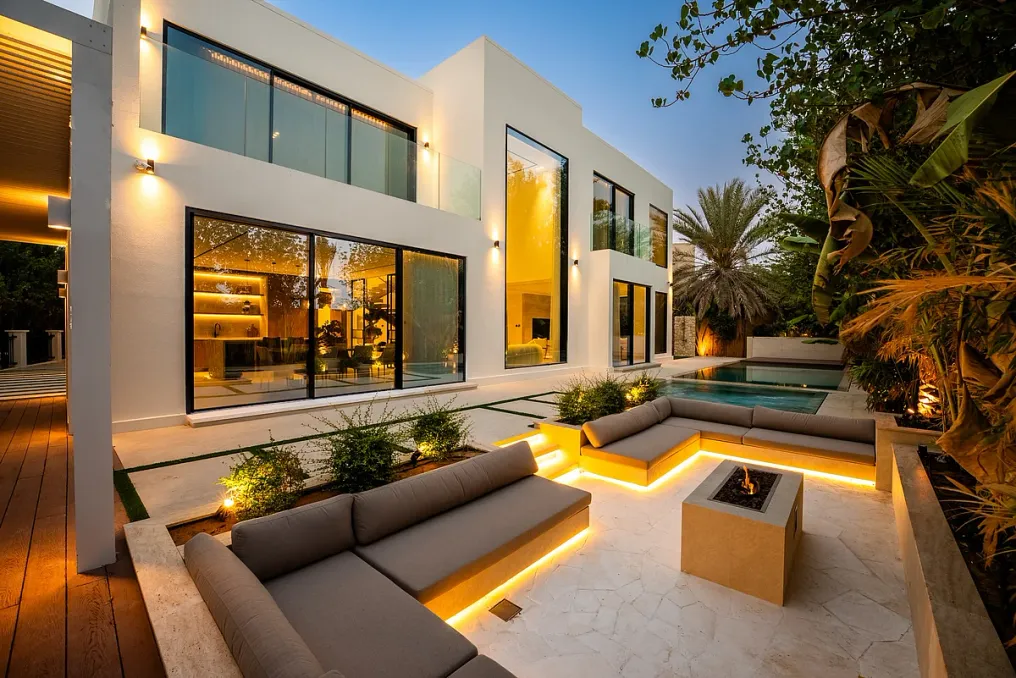
Thanks to the price correction that occurred in recent months, property buyers who were initially focused on smaller spaces can now afford more spacious properties in established and elite districts. This has made the market more accessible for both end-users and investors.
Industry leaders have described the fall in real estate prices in recent months as a 'healthy correction' caused by the regional conflict, which has increased market accessibility for mid-range buyers.
According to an analysis by the real estate brokerage firm Equity, regional turmoil has led to an unexpected benefit—a reassessment of market value that has expanded accessibility for middle-class buyers. Before the period of uncertainty, initial buyers were limited to purchasing one-bedroom apartments in secondary communities. However, after the price adjustments in March and April, a shift occurred: buyers who previously considered one-bedroom options can now purchase two-bedroom apartments in recognized communities. Investors holding studio portfolios have gained the opportunity to acquire one-bedroom apartments with real yield and growth potential. Equity emphasized that this was not just a price change, but an 'accessibility reset.'
Following the start of the regional conflict on February 28, 2026, the market demonstrated a 'healthy correction' after five years of growth, which had been supported by local and foreign investors, as well as end-users, driving demand prices to unprecedented highs.
According to ValuStrat, the July price index stood at 219.2 points, reflecting a slight monthly decrease of 0.3 percent. Nevertheless, the annual growth showed an overall decline of 1.6 percent. The cost of villas dropped to 292.5 points, and the cost of apartments fell to 168.7 points, relative to the base level of January 2021, set at 100.
In its semi-annual report for 2026, Equity reported that Dubai property buyers who previously considered middle-class communities such as Ardajan and Jumeirah Village Circle (JVC) are increasingly exploring premium areas, including Dubai Hills Estate, Dubai Creek Harbour, Palm Jumeirah, and Dubai Marina, where the accessibility gap between segments has narrowed.
Emrah Yar, founder and CEO of Equity, noted: 'What is particularly interesting over the last six months is the quality of opportunities available to buyers. We have seen clients who initially approached us with budgets focused on middle-class communities successfully acquire housing in premium locations, which would have been difficult a year ago. The discussion has shifted from chasing short-term price fluctuations to identifying long-term value, lifestyle benefits, and sustainable investment returns.'
According to the latest data from Property Monitor for Dubai, 79,281 residential transactions worth 221.3 billion dirhams took place in the emirate during the first half of 2026, indicating sustained market resilience despite a slowdown compared to the exceptional figures of the first half of 2025. Although the volume and value of transactions decreased year-on-year, market activity showed improving momentum towards the end of the period, as transaction volumes grew until June, reflecting sustained buyer confidence and constant demand in Dubai's residential communities.
Morgan’s International Realty's second-quarter 2026 report notes that the emirate's real estate market has corrected after the exceptional pace recorded during 2025 and early 2026, as activity slows down.
The sharpest contraction was observed in the secondary market during this quarter. The number of deals fell to 8,654, representing approximately 40 percent less, and the value dropped by 57 percent to 28.78 billion dirhams. This shift was most evident in financial activity. Cash purchases decreased by 75 percent to 1,123 deals, while mortgage-backed deals decreased more moderately—by 25 percent to 7,531.
The report also added that registrations of properties under construction should be viewed in the context of the time lag between commercial sales and official registration. Meanwhile, buyers signing new preliminary agreements during the second quarter generally continued to maintain a long-term view of Dubai and the project realization cycle.