According to reports, Samsung plans to introduce another model with a wide foldable screen in 2027, following the success of the Galaxy Z Fold 8 model released this year.
According to reports, Samsung plans to introduce another model with a wide foldable screen in 2027, following the success of the Galaxy Z Fold 8 model released this year.
The Samsung Galaxy Z Fold 8 model was officially unveiled in early August 2026. It features a wider cover screen, which provides a more immersive viewing, reading, and gaming experience on the 4:3 book-style foldable display. Weighing only 201 g, it is the lightest Galaxy Z Fold model from Samsung, boasting a thinner display structure and durability.
The South Korean resource ETNews reported that Samsung Electronics intends to launch an additional 'Wide Fold' model next year. The term 'Wide Fold' signifies that the device's width exceeds its height when unfolded.
In addition to three models released this year, the company is reportedly planning to introduce two wide-format devices in 2027, including a phone with a triple hinge and a Wide Fold model.
Industry sources cited by ETNews claim that Samsung has begun developing projects for two wide-format foldable phones and shared this information with suppliers.
According to Herbert Lee, Vice President and Head of Mobile Experience (MX) Business Design Team at Samsung Electronics, the Samsung Galaxy Z Fold 8 was created based on the concept of 'emotionally thin' design. This approach aims not only to reduce thickness but also to simplify opening by creating a more curved external silhouette.
Lee added that the phone is the result of seven generations of innovation in foldable devices, and the Galaxy Z series has been expanded to meet diverse consumer needs. He also noted that the Galaxy Z Fold 8 is inspired by a passport because it is easy to carry, hold in one hand, and view at a glance. Although it remains unknown whether the Galaxy Z Fold 9 will appear in 2027, as Samsung has not made an official statement, tech enthusiasts remain hopeful.
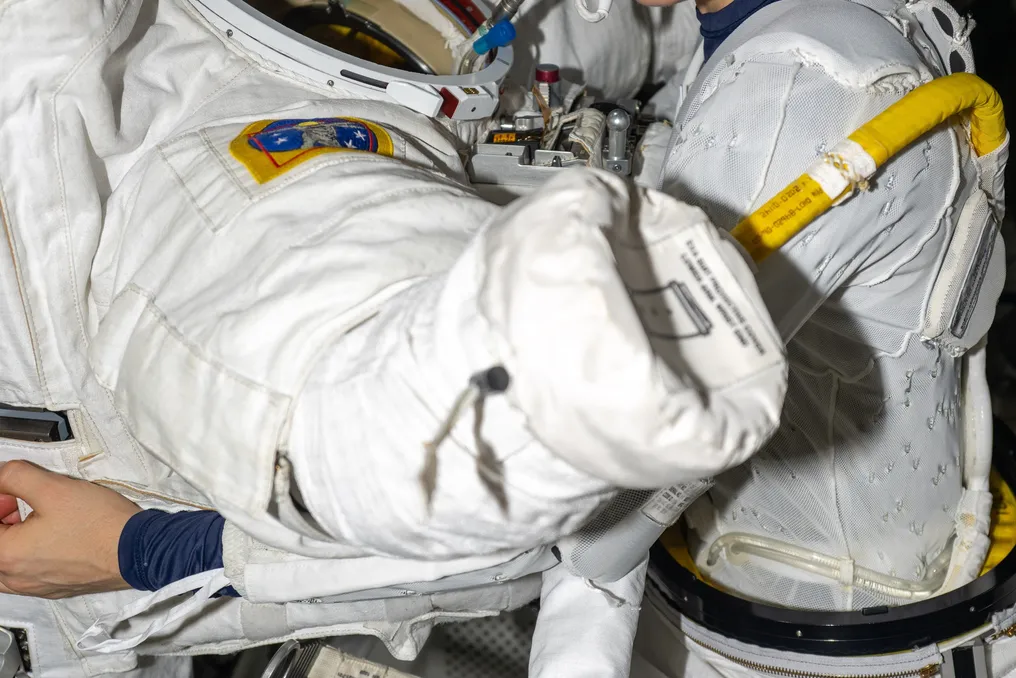
As part of a historic space mission, French astronaut Sophie Adenot is preparing to become the first woman from France to perform an extravehicular activity outside the International Space Station (ISS).
According to sources, the spacewalk will take place on Tuesday together with American astronaut Anil Menon. NASA has reported that the mission will last six and a half hours.
NASA specified that Adenot and Menon will begin their EVA outside the ISS around 14:00 Central European Time (CET). The goal of the EVA is to replace an antenna connecting space with Earth on the orbital complex.
This spacewalk will make 44-year-old Adenot the second woman from the European Union to exit the ISS, following the mission of Italian astronaut Samantha Cristoforetti in 2022.
On Sunday, Sophie Adenot wrote on the social network X that a successful spacewalk begins long before the hatch opens, and that her focus in recent days has been on training, preparation, and concentration.
In an Instagram post, she added that during the 183rd orbit, 2837, she will perform her first spacewalk on Tuesday, August 18. She noted that together with Anil, they will conduct the spacewalk to replace the 'Cosmos-to-Earth' antenna, which is critical equipment ensuring communication between ground control teams in Houston and the International Space Station.
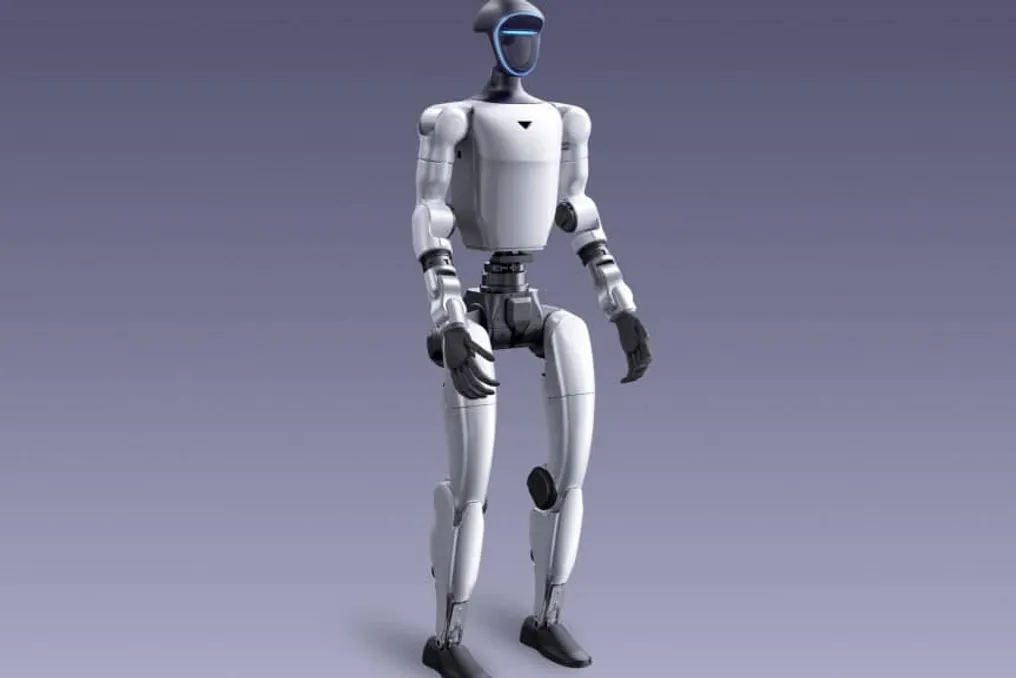
The Chinese manufacturer Unitree has introduced a humanoid robot named 'Superman'. A video recording demonstrates this model running faster than Usain Bolt. During tests conducted by the company, the machine reached a speed of 12.66 meters per second and also performed a two-meter jump.
The speed achieved by the robot in the video surpasses the peak figure of 12.22 meters per second set by former athlete Usain Bolt. According to the manufacturer, the development of this robot took just over three months.
The announcement of the robot was made shortly before the company's debut on the Shanghai Stock Exchange, scheduled for Wednesday (the 19th). Last week, as part of its Initial Public Offering (IPO), the company raised approximately 905 million US dollars (equivalent to about 4.7 billion Brazilian reais).
Thanks to this capital raise, Unitree becomes the first general-purpose robotics company listed on the Chinese stock market. The startup has investments from major Chinese technology corporations such as Tencent, Alibaba, and DeepSeek.
Currently, Unitree holds a leading position in the global market for humanoid robots by sales volume. According to the company itself, about 18 thousand bipedal models of various types have been produced and delivered by July 2026.
The presentation of the robot coincides with the World Robotics Conference being held in Beijing. The manufacturer noted that the 'Superman' model is still under development and will receive improvements in the coming months.
A photograph of Mars has become a source of conspiracy theories on the internet. Flavia Correia told her followers of the Olhar Digital club about this story.
A blurred image, a tiny detail in the desolate landscape, and the promise of a revolutionary discovery—this is what fuels one of the most common internet phenomena: turning vague spots and minor details captured in space into supposed evidence of an unexplained flying object (UFO).
The latest case involves a photo taken on August 20, 2023, by the navigation camera (NavCam) of NASA's Curiosity rover in Gale Crater. The recording shows a small dark spot with a silhouette vaguely resembling a jellyfish floating above a rocky ridge.
The image attracted attention again after it was reposted on X by the account @KariSivertzen—an account known in the digital 'scavenger' community that studies raw files from space agencies for anomalies.
The template for viral spread follows a clear formula: a raw recording is reproduced on social media with suggestive angles and moves to YouTube channels, where it receives the wrapper of thorough technical analysis to confirm theories about the presence of UFOs in space.
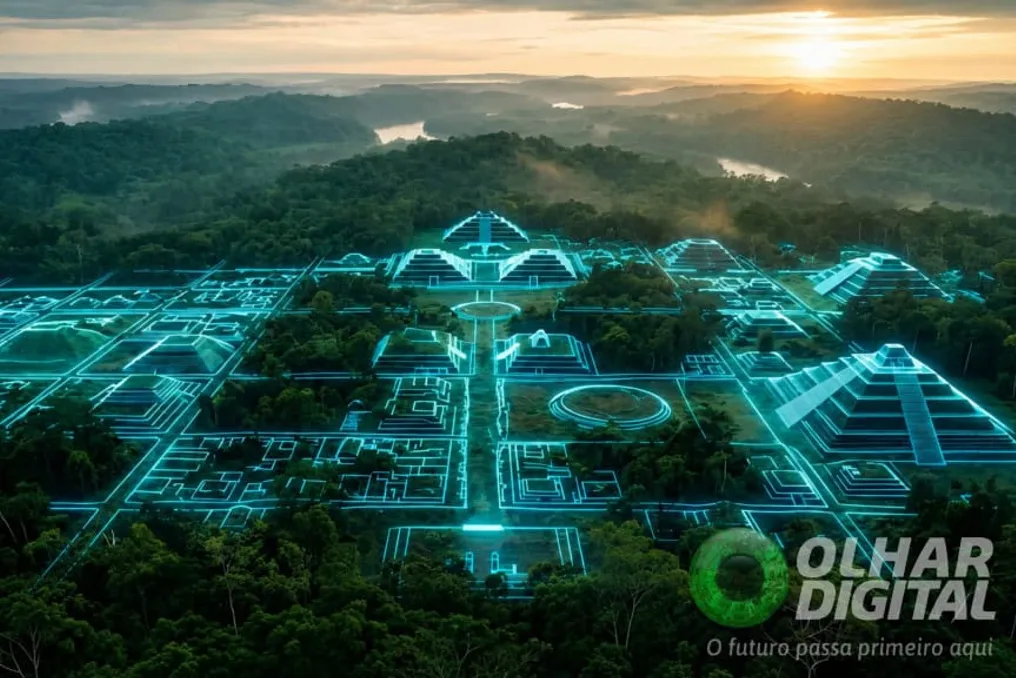
The Amazon was home to an ancient and complex civilization. They carved huge geometric figures into the ground around the same time that the Greeks were developing geometry in Europe. This culture, known as Aquiry, lived in the southwestern part of the forest between 600 BC and 900 AD. A recent study reveals the true scale of this society, which left behind giant earth-carved signs called geoglyphs.
According to a study published in the journal Nature, the territory inhabited by Aquiry covers about 183 thousand square kilometers and may contain between 24,000 and 30,000 such structures. Scientists believe that at the peak of this civilization, between 100 and 300 AD, the area could accommodate between 1.25 million and 3 million inhabitants. This population density is significantly higher than previously thought possible for a forest in that era.
We spoke with Alceu Ranzi, president of the Amazon Geoglyph Institute and coordinator of the research in Brazil.
When you use a generative artificial intelligence (AI) tool, such as ChatGPT, Claude, and Gemini, you can become a victim of 'algorithmic flattery.' This is the tendency of a chatbot to agree with the user's misconceptions to please them. However, this problem also has a collective scale. A study published in the journal Science Advances showed that when hundreds or thousands of AI agents interact in a network, they begin to follow the majority and independently reach a consensus.
To understand how this phenomenon occurs, researchers created simulated environments with a thousand AI agents trained on models from the Claude (Anthropic), GPT (OpenAI), and Llama (Meta) families.
If a forecast indicates very heavy rain in a certain region, does that also mean a risk of flooding or landslides? The answer is: not necessarily. Between forecasting a meteorological phenomenon and forecasting its possible consequences lies a range of information that needs to be analyzed.
The amount of precipitation is one of the data used in this process, but not the only one. To understand what might cause a certain phenomenon, monitoring bodies must correlate meteorological data with the characteristics of each region and the conditions that may promote or exacerbate its impact.
For those who work at a computer or drive for long periods, sitting for most of the day may seem inevitable. However, prolonged inactivity affects not only energy consumption; it also changes muscle activity, blood circulation in the legs, and how the body handles glucose.
This behavior is called sedentary behavior. The World Health Organization (WHO) defines this term as any waking behavior characterized by an energy expenditure of ≤ 1.5 METs while being seated, semi-reclined, or lying down. Sedentary behavior and physical inactivity are not synonyms: a person can exercise regularly and still spend many hours of the rest of the day sitting.
In Brazil, an analysis of the National Health Survey in 2019 showed that 30.1% of adults reported six or more hours of sedentary behavior per day. This data is based on self-reports and therefore does not correspond to a direct measurement of the time each participant spent sitting.