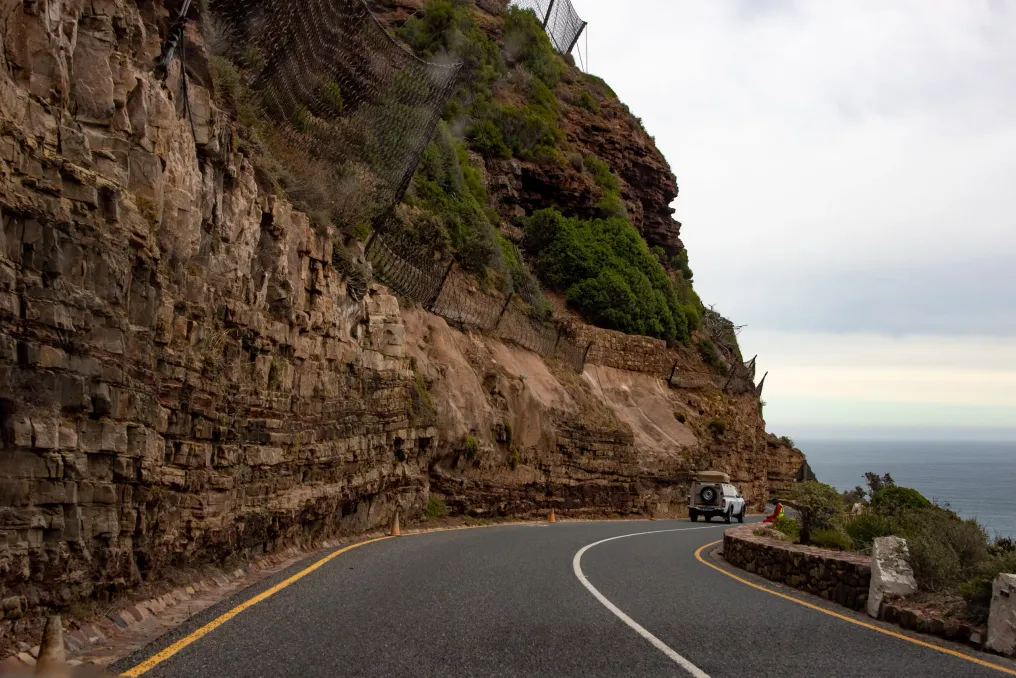
The Garden Route gained fame due to its combination of local forests, lagoons, beaches, mountain passes, and small coastal towns, encompassing a vast amount of South Africa in one stretch of road. However, if you are looking for alternatives to the Garden Route, the country offers many scenic roads that present their own unique combinations of landscapes, history, adventure, and slow travel.
South Africa is large enough to offer completely different versions of classic scenic holidays. You can replace the green forests of Knysna with the sandstone mountains of Cederberg, the Indian Ocean with the wild coast of the Wild Coast, and coastal villages with the expanses of Karoo.
These six alternatives to the Garden Route are designed for travelers who wish to enjoy the beauty of nature, adventures, and the relaxed pace of a classic South African road trip without following the same beaten path.
Alternatives for Coastal Lovers
If you are attracted specifically to the coast, you should consider the Wild Coast. This stretch runs along the Eastern Cape from the Mthambana River in the north to the Great Kei River in the south. It features a landscape of green-covered hills, dramatic cliffs, secluded beaches, forests, and protected bays, and has traditionally been the heartland of the Xhosa people.
This coast is also shaped by the sea: its history includes shipwrecks, such as the 'San Bento', which wrecked near the Msikaba River in 1554, and the 'Grosvenor', which sank in Lambasi Bay in 1782. The appeal of the Wild Coast lies in its pristine feeling; instead of moving between polished coastal towns, the journey focuses on walking, exploring, and being immersed in the landscape. The coast is ideal for hiking, horseback riding, fishing, snorkeling, and diving, and off-road tracks offer another way to travel. However, driving on the beach is prohibited due to the region's fragile ecosystem.
There is also an opportunity to slow down here: the region boasts about 320 registered bird species, and its forests include cicadas and yellow-flowering trees. The coast is closely linked to the culture and communities of the Xhosa, making this trip one where the landscape is only part of the story.
Cederberg: Mountains Without the Ocean
Cederberg proves that a magnificent road trip does not necessarily need an ocean. Located about three hours' drive from Cape Town, the Cederberg reserve feels like a world far removed from the city. The landscape here is dominated by rugged mountains, orange sandstone formations, fynbos, and deep valleys, among which stand landmarks such as Maltese Cross and Wolfberg Arch. This area was declared a reserve in 1973 and covers over 66,000 hectares.
History predating modern roads and cities is preserved here for thousands of years. CapeNature has documented over 2500 rock paintings by San and Khoi peoples in the wider Cederberg area, some dating back to periods between 300 and 6000 years.
Cederberg also has a more recent cultural history. Clanwilliam and Citrusdal are located at the foot of the mountains, while Wuppertal and Eldskluf are historical missionary settlements in the region. Clanwilliam is also closely associated with rooibos, which grows naturally in Cederberg and its surroundings.
For active tourists, this is one of the strongest alternatives on the list. Hiking, rock climbing, and mountain biking are available here, and Rocklands is internationally known for bouldering. You can also follow trails with rock art, swim in mountain pools, or simply spend a night gazing at the remarkably dark sky. Unlike the Garden Route, where lush greenery is often the main attraction, the beauty of Cederberg lies in its ruggedness. The mountains take on copper-red hues in the changing light, and the further you drive, the more remote the landscape seems.
Midlands Minder: Gastronomy and Crafts
For those who love a combination of landscapes, food, charming accommodation, and stops along the way, Midlands Minder presents a compelling alternative. The route passes through the hilly countryside of KwaZulu-Natal between Pietermaritzburg and uKhahlamba-Drakensberg, with rivers, farms, green hills, and mountain views in the background.
The history of this route is relatively recent but no less interesting. In 1985, four potters, a weaver, and several artists met at Caversham Mill and came up with the idea of opening their rural studios to visitors. What started as a small 'Rolling Exhibition' evolved into Midlands Minder, now one of South Africa's most famous arts and crafts routes.
Today, this route is as important for what you can eat and discover as it is for where you go. Visitors can view ceramics, textiles, furniture, leather goods, and art, while the gastronomic scene includes local cheeses, chocolate, beer, wine, and rustic restaurants. Furthermore, there are many opportunities for outdoor activities: available pursuits include hiking, mountain biking, horseback riding, fishing, golf, quad biking, and gentle sky tours. Nearby attractions include Howick Falls, Midmar Dam, and several nature reserves.
The result is a road trip that rewards frequent stops. You can head home thinking you will see the Drakensberg, only to spend half a day in a pottery workshop, have lunch in rustic cuisine, or admire the selection at a farm shop.
Panorama Route: Drama and Geology
If the appeal of the Garden Route lies in constantly changing landscapes, the Panorama Route amplifies this effect to the extreme. The route, spanning about 300 km through Mpumalanga, follows the edge of the Great Escarpment, passing by mountain peaks, waterfalls, forests, cliffs, and vast views of Lowveld. The landscape is also rich in history. For example, Long Tom Pass got its name from the Long Tom guns used during the Anglo-Boer War.
Furthermore, there are geological attractions here. God’s Window offers a view of the Lowveld from the escarpment, and Bourke’s Luck Potholes are carved into the rock where the Blyde and Treur rivers meet. Further up rise Three Rondavels above the Blyde River canyon. The route is particularly good for those who want to combine a road trip with hiking and wildlife viewing. Waterfalls such as Lisbon Falls, Berlin Falls, and Mac Mac Falls can easily be included in the itinerary, and the Blyde River Canyon and surrounding reserves provide opportunities for hiking, water tourism, and wildlife spotting.
It also fits perfectly into a longer trip. Instead of rushing through the Panorama Route on the way to Kruger, it is worth dedicating at least a couple of nights to explore the viewpoints, take walks, and make short stops.
Waterberg: Savanna and Ancient History
For an alternative to the Garden Route that replaces forests and beaches with scrubland, head north. The Waterberg is a Limpopo mountain region characterized by savanna, escarpments, and ancient rock formations. It is part of the Waterberg Biosphere Reserve, recognized by UNESCO in 2001. The reserve covers over 654,000 hectares and hosts more than 5500 registered plant species.
This landscape also possesses an extraordinarily deep human history. UNESCO notes that humans inhabited this region hundreds of thousands of years ago, and the Waterberg is one of South Africa's important areas for San rock art. For visitors, the main draw is the combination of wildlife and fauna. The region includes Marakele National Park and several private and provincial reserves offering safari and birdwatching opportunities. Horse safaris, hiking, hot air balloon rides, and other outdoor adventures are also available, depending on the accommodation.
The special appeal of the Waterberg is its sense of space. There is no need to follow a checklist of attractions. A few days in a lodge, an early morning safari, a walk through the bush, and an afternoon observation of the changing landscape can constitute sufficient experience. It is a different type of road trip, but that is precisely its meaning.
Graaff-Reinet and Karoo: Silence and History
Finally, there is a road trip for those who prefer green landscapes to silence. Graaff-Reinet was founded in 1786 and is the fourth oldest settlement in South Africa. For over two centuries, it served as an important stopover for travelers heading inland, and the town still retains about 200 historical buildings and restored Victorian-era houses.
The town is almost entirely surrounded by the Kamdebo National Park, creating an unusual combination of a historic town and a natural retreat. Kamdebo was proclaimed a national park in 2005 after developing from the Karoo Nature Reserve, established in 1979 as part of conservation efforts focused on the Karoo biome.
The park's main attraction is the Valley of Desolation, where massive dolerite columns rise above the Great Karoo. These formations were created by geological processes over millions of years, and the Valley was declared a national monument in 1939. Besides the viewpoint, Kamdebo offers hiking, off-road routes, scenic drives, wildlife viewing, and photography, where one can see species such as mountain zebra, buffalo, kudu, and springbok. But the true reason to visit this place is the pace. The Karoo demands slow travel, stopping in small towns, appreciating the architecture, and enjoying the vast landscapes, rather than rushing to the next attraction.
In conclusion, although there is always the temptation to compare every road trip in South Africa to the Garden Route, which rightfully is considered one of the country's best routes due to its forests, beaches, lagoons, and mountain scenery, perhaps a more important question is what you want from your next trip. If you need a wild coast, choose the Wild Coast. If mountains and ancient history appeal to you, head to Cederberg. For food lovers, crafts, and rural life, Midlands Minder is suitable. If drama is the priority, the Panorama Route will provide it in abundance. Waterberg is the answer for scrubland and wildlife, and the Great Karoo offers something completely different: space, silence, and a sense of history stretching far beyond the road beneath your tires. The Garden Route does not need replacing; there are too many good roads in South Africa to settle for just one. Sometimes the best alternative is not just another version of the same trip, but an entirely different experience.