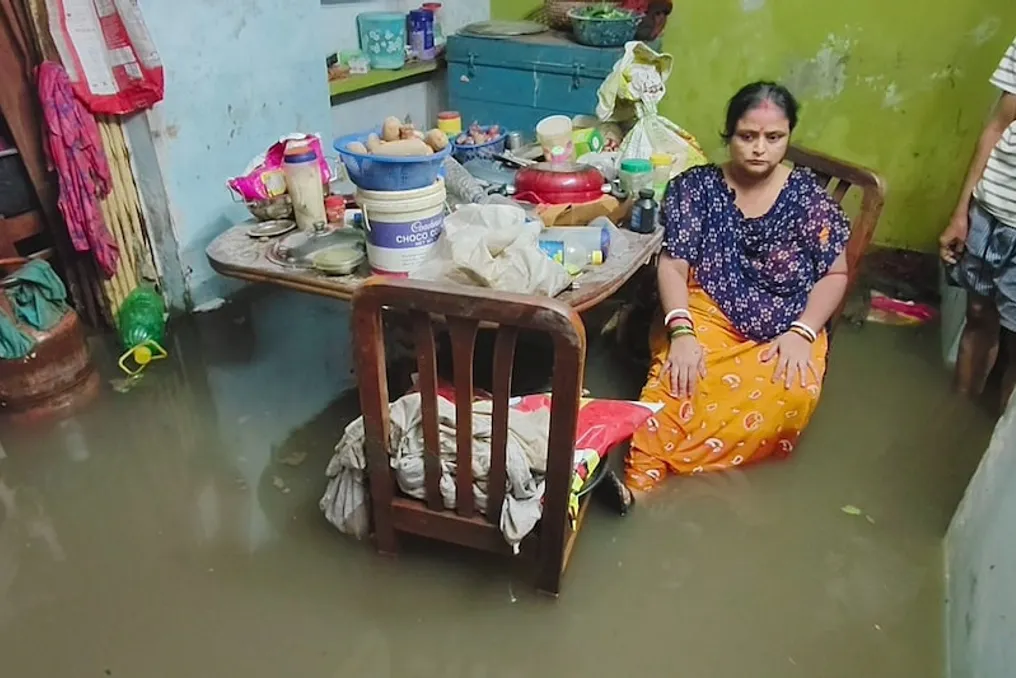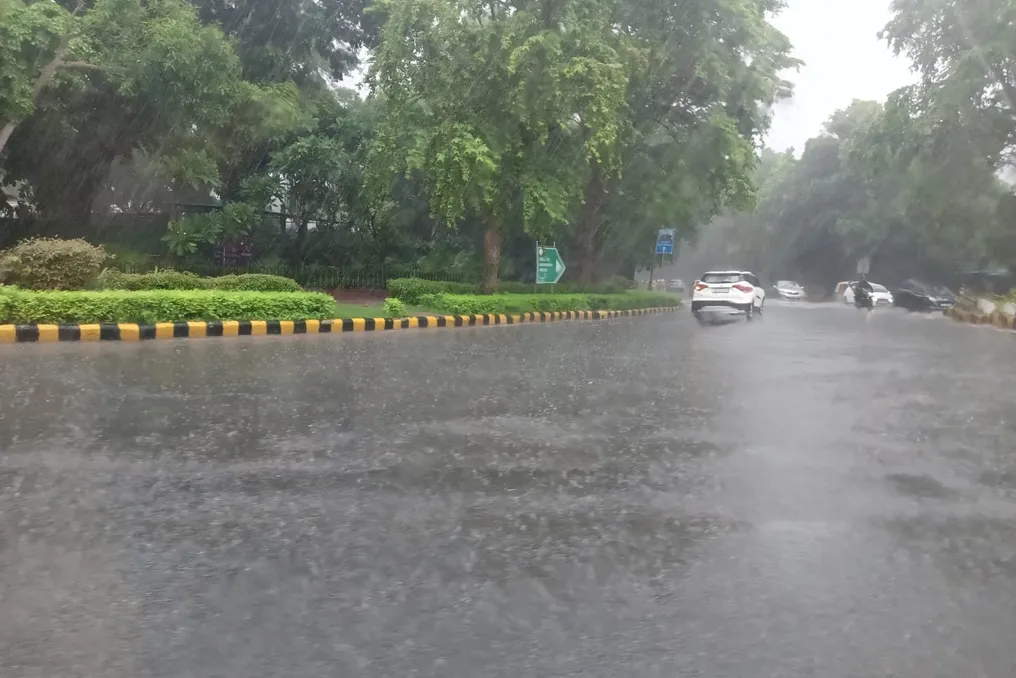
When the rainy season begins, the urban landscape can change drastically in a matter of hours: roads turn into rivers, underground passages become flooded, and overflowing drainage systems lead to a complete halt in traffic. However, just a few months later, many of these same cities begin to worry about declining groundwater levels and water scarcity.
Growing metropolises face a paradoxical water supply problem: there is an excess of water during one season and a severe shortage in another. Part of this problem lies in the changing landscape beneath the citizens' feet. As cities expand, natural surfaces such as swamps, ponds, soil, and open spaces are replaced by concrete, asphalt, and buildings. Rain that used to slowly seep into the ground now hits hard surfaces and immediately rushes into the storm drains.
According to a study by the Institute for World Resources, cited by the publication Good Food Movement, the area of built-up areas in the 10 most densely populated cities in India increased by 52% between 2000 and 2015. A significant part of this growth occurred on territories critical for replenishing groundwater reserves. This raises the question: what if cities were designed to absorb rainwater instead of just trying to divert it?
Consider the city as a sponge
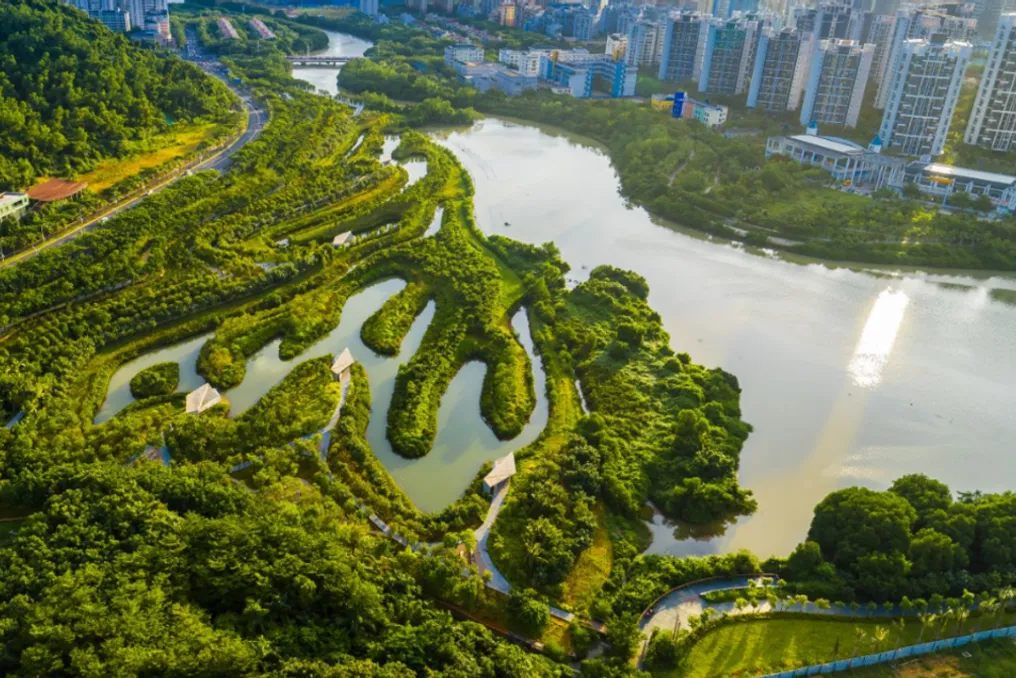
The 'sponge city' planning concept suggests not viewing every drop of rain as something that must disappear as quickly as possible through gutters. Instead, it provides for areas where water can be retained, penetrate the soil, collect, and slowly drain away. This can include restoring lakes and wetlands, creating rain gardens, planting trees and vegetation, using permeable pavements that allow water to pass through them, and designing parks and playgrounds capable of temporarily holding excess precipitation.
The scientific principle here is quite simple: slow down the movement of water. Compare how water behaves on tiles versus on soil. On tiles, water remains on the surface and flows into the drainage, whereas soil is capable of absorbing some of this moisture. Permeable pavements transfer this principle to the urban environment. Unlike traditional concrete or asphalt, they have interconnected gaps that allow rainwater to pass through the surface into layers of gravel and soil beneath. Some of the water can be temporarily stored in these layers, while some slowly filters into the ground.
Rain gardens function similarly. Runoff from a nearby street or roof is directed into a shallow planted area where vegetation and soil slow the water, filter some pollutants, and allow some of the water to soak into the ground. Wetlands and ponds work slightly differently: they act as temporary reservoirs, holding excess water instead of allowing a large volume to suddenly rush into drains and rivers.
What are 'sponge streets'?
To make a city more 'spongy,' it is not necessary to completely rebuild it. One can start with an ordinary street whose edges can be equipped with bio-drainage ditches—shallow, planted channels that collect and slow surface runoff. Sidewalks and parking areas can use permeable surfaces, and rain gardens can collect water from neighboring buildings and roads. Trees and vegetation can also intercept precipitation and help the soil retain moisture.
Each such measure may seem minor, but collectively they form a network of spaces capable of capturing, slowing, storing, and absorbing rainwater, thereby reducing the sudden load on urban drainage systems.
Although the idea originated in China, the principle is not new. The term 'sponge city' is closely associated with Chinese landscape architect and urban planner Cong Jian, who developed this concept in the early 2000s. This approach was subsequently incorporated into China's national urban policy in 2014. Yu's thinking was inspired by natural landscapes and traditional water management systems. Instead of relying solely on concrete canals and drains to carry away water, his method calls for cities to interact with the landscape—providing water space for spreading, settling, and soaking into the ground. Nevertheless, the principle itself is not new to India; traditional systems such as johads, ponds, and wells have long been used to collect, store, and manage rainwater.
Can this help Indian cities?
India is already conducting experiments with various elements of the 'sponge city' approach. In Chennai, a degraded swamp in Porur has been restored into Dr. M. S. Swaminathan's Ecological Wetland Park. Its network of ponds and wetland plants is designed to retain and filter stormwater before it is discharged downstream. According to reports, since its opening in 2025, the park has managed over 20 million liters of stormwater during peak monsoon seasons and is capable of treating over 90% of the runoff generated within its territory.
Ahmedabad has also implemented 'sponge park' projects, utilizing permeable paving and underground systems to help rainwater move beneath the surface rather than becoming immediate surface runoff. In 2024, the government approved nearly $300 million for seven major cities, including Mumbai, Chennai, and Bangalore, to manage urban flooding and conserve water. This program includes expanding water bodies alongside traditional drainage systems and early warning systems, reflecting a broader shift towards combining natural systems with existing infrastructure.
However, there is an important caveat: a sponge city is not a city that will never be subject to flooding. No park, wetland, or permeable road can absorb an unlimited amount of precipitation, especially during extreme downpours. These systems must also be designed considering local soil conditions, topography, groundwater status, and existing drainage networks. The true strength lies in combining the old and the new—drains and wetlands, pumping stations and parks, concrete infrastructure and natural systems—so that the city has more than one way to cope with the next downpour. For India, this may be the most valuable lesson from the 'sponge city' idea: we do not necessarily need to make our cities entirely 'spongy'; we need to provide water with more places to go before it overwhelms the drainage systems.