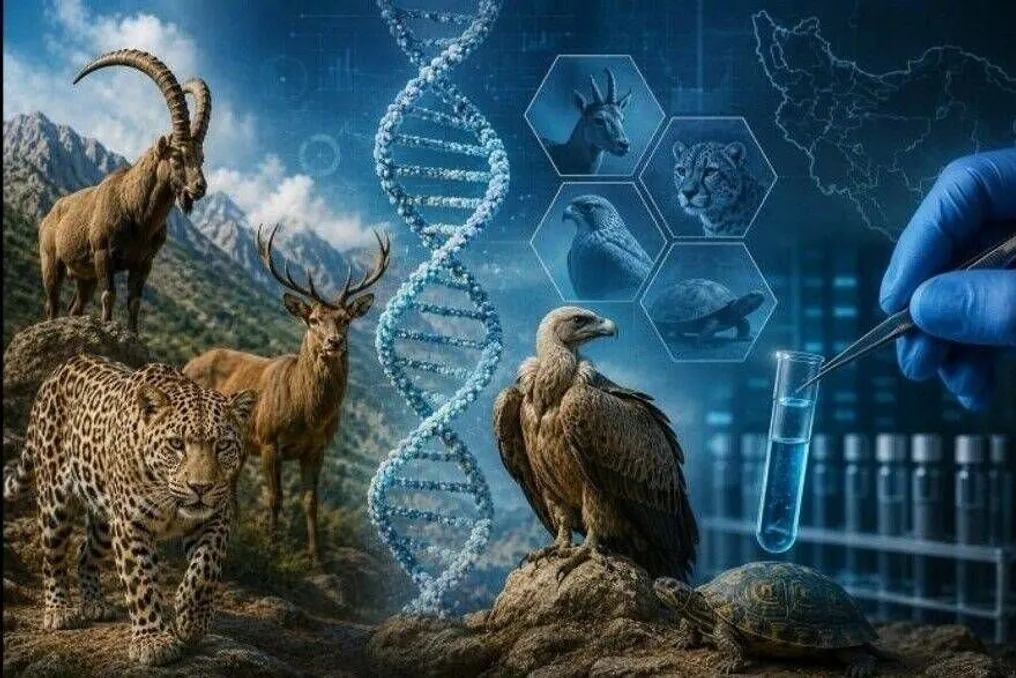
Genetic map of endangered species is being developed to increase survival chances
Read more
Tehran Times
www.tehrantimes.com

Genetic map of endangered species is being developed to increase survival chances

The Department of Environment (DOE) is working on creating a genetic map of wild species that are under threat of extinction. The goal of this work is to increase the probability of these animals' survival, develop breeding plans, manage populations, and mitigate the risks they face in their natural habitat.

A precise understanding of population genetics is critically important for the effective conservation of endangered species. In this regard, genetic and molecular studies of key wildlife species in the country have been initiated so that all management decisions are based on reliable scientific data, according to Leila Ezzeddinlou, head of the National Museum of Natural History and Genetic Resources.

The main objectives of these studies are to preserve genetic diversity within and between populations, prevent the decline of effective population size, avoid inbreeding and genetic erosion, and conserve genes adapted to different environmental conditions. Furthermore, these studies provide genetic resources for species restoration, breeding, and reintroduction programs.

Species Studies and Collaboration

Under three research agreements signed between the DOE, the College of Agricultural and Natural Resources at Tehran University, and Gorgan University, a project is underway to study the genomic diversity and phylogeny of populations of the Levant viper and Latifi’s viper. Conservation and therapeutic approaches based on genomic markers are being applied.

The creation of genetic profiles and maps has also begun for the Asian leopard, black bear, and Persian fallow deer, which are considered key and endangered species. Another part of the agreements focuses on assessing the genetic diversity, inbreeding, and kinship in the Persian zebra population, conducted jointly with the provincial DOE department of Yazd province. This initiative plays an important role in managing small populations and preventing the loss of genetic biodiversity.

From Accelerated Extinction to Successful Species Revival

Despite alarming data on the rate of species extinction, there are positive examples of the recovery of endangered populations, highlighting the significance of conservation efforts in preventing extinction and assisting vulnerable wildlife in recovery.

According to the latest report from the International Union for Conservation of Nature (IUCN) Red List, about 154 vertebrate species and approximately 25 percent of plant species in the country are threatened with extinction, with 117 species classified as critically endangered on the national list. Among the endangered animals are the Persian zebra, Asian leopard, black bear, great thrush, and yellow deer.

Two families of cats—the Irkhani tiger and the Persian lion—have gone extinct forever. However, the Persian zebra and the Persian fallow deer serve as examples of successful conservation measures, where scientific methods and community involvement have led to the recovery of these species, noted Hamid Zohrabee, an employee of the DOE.

Referring to stories of successful species recovery in Iran, Zohrabee mentioned that it was long believed that the yellow deer had become extinct globally. Nevertheless, some individuals were sighted in the forests of Deza and Karkeh, which are the main habitats of the Persian fallow deer, about 65 years ago. Their conservation program immediately began with captive breeding and subsequent release into the natural environment to improve reproductive rates.

The birth of the first Persian fallow deer in the current Iranian year, which began on March 21st, in Karkeh National Park, southwestern Huzestan province, offers hope for the revival of this unique animal. The Persian zebra is a subspecies of okapi, which is critically endangered. The birth of a foal in Yazd province estimates the current Persian zebra population to be over 50 individuals, indicating improved habitat conditions and effective management of protected animals.
Similar stories

Japanese scientists create female mouse clones using innovative genetic technique
Read more
olhardigital.com.br

Japanese scientists create female mouse clones using innovative genetic technique

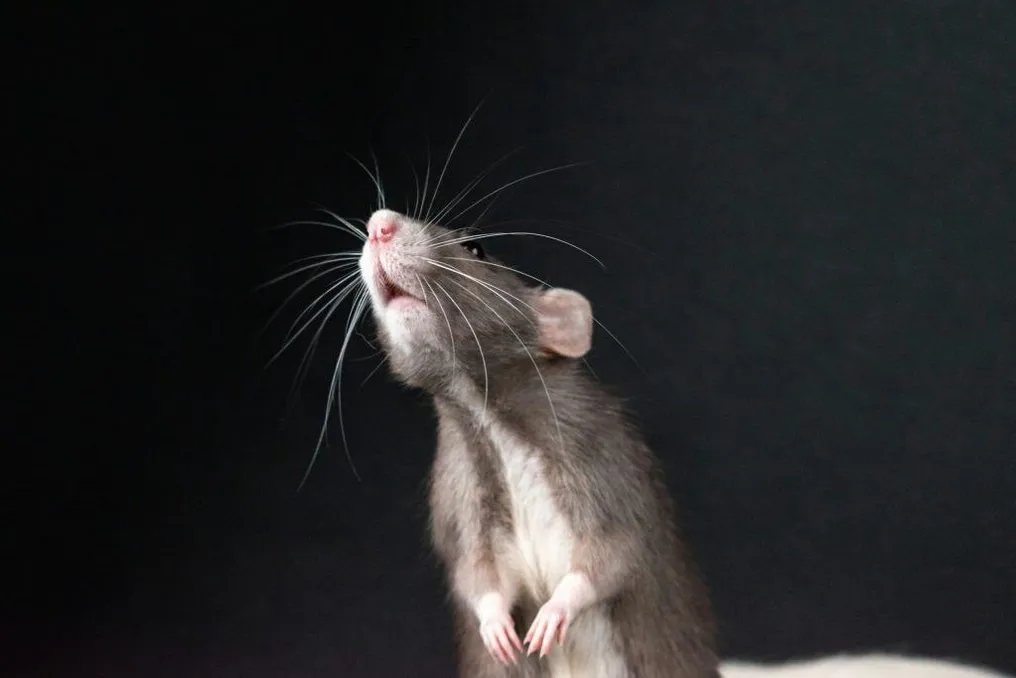
A team of researchers in Japan has succeeded in producing female mice from male animal cells, employing an experiment that combines cloning and gene editing. This advancement was achieved by scientists affiliated with Yamanashi University and the Riken BioResource Research Center.

The method used is based on CRISPR technology, named Y-CUT, which has the ability to remove the Y chromosome from male cells. Tests conducted on cloned mouse embryos and cells resulted in animals with only one X chromosome, forming the XO pattern.

This study, published in August 2026 in a preprint not yet peer-reviewed, suggests a potential application in the conservation of endangered species. The strategy would be particularly useful in scenarios where only males of a certain species remain, although significant limitations still exist for its application in other mammals.

The investigation started from a biological characteristic common to mammals: females generally have two X chromosomes, while males have one X and one Y. The team, led by Takashi Ishiuchi, focused on interfering with this system by removing the Y chromosome from male cells.

To achieve this, the scientists developed Y-CUT, a tool that acts on a specific area of the Y chromosome linked to its transmission during cell division. By applying this tool to mouse embryos with XY chromosomes, the researchers managed to eliminate the Y before transferring them to females that acted as surrogate mothers.

The resulting animals exhibited the XO configuration. The researchers reported that these females developed normally and demonstrated reproductive capacity, a crucial aspect for the future use of this approach.

In a subsequent phase, the team integrated this procedure with conventional cloning techniques. The nucleus of an adult cell, containing the donor's genetic material, is inserted into an egg cell previously devoid of its own DNA. Subsequently, Y-CUT was applied to these cloned cells to exclude the male chromosome.

This process allowed for the creation of females genetically identical to the males who provided the cells, except for the absence of the Y chromosome. The researchers were also able to replicate the strategy using male cells that had been kept frozen.

Another finding expanded the possibilities of the method: both males and females produced by the technique were able to mate and produce healthy offspring. For the authors, this opens up the prospect of using samples stored in biological material banks, known as 'frozen zoos,' which archive cells and tissues from various species.

The preservation of at-risk animals is one of the main reasons cited for developing the technique. While traditional cloning replicates the genetic material of an individual, if the donor is male, its clones will tend to be male. Thus, in populations composed only of males, conventional cloning would not solve the shortage of females necessary for reproduction.

The ability to generate both sexes from male material can increase this range of options. Ben Novak, a scientist at the organization Revive & Restore, commented that the variety of such tools can be very useful in different contexts involving rare or endangered species.

However, the method is not yet a universal solution. The technique requires eggs without their own genetic material, which must be obtained from females of the same or a closely related species, preventing its application in cases where only females are available.

There is also a biological restriction associated with XO chromosomes. Although the fertility observed in mice favors experimental tests in this species, other mammals with this chromosomal constitution may suffer from infertility. The study emphasizes that this difference reduces the chance of directly applying the method to other species.

The researchers estimate that other technologies may complement Y-CUT. Previous work has already demonstrated the production of eggs from male mouse cells, which could meet the need for eggs in cloning. Another line of research mentioned aims to add a second X chromosome to the cells, with the intention of restoring the fertility of the created females.

The strategy can also be combined with inverse approaches, applicable when a population has females but needs males. Recently, researchers at Yamanashi University demonstrated the possibility of introducing rat chromosomes into mice, an achievement that, according to Novak, may help in the future production of XY embryos.

For Monika Ward, a reproductive biologist at the University of Hawaii, who did not participate in the project, the method can also be valuable for research with genetically modified animals. Producing male and female clones of the same modified animal could reduce the cost and time of experiments, in addition to serving as a tool to study the functioning of sex chromosomes.

The study is still awaiting peer review, and the results themselves indicate that Y-CUT requires other specific technologies and biological conditions to achieve broader applications. Nevertheless, the experiment inaugurates a new possibility in cloning: generating female individuals capable of reproducing from male genetic material.

Popular