The appeal of the American Dream for the most talented students from Asia is being questioned amid recent immigration restrictions. Previously, the promise of a better life and promising economic opportunities made the US a highly desirable destination for Asian students.
In July, the White House introduced a new rule that abolishes the system allowing international students to remain in the country while maintaining student status. This is one of the most significant changes to educational visa rules in many years. Many fear that the Trump administration may use this to complicate the stay and employment of graduates, as well as to create uncertainty and delays when renewing visas for completing doctoral and other long-term programs.
The concern is not only related to the new migration regulations. Parents have always spent significant sums to prepare their children for admission to US universities, but now they have to teach their children how to navigate a country that seems less welcoming.
Challenges in attracting Asian students
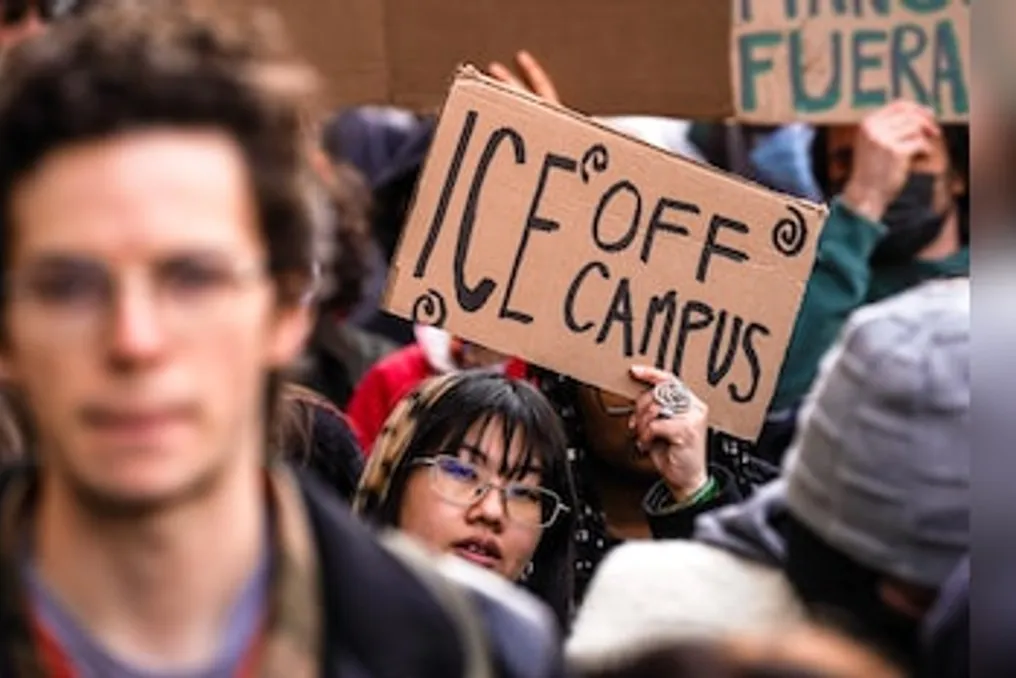
China is one of the largest markets for American universities, with nearly 266,000 students enrolled in the 2024/2025 academic year. However, these figures are declining, and America is no longer an undisputed choice. Incoming teenagers are now reportedly going to 'survival camps' where ICE raids and other scenarios are simulated to prepare them for potential dangers.
Families are also considering alternative destinations such as the UK, Canada, Australia, and Singapore. While some may view this as an overreaction and it does not reflect the approach of all Chinese families to college preparation, the existence of such camps indicates a change in perception of America. Parents who previously worried about their children getting into a good American college are now forced to worry about their fate after arriving in the country.
Economic impact of Trump's policies
According to a June report by the Peterson Institute for International Economics, Trump's policies and the growing hostile attitude towards international students are already affecting the US economy. The report authors calculated that the issuance of visas to international students has decreased by approximately one-third compared to the norm since the adoption of new federal government measures last year aimed at reducing the number of foreign applicants.
This will hit American innovation the hardest. The Peterson Institute estimates that foreign workers make up 30 percent of the highly skilled workforce in STEM, and most of them come to the US as students. If their numbers continue to decrease, this skilled pool will shrink by 6.2 percent. In a decade, this could lead to a reduction in GDP by $240 to $481 billion.
China is also closing the gap in education, surpassing the US in the annual number of artificial intelligence patents, despite Chinese researchers continuing to actively utilize American knowledge.
Nevertheless, the US is unlikely to soon lose its status as a leading educational destination for Asian students. America's top universities maintain an extremely strong brand, and the networks, research infrastructure, and employment opportunities they have historically provided are difficult to replicate.
However, the US cannot rely solely on the 'American Brand' to continue attracting the best and most talented. The UK and Australia are facing similar issues and have tightened elements of their international education systems. A sensible step would be to adopt some of their policies, more specifically defining which people America wants to attract. Furthermore, authorities must provide sufficient assurance to genuine students that they can complete their studies and offer the most talented among them a predictable path to stay and work.
The American Dream still exists, but if its realization becomes too burdensome, some of Asia's most promising students may decide to look elsewhere, and the US will suffer losses.