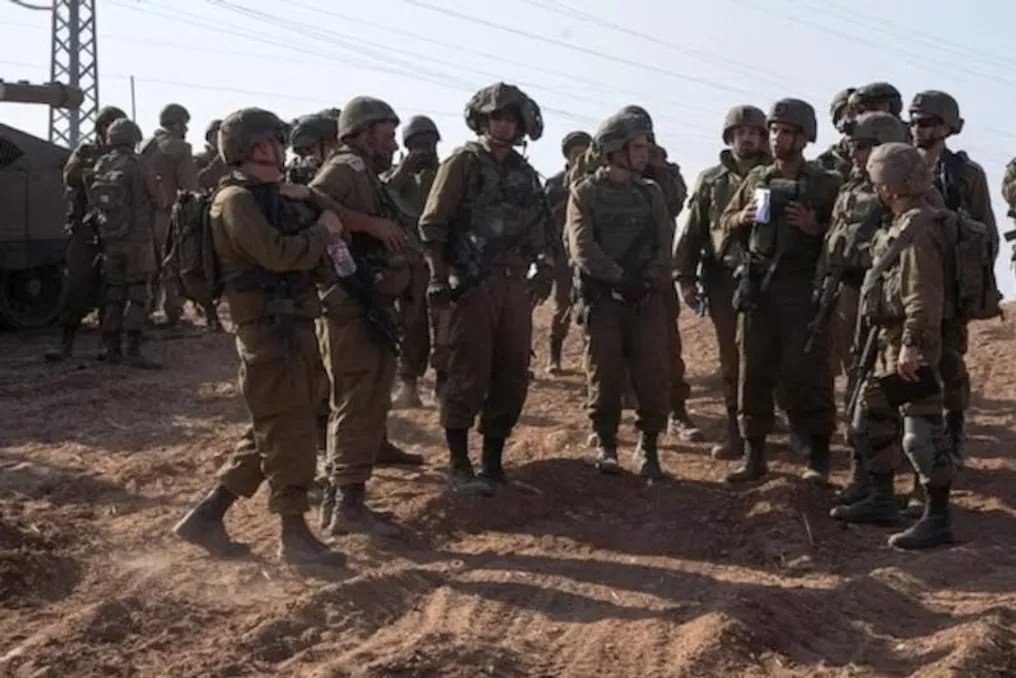
Despite being considered among the strongest, Israeli soldiers also exhibit another side. Following prolonged battles in Gaza, many service members are facing mental health issues. Some experience nightmares, others fear sudden loud noises, and a third relive war memories in their daily lives. This raises the question of why this is happening.
According to an AP report from November 2025, based on data from the Israeli Ministry of Defense, approximately 11,000 soldiers were identified with mental health injuries after the October 7, 2023 attack. These problems include conditions such as PTSD, anxiety, and depression. According to AP, this figure constitutes a significant portion of all registered cases of such mental trauma throughout the history of Israel's conflicts.
PTSD, or Post-Traumatic Stress Disorder, is a mental health condition that can develop after experiencing an extremely terrifying or life-threatening event. In this condition, a person may repeatedly recall the event. Symptoms can include flashbacks, panic attacks, sleep disturbances, and nightmares.
During military operations, soldiers are constantly under threat: shelling, explosions, drone and rocket attacks, the death of comrades, and the constant fear for their lives keep their brains in a state of prolonged stress. This is why, even after returning home, the body may adapt, but the brain requires more time to return to a normal state.
The AP report also presented the experience of a former Israeli soldier who participated in the fighting in Gaza. Even almost 18 months after being discharged from the army, he was troubled by flashbacks and panic attacks. He recounted that the flight of an airplane or drone, someone's scream, or loud noises would return him to the same mental state.
Another soldier noted that while collecting bodies in southern Israel after October 7, what struck him most was not the scene itself, but the smell of the bodies. Later, that same smell reminded him of the event when he changed a child's diaper. This example demonstrates that military trauma can be triggered not only by images but also by smells, sounds, or trivial things.
Rise in PTSD Cases
In January 2026, Reuters, citing data from the Israeli Ministry of Defense, reported an increase in PTSD cases among soldiers by approximately 40% since 2023. According to the report, among 22,300 service members who sought treatment for war-related injuries, about 60% suffered from post-traumatic syndrome. The Ministry of Defense also predicts a further increase in these cases in the coming years.
The importance of this data lies in the fact that PTSD does not always manifest as a visible physical injury. A soldier may not have serious bodily harm, but their sleep, behavior, and daily life can change. They may become irritable, jump at the slightest sound, avoid people, or constantly be on guard for danger.
The war between Israel and Hamas continued for a long time, and a large number of reservists were called up multiple times. Many soldiers did not have enough time for psychological stabilization and returning to normal life. Experts in the AP report named the duration of the war, its intensity, and frequent deployments as one of the main causes of the mental health crisis.
According to Reuters, between January 2024 and July 2025, 279 soldiers attempted suicide. The report also emphasizes that the psychological pressure associated with the war remains a constant problem among service members.
Nightmares are just one symptom of PTSD. In addition, there may be flashbacks, anxiety, sleep problems, irritability, intrusive memories of events, and social isolation. Some soldiers also suffer from moral injury, which means developing feelings of guilt or deep internal conflict regarding decisions made or events witnessed during the war.
In an interview with clinical psychologist Ronen Sidi, mentioned in the Reuters report, it was stated that part of the soldiers' trauma is related to the fear of death and the deep horror experienced during the war, while another part may be related to the traumatic experience itself.
Experts believe this is not inevitable. According to The Telegraph, based on data from the Israeli medical organization Clalit, 70% more cases of PTSD have been diagnosed in the general population since October 7. Clalit specialists warn that the real impact of the war on mental health may be much larger than what PTSD statistics show.
Professor Amir Krivoy, a mental health specialist at Clalit, notes that due to the continuous war and repeated stressful events, there is no natural decline that usually occurs after a stressful incident over time. In his opinion, PTSD statistics reflect only part of the mental crisis, including depression, anxiety, and other conditions.