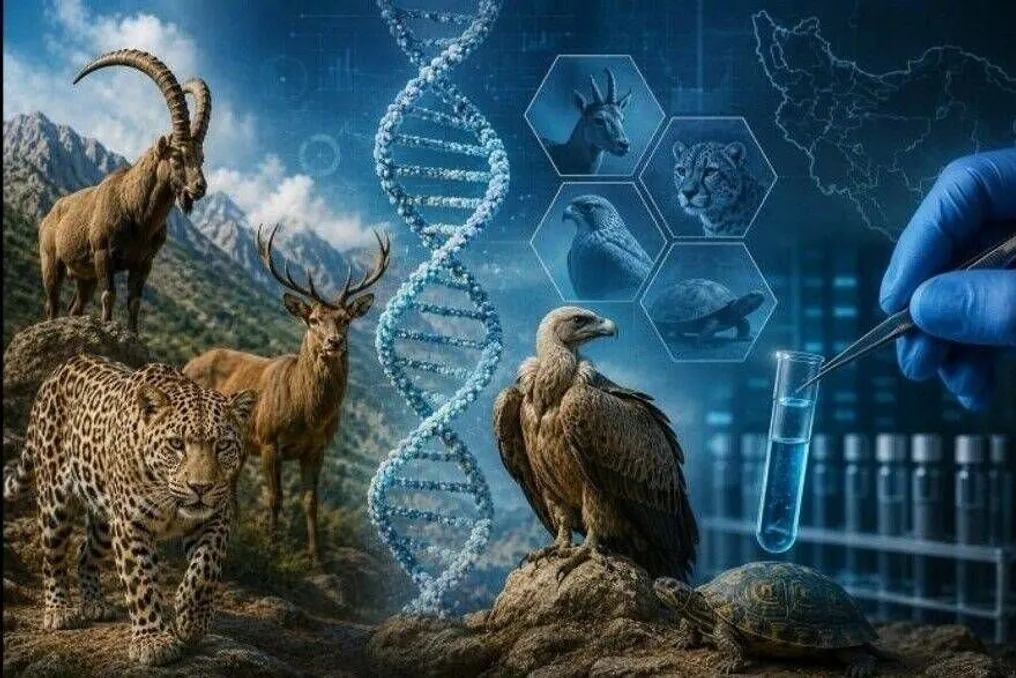
The Department of Environment (DOE) is working on creating a genetic map of wild species that are under threat of extinction. The goal of this work is to increase the probability of these animals' survival, develop breeding plans, manage populations, and mitigate the risks they face in their natural habitat.
A precise understanding of population genetics is critically important for the effective conservation of endangered species. In this regard, genetic and molecular studies of key wildlife species in the country have been initiated so that all management decisions are based on reliable scientific data, according to Leila Ezzeddinlou, head of the National Museum of Natural History and Genetic Resources.
The main objectives of these studies are to preserve genetic diversity within and between populations, prevent the decline of effective population size, avoid inbreeding and genetic erosion, and conserve genes adapted to different environmental conditions. Furthermore, these studies provide genetic resources for species restoration, breeding, and reintroduction programs.
Species Studies and Collaboration
Under three research agreements signed between the DOE, the College of Agricultural and Natural Resources at Tehran University, and Gorgan University, a project is underway to study the genomic diversity and phylogeny of populations of the Levant viper and Latifi’s viper. Conservation and therapeutic approaches based on genomic markers are being applied.
The creation of genetic profiles and maps has also begun for the Asian leopard, black bear, and Persian fallow deer, which are considered key and endangered species. Another part of the agreements focuses on assessing the genetic diversity, inbreeding, and kinship in the Persian zebra population, conducted jointly with the provincial DOE department of Yazd province. This initiative plays an important role in managing small populations and preventing the loss of genetic biodiversity.
From Accelerated Extinction to Successful Species Revival
Despite alarming data on the rate of species extinction, there are positive examples of the recovery of endangered populations, highlighting the significance of conservation efforts in preventing extinction and assisting vulnerable wildlife in recovery.
According to the latest report from the International Union for Conservation of Nature (IUCN) Red List, about 154 vertebrate species and approximately 25 percent of plant species in the country are threatened with extinction, with 117 species classified as critically endangered on the national list. Among the endangered animals are the Persian zebra, Asian leopard, black bear, great thrush, and yellow deer.
Two families of cats—the Irkhani tiger and the Persian lion—have gone extinct forever. However, the Persian zebra and the Persian fallow deer serve as examples of successful conservation measures, where scientific methods and community involvement have led to the recovery of these species, noted Hamid Zohrabee, an employee of the DOE.
Referring to stories of successful species recovery in Iran, Zohrabee mentioned that it was long believed that the yellow deer had become extinct globally. Nevertheless, some individuals were sighted in the forests of Deza and Karkeh, which are the main habitats of the Persian fallow deer, about 65 years ago. Their conservation program immediately began with captive breeding and subsequent release into the natural environment to improve reproductive rates.
The birth of the first Persian fallow deer in the current Iranian year, which began on March 21st, in Karkeh National Park, southwestern Huzestan province, offers hope for the revival of this unique animal. The Persian zebra is a subspecies of okapi, which is critically endangered. The birth of a foal in Yazd province estimates the current Persian zebra population to be over 50 individuals, indicating improved habitat conditions and effective management of protected animals.