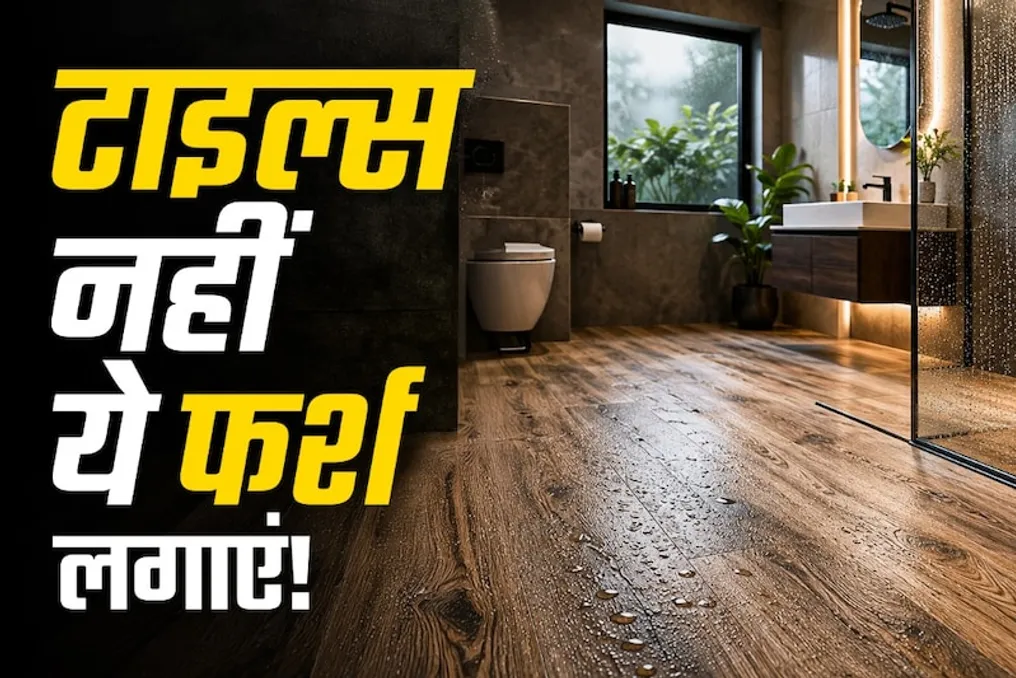
People often encounter situations where they slip or fall in the bathroom, and the cause is the slippery tile or stone surface. Over time, surfaces in bathrooms can become more slippery. Despite this, many continue to consider tiles or stone when choosing flooring because they look impressive. However, when in contact with water, many of these coverings become very slippery.
This is especially problematic in homes with small children or elderly people, where a wet bathroom floor poses a danger. In such cases, the question arises about what kind of floor should be used. If you are concerned about slipperiness in the bathroom and are looking for an option that looks beautiful but minimizes the risk of falling, the solution may be anti-slip vinyl flooring.
Vinyl flooring is a synthetic flooring made primarily from PVC plastic. It can imitate the appearance of wood, marble, or stone, but it is cheaper, lighter, and easier to install than natural counterparts. Furthermore, it is sufficiently resistant to water and humidity, durable, and resistant to wear, so it is actively used in both residential and office spaces.
Although vinyl flooring was traditionally used in bedrooms and living rooms, today it is also used in bathrooms due to the availability of waterproof and textured options. The surface of vinyl has light grip, which reduces the likelihood of slipping compared to tiles or other smooth surfaces in the presence of water.
Thus, if the goal is to make the bathroom aesthetic and safe, anti-slip vinyl flooring can be a suitable choice.
Many people dislike walking barefoot on cold tiles early in the morning. Vinyl flooring feels softer and warmer compared to tiles. For homes with small children, vinyl flooring is particularly good because it is not as hard as stone, and injuries from a child's fall may be less severe.
Water and Humidity Resistance
The main problem in the bathroom is water and humidity. Therefore, before installing any flooring, it is necessary to ensure that it is designed for this type of room. Under these conditions, it is recommended to choose waterproof or water-resistant vinyl flooring. Nevertheless, it is not enough just to replace the floor material; it is critically important to ensure proper sealing of joints and the edges of the subfloor, otherwise, water can penetrate inside and cause damage.
Bathroom Aesthetics
If there is a perception that vinyl flooring looks like simple plastic, this is not true. Options with wood texture, stone appearance, marble patterns, and various colors are available on the market. This allows you to update the bathroom, giving it a modern look, without the need for expensive real stone or tiles. In small bathrooms, light tones and minimalist patterns help visually expand the space.
Ease of Cleaning
Since the bathroom floor requires daily cleaning, vinyl has the advantage that dirt, soap residue, and stains are easier to remove from its surface. However, due to the texture of the anti-slip surface, regular cleaning is necessary to prevent dirt accumulation. At the same time, aggressive chemicals or cleaning agents that may damage the top layer of the coating should be avoided.
If you are concerned about whether vinyl flooring will provide complete protection against slipping for years to come, it is important to understand that no flooring guarantees 100% prevention of slipping forever. Over time, the coating may wear out, and slipping may increase due to layers of soap, oil, or water. Therefore, it is not enough just to choose the coating; it is crucial to ensure proper drainage in the bathroom and maintain regular floor cleanliness. When purchasing, pay attention to products specifically designed as anti-slip for bathrooms.
When deciding to install vinyl flooring in the bathroom, choose models specifically designed for wet areas. Before starting installation, the floor must be completely level and dry. It is also necessary to carefully seal all edges and joints.