China Mobile has released its first half of 2026 results, which once again indicates the deepening of token operations. These results announced the introduction of unified national pricing for tokens in both public and enterprise markets.
China Mobile has released its first half of 2026 results, which once again indicates the deepening of token operations. These results announced the introduction of unified national pricing for tokens in both public and enterprise markets.
According to CAICT data, daily token usage in China has increased by over 1000 times in two years, reaching over 140 trillion by March 2026, compared to approximately 100 billion at the beginning of 2024. IDC data shows that MaaS token usage in the corporate sector reached 1,944 trillion in 2025, an increase of 16 times, with MaaS cloud service revenue amounting to 3.07 billion yuan.
This growth occurs against the backdrop of slowing revenue in the telecommunications industry: telecom business revenue in the first half of 2026 decreased by 2.1% to 887.3 billion yuan, although the volume at constant prices grew by 7.7%, demonstrating a pattern of revenue decline despite volume growth.
In May, China Mobile launched national token packages that standardized the point system for packaging token consumption across various models into unified credits, thereby lowering usage thresholds. These packages start from 5 yuan per month and include cloud computing and cloud telephony. Regional pilot projects included offers from Jiangsu Mobile—5 yuan for 2.5 million tokens, Shanghai Mobile—1 yuan for 400,000 tokens, and Beijing Mobile packages starting from 5.99 yuan.
Analyst Zhou Guijun noted that China Mobile's approach is not merely about selling quotas but about creating an intermediary platform that connects models, computing power, and applications through unified measurement. The company's token ecosystem has connected over 300 models, and centralized operations can reduce unit token costs by approximately 30% and resource utilization by more than 50%.
Competitors are also actively developing this area. China Telecom launched trial consumer-level token packages on May 17th priced at 9.9, 29.9, and 49.9 yuan for 10, 40, and 80 million tokens, respectively, as well as developer packages ranging from 39.9 to 299.9 yuan, combining tokens with communication, security, cloud, and model services. China Unicom is conducting provincial pilots in Hubei, Shanghai, and Sichuan provinces, offering personal packages from 6 to 18 million tokens tied to broadband access and AI cloud desktops. The overall industry trajectory suggests regional pilots first, followed by group platforms, and finally unified pricing.
Scaling implementation faces three main challenges. Firstly, tokens are not intuitive like data traffic: the value of one million tokens can mean ten or a hundred AI conversations, depending on the model, context, and task. The China Association of Communications Enterprises noted in July difficulties with accounting, cognitive perception barriers for users, and the immaturity of business models. Secondly, suppliers have different definitions: Tencent Cloud separately bills for input and output tokens or sells prepaid packages with multiple price breaks between models, while its TokenPlan is focused on agent and coding workloads with a monthly cost starting from 28 yuan. Thirdly, buyers: consumption is concentrated among developers, enterprise AI, agents, coding, and professional content; meanwhile, free quotas are often sufficient for ordinary consumers.
As CITIC Securities points out, the rental of computing power may shift from billing server hours to token consumption, and token operators could become a new node of value; the key factor is stable demand for AI calls as agents transition to production use.
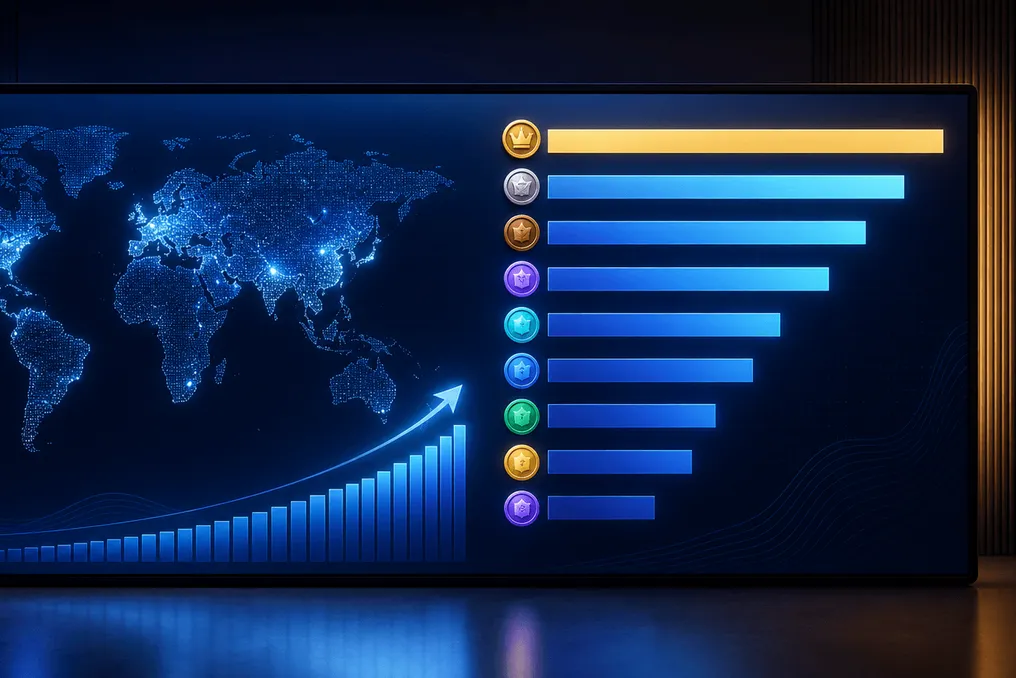
Chinese artificial intelligence laboratories now occupy the top four positions in the global model token usage ranking. According to the latest data from OpenRouter, the total global model usage reached 69 trillion tokens between August 3 and 9, which is 21.48 percent higher compared to the previous week. Chinese models accounted for 34.25 trillion of this total, while American models contributed 9.17 trillion. This marks the fifteenth consecutive week that Chinese models have led the global ranking.
A more detailed analysis of the chart reveals a more complex picture. The official version of DeepSeek-V4-Flash-0731 took first place with 8.83 trillion tokens, representing a 570 percent increase from the previous week. Tencent Hy3 was second with 8.05 trillion tokens, showing a 67 percent growth. The preview version of DeepSeek-V4-Flash-0423 dropped to third place with 5.88 trillion tokens, and Xiaomi MiMo-V2.5 secured fourth place with 5.39 trillion tokens. Thus, all four leading global spots are now held by Chinese labs.
The official release of DeepSeek was made on July 31. The model structure and parameter count remained unchanged compared to the preliminary version, but the fine-tuning recipe was started from scratch. This resulted in significant improvements in mathematical and coding test scores, explaining the rapid shift in developer traffic. According to Artificial Analysis, the official V4-Flash now passes single-task tests at an average cost of $0.03, which is about one hundred times cheaper than Anthropic's flagship Claude Fable 5, making it the most affordable large model globally.
There is also a shift in rankings. The MiniMax M3 model, which was in seventh place last week, and Stepfun Step 3.7 Flash, which was in ninth, have left the top ten in the current ranking. OpenAI's GPT-5.6 Luna entered the top five with 4.43 trillion tokens, showing a 128 percent increase after the company reduced the price for enterprise workloads by 80 percent. Google's Gemini 3.6 Flash entered the top ten for the first time with 2.33 trillion tokens, increasing by 446 percent compared to the previous week.
The structural conclusion is that Chinese open-source models have transitioned from a price advantage to a usage advantage. Fifteen weeks of sustained global leadership, holding four out of the top four spots, and a flagship model priced at one-hundredth—all point to the same conclusion: the Chinese open-source stack no longer competes solely on price. It competes in a combination of price, throughput, and benchmark quality, and wins on all three parameters.