As students return to classrooms across the UAE, roads near schools are expected to become busier during morning drop-off and evening pick-up times. Due to parental rush, the arrival and departure of school buses, and students crossing roads to enter school gates, even minor traffic violations can cause congestion and increase safety risks. Therefore, drivers are strongly advised to plan their journeys, leave early, and adhere to traffic rules in areas around schools.
Below are ten common mistakes that drivers should avoid.
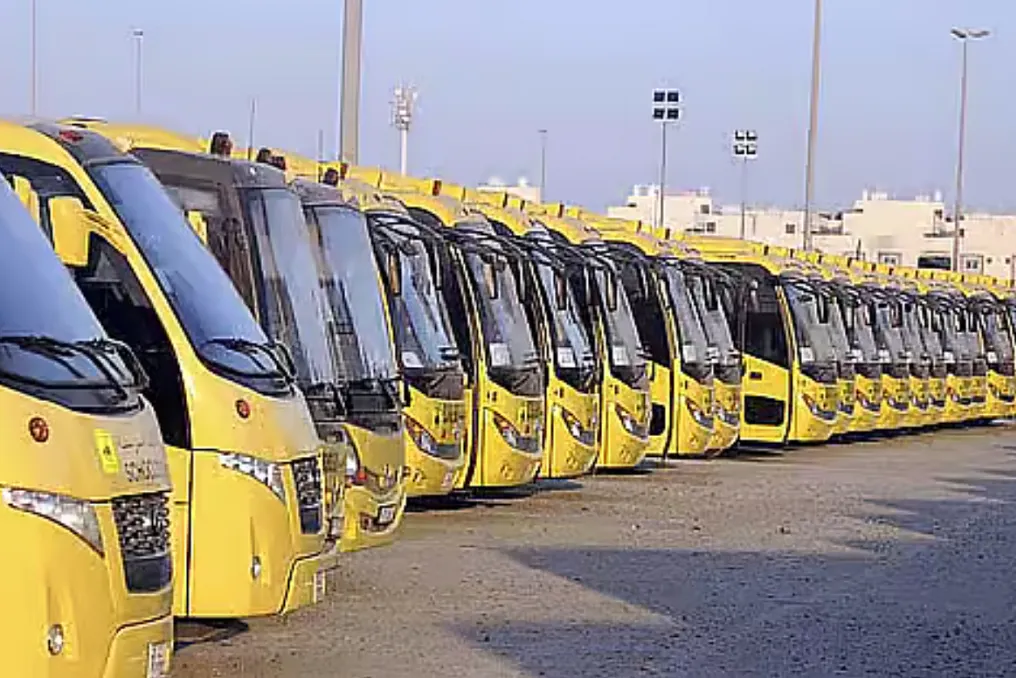
When a school bus stops and deploys its 'Stop' sign to allow students to enter or exit, approaching drivers must stop and wait until the bus completes the process and it is safe to proceed. Some drivers might see a bus ahead and assume they have enough space to overtake, especially if they are in a hurry. However, children may be exiting the bus and crossing the road, which makes predicting their movements difficult.
Drivers should slow down as soon as they see a stopping school bus and remain stationary until the 'Stop' sign is deployed. Giving students a few extra seconds to board or alight helps prevent accidents and keeps the area around the bus clear. Failure to stop for a school bus can result in a fine of 1000 dirhams and the accumulation of 10 black points.
Speeding near schools removes drivers' reaction time when children suddenly cross the road, a school bus stops, or a vehicle slows down to let a student off. Many school zones have reduced speed limits, and drivers must follow signs rather than assuming the limit is the same throughout the road. A driver rushing to drop off a child might continue at their usual speed without realizing they have entered a reduced speed zone.
Even if the road appears clear, children may suddenly cross it or move between vehicles, so drivers must reduce speed and remain vigilant. Speeding fines depend on how much the driver exceeds the set limit, ranging from 300 dirhams up to 3000 dirhams for serious offenses.
There may be a temptation to quickly check a message, answer a call, or look at the navigation while driving to school, especially when parents are already rushing to get children to class on time. However, taking your eyes off the road for even a few seconds can cause the driver to miss what is happening right ahead. Areas around schools require heightened attention; a driver looking at their phone might not notice a student stepping onto the crosswalk or a vehicle suddenly stopping in front of them. Drivers must keep phones away and focus on the road throughout the journey, especially when approaching schools.
Using a mobile phone while driving can lead to a fine of 800 dirhams and four black points. Crosswalks near schools can become particularly busy during drop-off and pick-up hours, as groups of students and parents often cross the road simultaneously. Drivers should slow down when approaching a marked crossing and give pedestrians enough time to cross safely. Attempting to pass before a child reaches the other side leaves little reaction time if they suddenly stop, change direction, or another child follows them. For parents, this might only take a few extra seconds, but for drivers, allowing this time can prevent a potentially serious situation. Failing to yield to pedestrians can result in a fine of 500 dirhams and six black points.
Stopping at a crosswalk might seem like a quick way to drop off a child when the street near the school is crowded, but it can create problems for everyone using the crossing. When a vehicle stops at the crossing, students have to go around it or walk between other cars to reach the sidewalk. This can also obstruct the visibility of children crossing the road to other drivers. Several students and parents may use the crosswalk simultaneously during the school day, so maintaining its clear passage is paramount.
Stopping in the middle of the road to drop off or pick up a child is a common issue near schools, especially during morning and afternoon rush hours. When a parent stops in the traffic lane instead of using a designated area, other drivers have to slow down, change lanes, or maneuver around the vehicle. Meanwhile, children might walk between cars to reach the school entrance or school bus, complicating safe management of the area. Parents might intend to stop for just a minute, but if several cars do this, the road can quickly become congested and unpredictable. This can also impede school buses from pulling up for student boarding and safe departure.
Some parents may feel there is no need to worry about seatbelts if the school is only a few minutes away, especially if they are already late and just want to get the children to school. But a short trip does not mean zero risk. A sudden stop, a vehicle changing lanes, or an unforeseen road incident can happen at any moment. Therefore, children must be properly secured throughout the entire journey, regardless of whether they are sitting in the front or back of the vehicle. All passengers must wear seatbelts, and failure to comply with this requirement can result in a fine of 400 dirhams and four black points.
Many parents may underestimate the importance of proper child restraint, especially during short trips to school. But even a few minutes on the road can involve unexpected risks. Children under 10 years old or shorter than 145 cm should not sit in the front seat, and small children must use appropriate child restraint devices. Parents must check that children are seated correctly and securely fastened before departure. Violating the rules for using child restraints can result in a fine of 400 dirhams and four black points.
Finding parking near a busy school can be difficult, but stopping behind another vehicle and blocking it can cause problems for other parents and drivers. A parent might leave their car for a few minutes to walk a child to school, only to return and find they have blocked another vehicle's exit. This can cause unnecessary delays and add to the congestion around the school. Improper parking can make already busy school roads even more congested and may block access for students, parents, and emergency services.