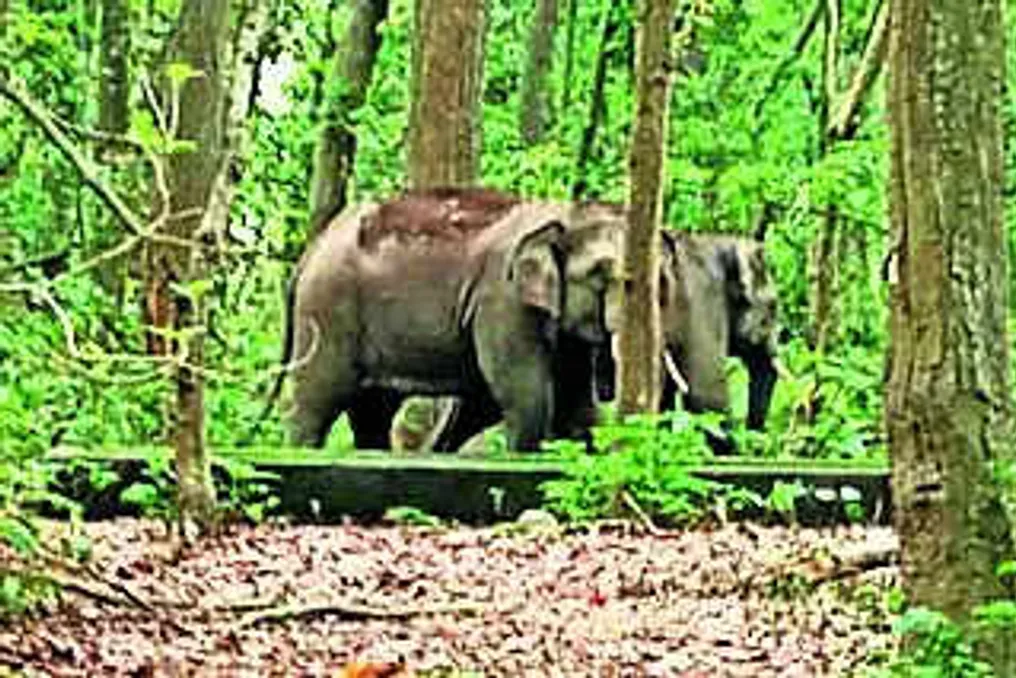
The Supreme Court (SC) has decided to ensure the actual observance of elephants' right to free movement by obliging the Union government to conduct a fresh assessment. This assessment must identify which states have erected walls or dug trenches on the inter-state migration routes of these animals.
The judicial bench, comprising Chief Justice Suri Kant and judges Joymali Bagchi and Vi Mohana, stated that obstacles, blockades, or hindrances to the movement of elephants from one state to another are unacceptable.
As part of the case concerning the protection of elephant corridors in West Bengal, the court directed Additional Solicitor Aishwarya Bati to convey the court's concern to the Ministry of Environment and Forests and demand an inspection of the condition of elephant corridors in various states.
When petitioner's lawyer Pirna Singh Bindry pointed out a specific problem in Bengal, Judge Bagchi noted that herds of elephants from Nepal and North Bengal migrate to Odisha and Chhattisgarh, but these two states have built walls on their migration route.
Chief Justice Kant emphasized that creating such barriers is inadmissible, and that states cannot evade responsibility for maintaining elephant corridors for the free movement of herds solely due to crop damage, farmers' complaints, or difficulties for villagers. He added that the solution is not to block the corridors, but to find alternative routes.
The bench ruled that the ministry's guidelines for maintaining corridors must be strictly followed. When Bati informed the court that such an inspection was conducted in 2023, the court demanded that the government conduct a new assessment.
Judge Bagchi highlighted the need for synergy between states, noting that 'elephant corridors are not specific to any single state. Elephants move across states.' Chief Justice Kant questioned how any state could block traditional migration paths if they exist.
The court granted the government eight weeks to submit a report on the results of the new inspection. This report must also include information on compliance with the ban on using firearms, explosives, or torches to divert elephant herds from their natural migration routes.