In July, Morocco became the first Arab and African country to deploy its military forces to the International Stabilization Force (ISF) in Palestine, in line with Donald Trump's 'peace plan' for Gaza, which was supported by his questionable Board of Peace (BoP).
On July 15, an agreement formalizing Morocco's participation in the ISF was signed in Rabat. The ceremony took place in the presence of Moroccan Foreign Minister Nasser Bourita, BoP CEO Nikolai Mladenov, high-ranking military officials, and ISF Commander Jasper Jeffers.
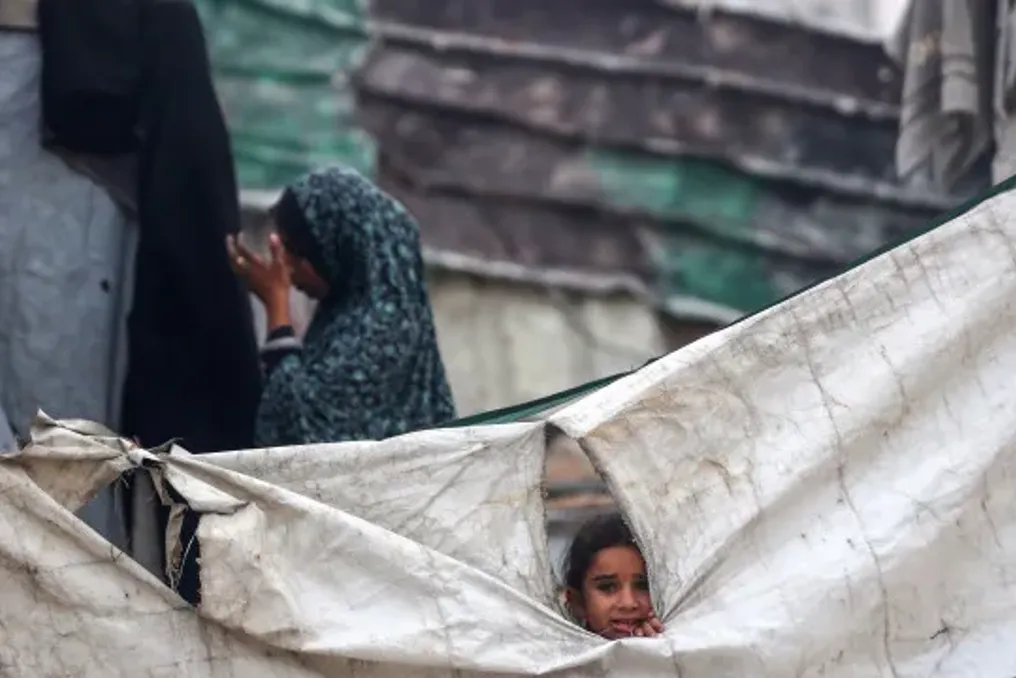
Morocco's participation followed directives from King Mohammed VI, Supreme Commander and Head of the General Staff of the Royal Armed Forces, as well as Chairman of the Al-Quds Committee. Initially, 500 Moroccan soldiers were planned to be sent to the refugee camp in the southern city of Rafah, but as reported by Al Jazeera, the number was reduced to 200 soldiers.
This force is expected to operate jointly with the Israeli army. After signing the agreement, Morocco's HAMAS announced its conditional disarmament proposal, consistent with the Trump plan for Gaza.
Conflict and Party Positions
Nevertheless, Israel ignored its part of the agreement and shows no intention of withdrawing troops from Palestine and the territories it occupies. Instead of setting withdrawal deadlines, ultra-right Israeli Finance Minister Bezalel Smotrich proposed expanding illegal settlements in the Gaza Strip.
According to an official statement from Morocco's National Defense Administration, the country's contribution 'demonstrates its commitment to peace, international cooperation, and regional stability.' The statement also emphasized that this step aligns with Morocco's role as a founder of the BoP.
Professor of International Relations Said Saddiki from Sidi Mohammed Ben Abdellah University in Fez explained the benefits for Rabat: joining the force 'gives Morocco the opportunity to restore a more prominent diplomatic role in the Palestinian issue, complementing its long-standing role through the Al-Quds Committee and Bait Mal Al-Quds Agency.'
Humanitarian Narrative
While other sources, such as the Council on Foreign Relations, point to the ISF's goal as being the primary security force in Gaza, replacing the Israeli army, Morocco places strong emphasis on its help in establishing a field hospital in Gaza as part of the ISF mission. However, Saadia*, a key member of BDS in Morocco and organizer of the latest 'Global Sumud' flotilla, called this hospital 'nothing more than a narrative.'
Speaking to Middle East Eye, Saadia noted: 'Perhaps Morocco helps Palestine, but it helps Zionist education more,' adding that this is linked to the kingdom's role in sending weapons to Israel. Professor Saddiki believes the field hospital 'should primarily be seen as a humanitarian initiative, not a military one.'
Although he noted good relations between Morocco and both Palestinian and Israeli leadership, he stressed that 'the current regional situation leaves little room for any Arab country to play an effective mediating role. Therefore, Morocco will likely contribute through humanitarian aid and diplomacy, rather than active mediation.'
The Moroccan Ministry of Defense has not yet disclosed the details of the role the country will play in the ISF in Palestine. Saadia speculated: 'I do not know what Morocco's role [in the ISF] will be, other than perhaps disarming the resistance [HAMAS] and even overseeing the new colonization of the Gaza Strip by American-Zionist education.'
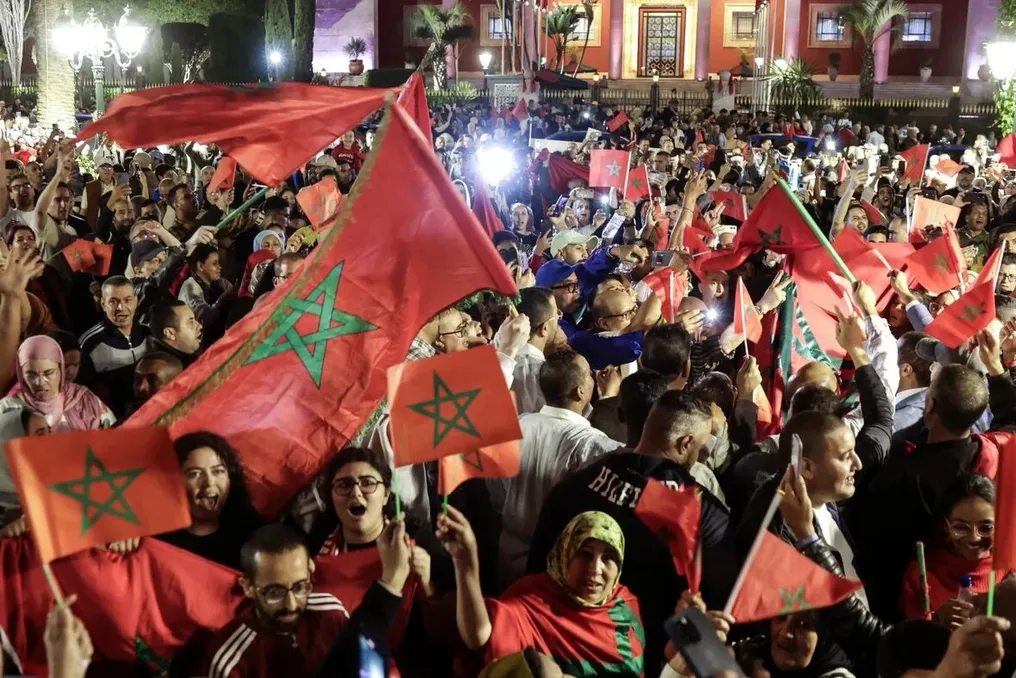
Professor Saddiki believes Morocco's participation 'does not represent a strategic alignment against any side, nor does it come at the expense of the Palestinian cause.' He also recalled that 'domestically, Morocco sought to balance its foreign policy with popular support for Palestine,' noting that pro-Palestinian and anti-normalization movements in Morocco remain very active since October 2023.
Accusations of Complicity in Genocide
Despite the apparent support for Israel from the Moroccan state, many Moroccan citizens warn that any normalization deals with Israel are tantamount to 'complicity in the genocide' of the Palestinian people in Gaza and the occupied West Bank. Younes*, a central figure in the pro-Palestinian protest movement in Morocco and one of the organizers of the last two 'Global Sumud' flotillas, told MEE: 'Joining the ISF is full complicity in genocide.'
The activist added that 'entering Gaza in a Zionist tank to 'impose' peace on one hand and force Palestinians into surrender and demilitarization on the other is a great sin that will not be tolerated.' Younes also stated that the peace plan and the board are widely condemned for violating international law, ranging from grassroots activism to the level of states. He added: 'There is no peace plan based on the history of deals with Zionist education [...] they think they can do whatever they want.'
An activist from Rabat, who preferred to remain anonymous, described Morocco's involvement as 'very disheartening and disappointing.' Despite the disappointment, she said she was 'not surprised' by Morocco's participation. She clarified that this does not mean the public supports further normalization with Israel: 'I cannot speak for all young Moroccans of Generation Z, but I would say that most oppose Morocco's military support in the ISF.'
The Arabic Index 2025, published by the Arab Center in Washington, D.C., earlier this year, showed that 89 percent of Moroccans oppose recognizing Israel, while only six percent support normalization with Israel.
A Moroccan journalist, who wished to remain anonymous, told MEE that 'Morocco's state narrative presents normalization as a lever, cooperation, and support for a two-state solution in exchange for US support.' However, the journalist noted that 'public trust in Morocco is collapsing' due to the gap between the official presentation and what is seen on the ground, related to the ongoing expansion of Israeli settlements in occupied territories, which 'moves away from any two-state outcome.'
For this activist, further military intervention with Moroccan forces will not bring peace to Palestinians. 'I do not think military intervention will bring peace when the oppressor destroys, bombs, blocks, and [commits] genocide for decades,' she stated. She added: 'The US and Israel will only continue to destabilize, kill, kill, and sow chaos in Gaza and destroy the lives of millions of Palestinians.'
Cry into the Void
Morocco is the only North African and Arab country sending military forces to the ISF, joining Kosovo, Albania, Kazakhstan, Indonesia, and recently Uganda. Meanwhile, neighboring Egypt has limited its participation to training and logistical support.
This unique position has caused deep resentment among local activists. Younes expressed his disappointment over how quickly normalization spread across the country. He explained: 'Zionists in Morocco have successfully infiltrated all sectors in a short period. What we are gathering as voluntary efforts and popular mobilization to fight this cancerous tumor in recent years is not enough.'
Acknowledging the severity of his assessment, he continued: 'I think the more we fight against accepting cooperation with Israel, the more Moroccan authorities normalize with these terrorists. We must change our approach and look for alternatives.'
Despite increased pressure from Moroccan state authorities, the pro-Palestinian movement maintains its defiance. Saadia argued that governments participating in the ISF are operating under a dangerous illusion. She warned that these countries mistakenly believe that 'this American-Zionist axis will bring them any security or protection.'
Referring to the broader geopolitical escalation in the region, she reflected on the current war between the US and Israel against Iran: 'From this war we can understand that Americans do not protect anyone except Zionist education.'
[ ]