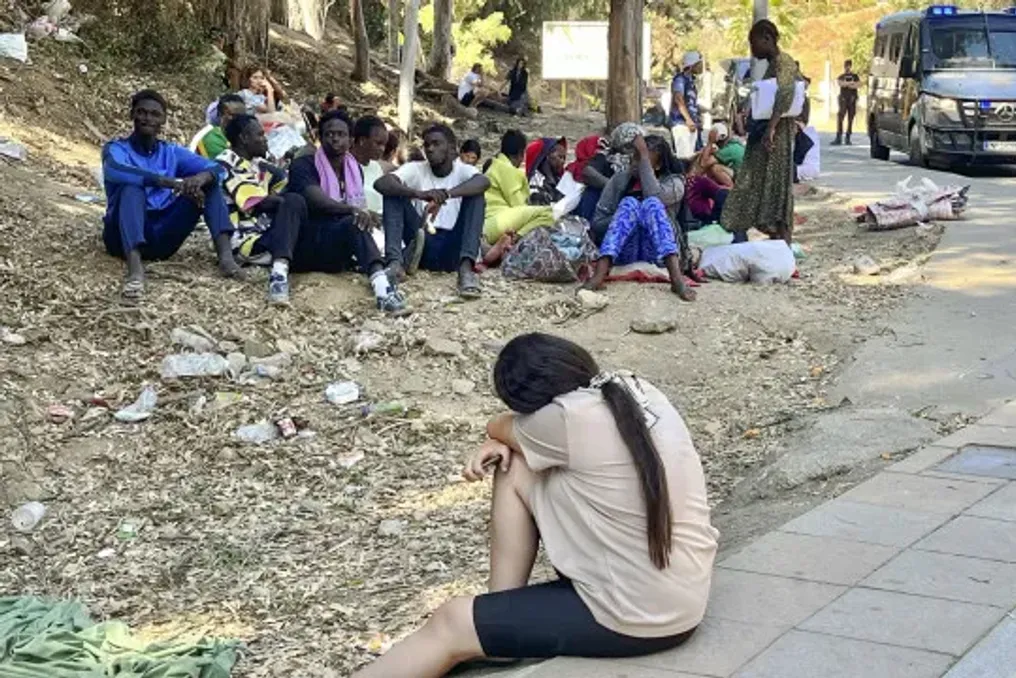
More than one hundred migrants in Ceuta have started a hunger strike on Trampolín beach. One of the participants, Youssef, about 40 years old, told the Spanish news agency EFE that the hunger strike began on Sunday. Their demand is to be released from the situation they have been in for 18 days in this autonomous city zone of Spain, located in North Africa.
The migrants, displaying placards and banners explaining that they are Moroccans and do not wish to return to their country, are demanding asylum in Spain. They stated that they will continue the hunger strike until they are transported away.
Youssef emphasized that they do not want to cause problems, but only to leave this place. He appealed to the head of the government of Ceuta, Juan Jesús Viva, the Prime Minister of Spain Pedro Sánchez, and King Felipe VI, expressing regret that none of the authorities arrived at the site to speak with them.
He added that they do not intend to 'bother' the residents of Ceuta, especially ahead of the start of the school year for children in the coming weeks, and hope that their problem will be resolved before then.
Despite the migrants setting up tents on Trampolín beach, they reported suffering from high daytime temperatures and cold at night.
Spain's Minister of Inclusion, Social Protection and Migration, Elma Saiz, announced that various temporary and emergency humanitarian aid units would be deployed in Ceuta to provide 'immediate' accommodation for 1500 migrants.
New reception centers will be established in four locations: on the parking lot of the Loma del Colmenar livestock management center, provided by the autonomous city; in the equestrian center; on the former football field in the Cavalry barracks; and in the area known as El Guano, with the latter two belonging to the Spanish government.
Work to prepare these new temporary migrant accommodation sites in Ceuta began today, including the adaptation and installation of tents on the Loma del Colmenar grounds. The goal is for this space to start accepting migrants within the next few hours.
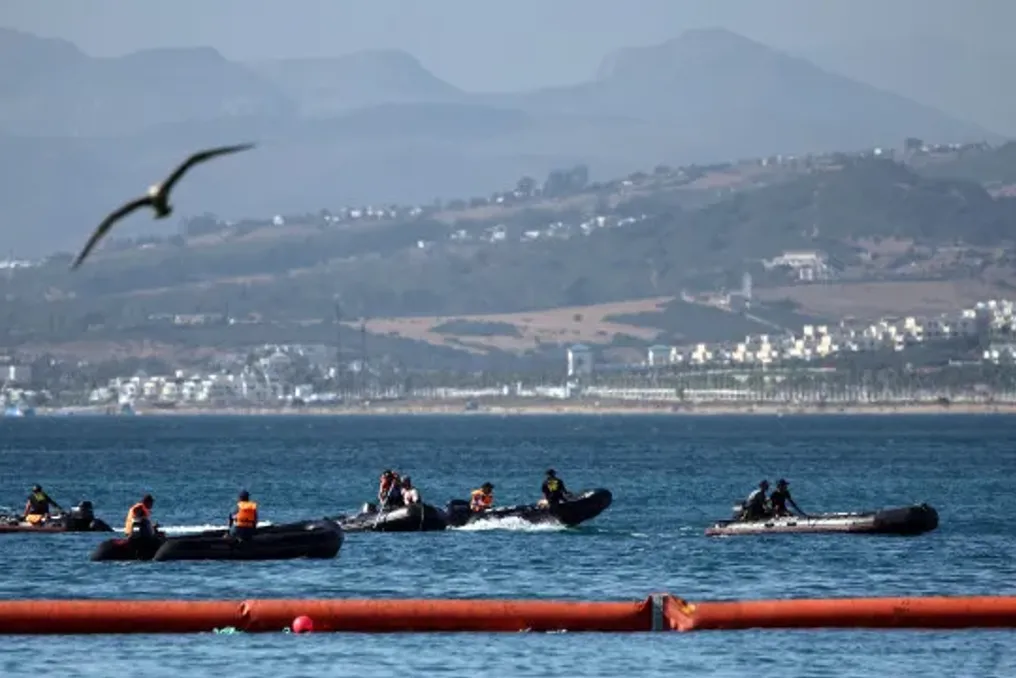
These migrants are part of those who remained in the Spanish enclave after the mass influx on July 30th. In total, over 72,000 migrants were in the city within 24 hours, about 70,000 of whom voluntarily returned to Morocco a week later.
Ceuta is a small region with a population of about 83,000, located in the extreme north of Morocco and bordered by the Strait of Gibraltar. It is one of the two land border crossings between Africa and Europe, alongside the other Spanish enclave—the city of Melilla.