Terracotta products made from clay mined in Gorakhpur, Uttar Pradesh, such as elephants, horses, lamps, and decorative items, are no longer limited to local markets. Demand for this terracotta product has reached major cities nationwide and international markets. Many artisans who previously earned a living through family skills are now earning millions of rupees thanks to this work. The 'One District One Product' (ODOP) program, the acquisition of the GI Tag, training, and government support have played a significant role in this.
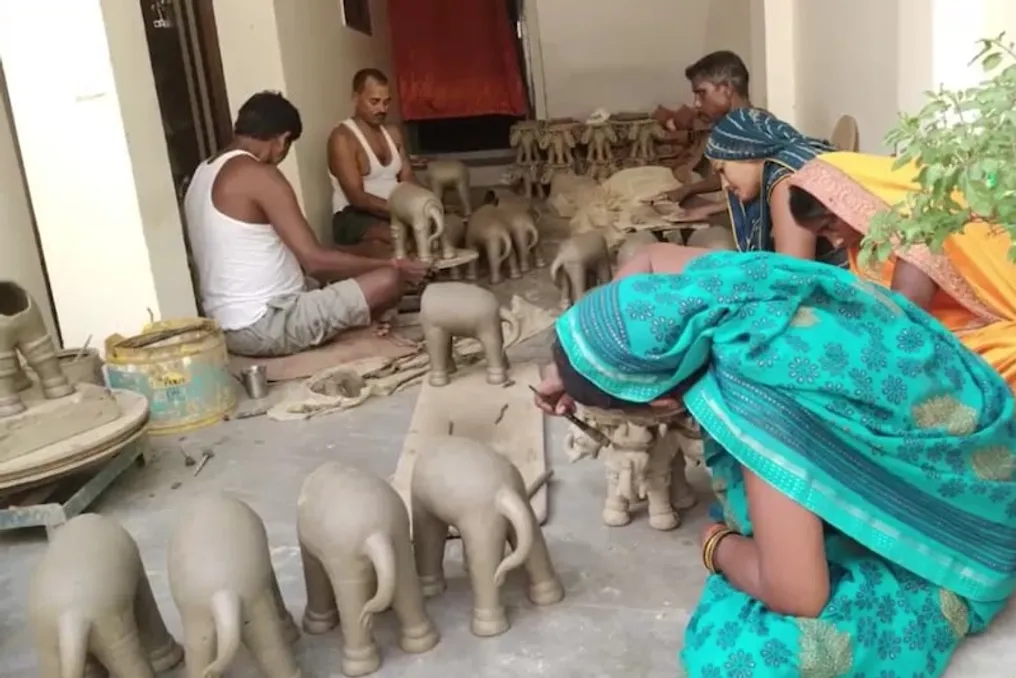
Terracotta in Gorakhpur is an ancient craft practiced by local pottery families. Initially, toys are made from special smooth clay dug from ponds, and then they are fired in kilns. This process creates various decorative items, including figurines, horses, lamps, and other objects.
A large number of families engage in this trade in areas such as Huthan Kas, Langdi Gulria, and Padri Bazar in Gorakhpur. Women also find employment in this business, working from home. This has contributed to the development of traditional art and strengthened the financial position of families.
Gorakhpur terracotta was included in the 'One District One Product' program of Uttar Pradesh, which intensified the focus on promoting this traditional art in the market. Obtaining the GI Tag further enhanced the recognizability of the terracotta. Under government schemes, artisans received assistance such as training and toolkits. Trained individuals could also receive subsidies to expand their businesses. As a result, many artisans have managed to transform small home-based work into large commercial ventures.
Rajan Pradapati from the Gulria area is a prime example of such success. Rajan, who received the Presidential Award, now manages a large terracotta manufacturing business. His factory employs about 25 workers. Up to two trucks are dispatched at one time, with one truck carrying goods worth about 4–5 lakh rupees. According to Rajan, approximately 24 trucks are sent out annually, generating an annual turnover of up to one and a half billion rupees. Rajan, who once lived in a mud house, now resides in a permanent structure, and his business provides employment for other families.
Pannalal Pradapati from Aurangabad village in the Gulria area is also actively developing his traditional trade. He manages the work of 5–7 artisans who specialize in molding and firing figurines. Pannalal explains that he previously lacked the necessary tools. After receiving a free toolkit from the government, the pace of work accelerated. He now sends one truckload of goods every month, bringing him an annual income of 60–70 lakh rupees. Pannalal, who used to live in a shed, now runs his business from a permanent house. After starting small, he aims to expand his business.
Even small artisans have received support. Hiralal Pradapati from Aurangabad has been involved in terracotta for about 18 years. He notes that previously, he had to use his home for work. Now, separate workspaces have been arranged for artisans. He earns about 15–16 thousand rupees per month from this work, totaling about 4 lakh rupees annually. There are about 12 shops in the village employing 60–70 people. Finished products are shipped to other cities by truck.
According to Ujwal Singh, Director of Industries, Gorakhpur terracotta is being promoted under ODOP. He emphasizes that because it is an ancient art form, artisans associated with it receive support through training. This training includes free toolkits and subsidies as needed. The government's goal is not only to train masters but also to bring their products to larger markets.
The story of Gorakhpur terracotta is not just a story of creating clay objects; it is a narrative of craftsmanship passed down through generations within families. The ODOP programs, the GI Tag, government aid, and market linkage have given this art form a new direction. Products that were once used for daily needs in the village are now reaching major cities. For many artisans, this work has become not just a tradition but a reliable source of employment and income.