Despite hundreds of years since the abolition of slavery, wounds remain unhealed, as the global discussion on compensation for slavery extends beyond merely acknowledging historical facts.
The demands for reparations gained widespread recognition after the UN General Assembly adopted a landmark, non-binding resolution in March, which declared transatlantic slave trade and racial chattel slavery as 'the most heinous crime against humanity' and called for restorative justice.
Currently, several countries in Africa and the Caribbean are insisting on a package of measures—financial, social, cultural, and political—to address the long-term consequences of the transatlantic slave trade and colonialism.
In June 2026, African and Caribbean nations gathered in Accra, Ghana, to approve a 19-point framework for restorative justice. This framework calls for official apologies, financial compensation, debt relief, return of cultural heritage, and systemic reforms from countries and institutions that benefited from the transatlantic slave trade. According to reports, the proposals also include a Global Reparations Fund, funding for climate justice, and pathways to citizenship for the African diaspora.
What Can Reparations Actually Be?
Typically, when people hear the word 'reparations,' they envision monetary compensation for the descendants of enslaved people. However, the demands put forward by African and Caribbean governments are much broader.
The Caribbean Community (CARICOM) has long argued that restorative justice must cover the economic, social, and psychological damage caused by slavery, the slave trade, and colonialism. Their Ten-Point Plan includes formal apologies, an indigenous development program, support for voluntary migration to Africa, creation of cultural institutions, return of cultural heritage, public health programs, education, psychological rehabilitation, technology transfer, debt cancellation, and monetary remuneration. This means that reparations can take many forms simultaneously.
1. Financial Compensation
One of the demands is direct monetary compensation. The revised CARICOM manifesto explicitly calls for financial compensation from slave-owning countries, monarchies, churches, institutions, corporations, and families for losses, including loss of life, liberty, labor, physical and psychological harm, and gender-based violence. Nevertheless, the Caribbean plan does not specify a compensation amount; instead, it views monetary payments as only one part of a broader recovery program.
2. Debt Relief
Debt cancellation is another crucial part of the proposal. CARICOM believes that the economic consequences of slavery and colonialism contributed to the development gap between Caribbean states and former colonial powers. Therefore, their reparations plan calls for the cancellation of a portion of international debt as part of restoring the economic legacy of slavery and colonialism. The Accra 2026 Framework also provides for debt relief and reforms to the international financial system.
3. Return of Stolen Cultural Property
Reparations can also mean the return of objects and materials seized from Africa and other affected regions. The African Union demanded the restitution and return of African cultural assets, as well as national archives from the colonial period. This issue received additional international recognition in March 2026 when the UN General Assembly passed a resolution calling for immediate and unimpeded restitution of cultural items, including works of art, museum exhibits, documents, and national archives, to their countries of origin.
4. Official Apologies
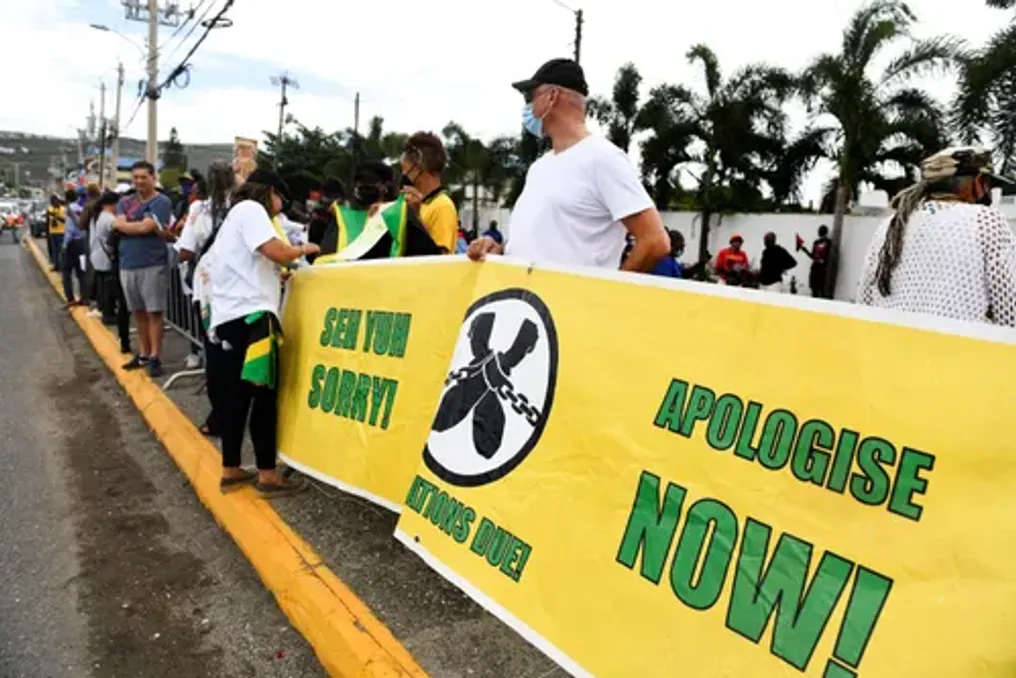
For many governments and activists, official acknowledgment of responsibility is central to reparations. The Accra 2026 Framework calls on countries and institutions that benefited from the transatlantic slave trade to provide full, official, and unconditional apologies. It was noted at the conference that an apology serves as a foundation for reconciliation, trust-building, and restorative justice. This requirement is not limited to governments; the updated CARICOM plan also names monarchies, churches, corporations, and other institutions that profited from slavery as potential participants in restorative efforts.
5. Investment in Education and Health
Reparations can also include long-term investments in communities affected by the legacy of slavery. The CARICOM plan provides for educational programs and measures to address public health issues related to the historical experience of slavery and its consequences. It also offers psychological rehabilitation to address intergenerational trauma. The idea is that rectifying historical harm should not be limited to compensating individuals but should also address inequality persisting across generations.
6. Support for Repatriation to Africa
Another proposal is voluntary migration. The CARICOM plan calls for funding to assist people of African descent in the Caribbean who wish to return to Africa. It also suggests strengthening cultural and historical exchange between Africa and the Caribbean. This is presented as a choice, not a forced relocation.
7. Global Reparations Fund
The African Union previously supported the creation of a Global Reparations Fund based in Africa. The Accra 2023 proclamation called for the establishment of such a fund with the support of multilateral institutions and agencies aligned with the agenda of restorative justice. This idea later emerged within a broader campaign for reparations in Africa and the Caribbean, although the exact mechanism for financing and distribution of funds remains a serious unresolved issue.
8. Climate Justice
Discussions on reparations are increasingly expanding to climate finance. The updated CARICOM manifesto asserts that climate justice and reparations for slavery are closely linked, reflecting the vulnerability of many Caribbean nations to climate change despite their relatively small contribution to global emissions. The Africa and Caribbean 2026 Framework similarly includes climate justice funding among its proposals.
Why Are These Debates Happening Now?
This momentum gained acceleration following a series of international events. The African Union declared 2025 the 'Year of Justice for Africans and People of African Descent through Reparations,' focusing on the legacies of slavery, colonialism, apartheid, and genocide. Subsequently, the AU established a decade dedicated to reparations, running from 2026 to 2036.
Following this, on March 25, 2026, the UN General Assembly adopted a resolution recognizing the trade of enslaved Africans and racial chattel slavery as 'the most heinous crime against humanity.' The resolution passed with 123 countries voting 'yes,' three 'no,' and 52 'abstaining.' The United States, Israel, and Argentina voted against, while the UK and EU abstained. Although the resolution lacks legal force, it provided diplomatic momentum to the reparations movement.
Which Countries Are Being Asked to Pay?
The demands are primarily directed at states and institutions that participated in, benefited from, or facilitated the transatlantic slave trade and colonial systems. The CARICOM plan names the United Kingdom and other European countries among those from whom reparations are sought, and it also points to institutions and private organizations that profited from slavery.
One of the main arguments against reparations is that modern governments and companies are being asked to account for actions that occurred centuries ago, often involving predecessors rather than the same legal entities that exist today.
Can Reparations Mean Receiving Money for Individual Descendants?
Not necessarily. The current proposals are structured around governments, institutions, and communities, rather than a system where every descendant of an enslaved person receives an individual payment. A reparations program can include government-to-government payments, debt cancellation, development programs, cultural restitution, investment in public health, education, institutional reform, and direct compensation.
What Happens Next?
The Accra Conference in June 2026 was intended to move the debate from recognition to implementation. African and Caribbean leaders agreed on a common framework and called for mechanisms that will turn proposals into concrete actions. This framework is expected to be presented to the UN General Assembly. Currently, there is no single global reparations bill, agreed-upon total cost, or international mechanism compelling former slave-trading powers to pay. However, there is a growing coordinated demand for restorative justice, which may bring this goal closer to reality.