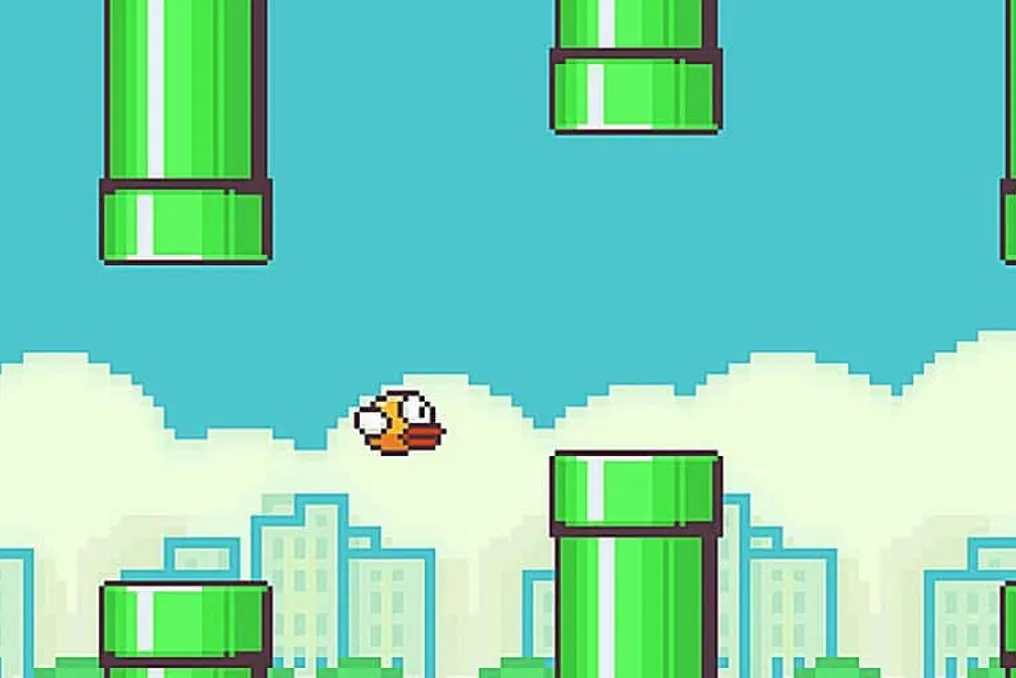
In February 2014, Flappy Bird reached the top of the app stores in the United States and China, accumulating over 90 million downloads and generating approximately US$ 50 thousand per day from ads.
At this peak, its creator, Dong Nguyen, a Vietnamese citizen, made the unusual decision to remove his own game from the market. Initially, Flappy Bird started as a modest project, developed alone by Nguyen when he was 28, in just three days, without anticipating the global impact it would have.
The concept of the application was simple: guide a bird through green pipes, controlling it with taps on the screen to keep it airborne. Launched on the App Store in May 2013, the game remained unnoticed for months, lost among countless daily releases.
Visibility skyrocketed in January 2014, driven by a video of YouTuber PewDiePie playing and expressing frustration with Flappy Bird's difficulty. However, records from that time indicate that the application was already climbing the most downloaded lists before this peak in social media mentions, suggesting that growth might have started internally within the stores, with the YouTuber acting more as a catalyst than a primary cause.
For Nguyen, this sudden popularity created a problem he did not know how to solve. On the evening of February 8, 2014, he chose to resolve the issue by posting a notice on social media, announcing that Flappy Bird would be taken offline in 22 hours because it could no longer handle the situation.
He strictly adhered to the deadline, and the following Sunday, the game disappeared from both the App Store and Google Play, depriving millions of users of a pastime many had adopted.
This removal triggered a wave of speculation, ranging from dramatic theories about a possible legal threat from Nintendo due to the green pipes resembling those in Super Mario, to the simpler hypothesis that the creator wished to resume a peaceful life.
The abrupt exit created a significant vacuum. In just a few hours, collectors began competing for phones with the game installed; an iPhone 5s even received 74 bids on eBay, approaching US$ 100 thousand, all for a device containing a free application.
On the other hand, a vast community of developers saw this as a quick opportunity. With an investment of US$ 99 and about three hours of work, it was possible to create a clone, with new ones appearing every 24 minutes on the App Store, totaling an average of 60 daily releases. One of these clones, titled 'Tiny Flying Drizzy' and featuring the image of the rapper Drake, even ranked first among the most downloaded free apps.
The real reason was revealed in an exclusive interview given to Forbes, days after the game's removal, while he was staying in a hotel in Hanoi. Nguyen explained that Flappy Bird was conceived to be played in short periods, like a moment of rest, but it had turned into a highly addictive product.
He was emphatic in justifying his decision to remove it: 'I think it became a problem. To solve this problem, the best thing is to take Flappy Bird offline. It's gone forever.' Furthermore, during the same interview, he categorically refuted the Nintendo theory, denying any legal risk related to the Super Mario-like green pipes.
Fame recognition also aggravated the situation; he confessed he could no longer sleep and only felt relief after removing the game. Regarding financial gains, he avoided confirming the exact amount but acknowledged it was substantial, estimated by the press at the time to be around US$ 50 thousand per day.
Despite this, he stated he felt greater security and freedom to follow his path after the success. The interview concluded with a simple thank you: 'thank you very much for playing my game.'
In the following months, Nguyen signaled several times the possibility of Flappy Bird returning. In February, shortly after the deletion, he informed the BBC that he was considering reviving the game. In March, in response to a fan on Twitter, he briefly replied: 'Yes. But not so soon.' In May, in another interview with CNBC, he promised a renewed version, including a multiplayer mode and, according to him, less addictive than the original, although none of these promises materialized as described.
Ten years later, Flappy Bird reappeared, but without Nguyen's involvement. In 2024, after the trademark expired, the company Gametech Holdings acquired the rights and sold them to the Flappy Bird Foundation, associated with Michael Roberts, a studio focused on Web3 projects.
Researchers located hidden pages on the relaunch website indicating that the project involved cryptocurrencies. There was a native token called '$FLAP', which players obtained by playing and could convert into real money.
After seven years away from the spotlight, Nguyen reappeared only to deny any involvement, stating: 'I have nothing to do with their game. I didn't sell anything.' He further emphasized: 'I don't support crypto either.'
The game he tried to eliminate from the world scene returned, now under the ownership of a studio linked to Web3/crypto initiatives, without his authorization or any financial compensation. Flappy Bird survived its creator; Nguyen sought to erase it in 2014 claiming the game had become excessive, but it resurfaced a decade later in a completely unexpected format, tied to tokens and profit promises.