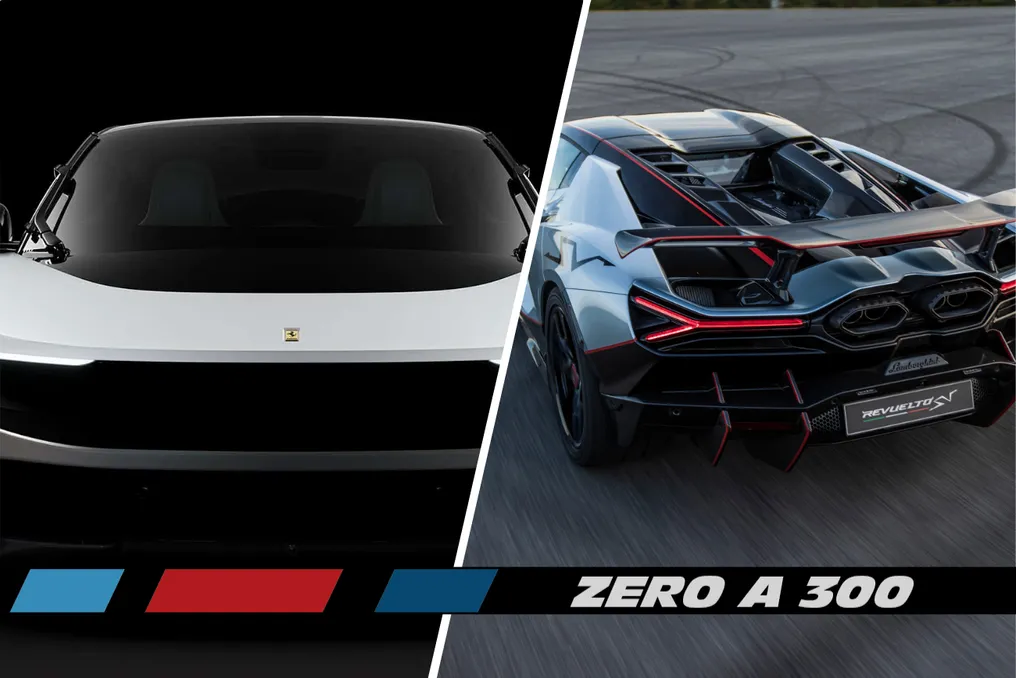
Luxury model presentation in Monterey: Lamborghini Revuelto SV, Ferrari Luce, and Aston Martin Valen
Read more
FlatOut
flatout.com.br

Luxury model presentation in Monterey: Lamborghini Revuelto SV, Ferrari Luce, and Aston Martin Valen

At an event in Monterey, several automotive brands presented new releases and special models. Among them, Lamborghini displayed the Revuelto SV, Ferrari held the auction of 'Chassis 0' for US$ 40 million, and Aston Martin showed the Valen, while Land Rover presented the Defender Dakar.

Lamborghini presents the Revuelto SV in Monterey

Lamborghini developed the Revuelto SV following a unique path. Although it maintains the 6.5-liter V12 engine with its original 814 hp, the new Super Veloce reaches 1,050 hp thanks to an additional 49 hp from the three electric motors, which now generate 255 hp. This electric addition results in minimal improvements on paper, with a 0 to 100 km/h time of 2.4 seconds (0.1 second faster) and 0 to 200 km/h of 2.4 seconds (0.3 seconds faster).

The dry weight remains at approximately 1,770 kg, even considering the lightest options, without the typical mass reduction of SV models. The most substantial modifications are concentrated on the vehicle's dynamics, covering aerodynamics and mechanics. The movable spoiler has been replaced by a fixed wing, the front bumper has been altered, and new elements have been incorporated to optimize airflow under the car. Lamborghini states that the downforce increased by 80%, although it has not disclosed the exact figures.

The brakes have been renewed, featuring carbon-ceramic discs measuring 420 mm in the front and 410 mm in the rear. According to the manufacturer, these new brakes provide up to an 11% improvement in braking and 23% in heat dissipation. In the suspension, the SV replaces the Revuelto's active dampers with manually adjustable dampers. The Pilot mode also incorporates a five-level traction control system, inspired by the brand's GT3 cars. There has also been an enhancement in electronic controls, such as brake-by-wire and driving aids, which use predictive models to anticipate and adjust the car's response to commands.

Production of the Revuelto SV will be limited to 1,963 units, a number referencing Lamborghini's founding year, and the price has not yet been revealed.

This is the open version of the Brabus Bodo

German tuner Brabus took advantage of the Monterey events to present the Bodo Cabriolet, the convertible version of its Bodo model, created in honor of its founder, Bodo Buschmann, and based on the Aston Martin Vanquish. The body was completely rebuilt in carbon fiber, surpassing Monterey standards in terms of extravagance.

The rear of this model reaches a width of 2.03 meters, featuring prominent fenders and an active aerodynamic system integrated into the trunk lid. The spoiler adjusts its position according to speed, and during intense braking above 140 km/h, it assumes a more vertical angle to act as an aerodynamic brake. The roof is electric and has an opening or closing time of less than 15 seconds. The rear is complemented by a carbon diffuser and four titanium exhausts.

Under the hood is the 5.2-liter biturbo V12 from the Vanquish, which has been extensively modified by Brabus. This unit received a new ram-air intake, more efficient intercoolers, two specific turbochargers, and a stainless steel exhaust system with 3D-printed metal tips. With these changes, power rises to 1,000 hp at 6,400 rpm, generating 122.3 kgfm between 2,900 and 5,000 rpm. All this power is directed exclusively to the rear wheels through an eight-speed automatic transmission and electronic differential.

Brabus sets the following times: 0 to 100 km/h in 3.0 seconds, 0 to 200 km/h in 8.5 seconds, and 0 to 300 km/h in 23.9 seconds, with the maximum speed electronically limited to 359 km/h. Internally, the Bodo Cabriolet maintains the Vanquish's 2+2 configuration but offers high customization. Brabus applies its 'Shell' stitching standard not only to the seats but also to the leather-covered floor, rear compartment, mats, and trunk. It was announced that only 77 units will be produced, with prices starting from US$ 1,240,000.

Ferrari Luce

Similar stories

Chevrolet Camaro could be launched as a four-door sedan, keeping V8 engine and manual option
Read more
flatout.com.br

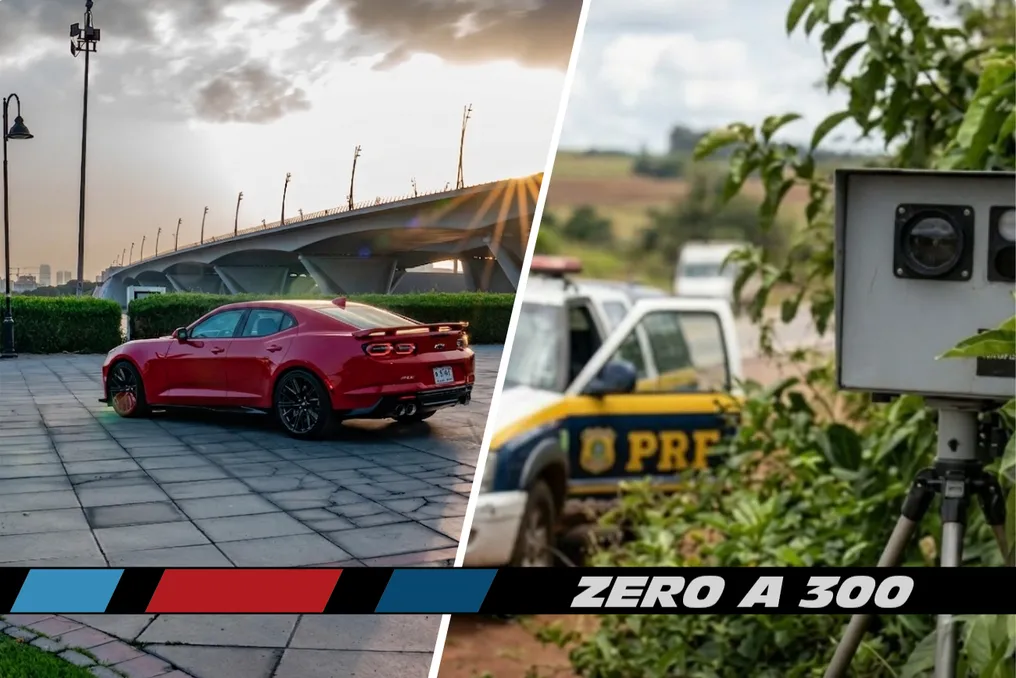
Chevrolet Camaro could be launched as a four-door sedan, keeping V8 engine and manual option

While Dodge works to revitalize the appeal of the Charger for enthusiasts and Ford seeks to increase the profitability of the Mustang in the next generation, the Chevrolet Camaro is on pause, at least temporarily.

Sources linked to the brand, spoken to by GM Authority, provided information about the seventh-generation Camaro, which is expected to launch in 2029. This new model would be significantly different from previous ones, presenting itself as a four-door sedan.

Chevrolet plans to develop this new Camaro using the GM Alpha 2 platform, the same one used in the future Cadillac CT5 and in a sedan that Buick is expected to introduce soon. Production would take place at the GM factory located in Lansing Grand River, Michigan, replicating the manufacturing location of the previous Camaro before its discontinuation in 2024. The sedan would have dimensions comparable to the Chevrolet Malibu.

A positive point is that, following the tradition of American automakers, the new Camaro would not abandon internal combustion; the small block V8 engine is expected to remain under the hood, and, crucially, the manual transmission option would be maintained.

However, the transition to a four-door body raises questions, especially considering that the North American market has driven the migration from sedans to SUVs and pickup trucks. Furthermore, the Dodge Charger itself demonstrates the viability of offering the same vehicle as both a coupe and a sedan.

Despite the optimism, there is some skepticism regarding this information, but the prospect of a Camaro sedan is seen as better than having no Camaro at all.

News on the Royal Enfield Meteor 350 2027

The Royal Enfield Meteor 350, one of the brand's most popular models, has received updates for the 2027 version, including new equipment and color options. All versions of the Meteor now come equipped with assisted and slip clutch, which reduces effort when operating the lever and prevents rear wheel lock during abrupt downshifts.

Additionally, the Tripper navigator, which uses pairing with the mobile phone's GPS to guide the route curve by curve, has been standardized across the entire line, not limited only to the more expensive variants. The Meteor 350 has also started including full LED lighting and a USB Type-C port on the handlebars, features welcomed by long-distance travelers.

The only exception is the entry-level Fireball version, which did not receive adjustable levers, a feature exclusive to the Aurora and Supernova variants. The Supernova, in turn, now features alloy wheels and tubeless tires, while the Aurora retains its spoked wheels. Visually, the Fireball gains the Fireball Orange color, and the other versions are available in Stellar Matt Grey, Aurora Retro Green, and Supernova Black shades.

The prices for the 2027 line are: Meteor 350 Fireball Orange for R$ 24,990; Meteor 350 Stellar Matt Grey for R$ 25,990; Meteor 350 Aurora Retro Green and Meteor 350 Supernova Black for R$ 26,490. The mechanics remain unchanged, maintaining the 349 cc single-cylinder engine, with 20.2 hp and 2.75 kgfm, and the five-speed gearbox.

Bill proposal aims to annul hidden radar fines

A new legislative initiative under discussion in the National Congress proposes to prohibit the imposition of penalties for speed radars installed in a hidden manner or without proper signage. Bill Project 2364/26, presented by parliamentarian André Fernandes, suggests that the Brazilian Traffic Code requires complete visibility of these devices. The central argument of this proposal is that road enforcement should prioritize awareness and accident prevention, rather than acting as a revenue collection tool.

It is important to note that, although the text has begun its analysis process to proceed through the Chamber of Deputies and the Senate, no fine issued to date will be automatically canceled. Current regulation continues to be defined by the National Traffic Council through Resolution 798/2020, meaning that all records made currently maintain their legal validity while the parliamentary debate continues.

According to current regulations, fixed meters require preliminary technical studies and indicator signs on the track, while portable devices must be operated exclusively by uniformed officers and in visible locations. The main innovation of the new measure is elevating this requirement for transparency from the merely administrative level of resolutions to the definitive body of federal law, eliminating opportunities for disguised inspections.

Current rules provide for escalating punishments for disrespecting speed limits: excesses up to 20% constitute a medium infraction (four points and R$ 130.16); transgressions between 20% and 50% are considered serious (five points and R$ 195.23); and violations exceeding 50% are classified as a very serious offense, resulting in a debt of R$ 880.41 and immediate suspension of the driver's license.

Aston Martin launches DB12 S inspired by 1950 Le Mans cars

Aston Martin prepared three special editions of the DB12 S for the Monterey Car Week. The distinctive aspect of these units is subtle, as the colors were inspired by the Aston Martin DB2 that competed in the 24 Hours of Le Mans in 1950. At that time, the vehicles were identified by British plates starting with 'VMF' and had grilles painted in distinct colors to facilitate identification on the track: one in red, another in yellow, and the third in blue.

This specific detail is what differentiates this special series from other DB12S. The three models received Carbon Black paint, but each incorporates one of the Le Mans colors in the grille: the VMF 63 sports Rosso Red, the VMF 64 features Speed Yellow details, and the VMF 65 uses Ellwood Blue. These colors also appear on the carbon fiber side intakes and in small interior and exterior trims. Aston Martin also added the silhouette of the competition DB2 to the bottom of the rear spoiler, functioning as a surprise element, whose design is also embroidered on the seats.

In terms of specifications, they are identical to the DB12 S presented last year, equipped with a 4.0-liter AMG V8 biturbo engine, generating 700 hp, an eight-speed automatic transmission, carbon-ceramic brakes, recalibrated Bilstein adaptive dampers, and stiffer stabilizers than those on the standard DB12. Aston Martin has not yet confirmed whether these three cars will be marketed after the Monterey Car Week, but given the company's situation, it is likely they will be sold to the brand's most engaged customers at a price yet to be disclosed.

Winning Lola rotary from Le Mans goes to auction

One of the most notable cars that participated in Le Mans is available for sale. The Lola T616-Mazda, chassis HU-2, which won the C2 class at the 24 Hours of Le Mans in 1984, will be auctioned during the Monterey Car Week, with an estimated sale price in the range of US$ 300,000, a considerable amount for a car that was not a main protagonist of the event.

Its highlight lies, firstly, in the Mazda 13B engine, the famous 1.3-liter two-rotor Wankel, and in the fact that it won its class at Le Mans using street tires. In fact, the T616 was part of a BF Goodrich project aimed at promoting radial tires. The company already supplied tires for Mazda RX-7s in the United States but decided to create its own team to compete in endurance races with C2 class prototypes.

They prepared two Lola T616s with the 13B engine from the RX-7 and tires that maintained the structure of street tires, only adapted in size for the prototype wheels. Despite having a street compound and carcass, the prototype finished the race in tenth overall but won the C2 class. The second Lola of the team achieved third place in the category and twelfth overall. This participation also entered Mazda's history, marking the second consecutive victory of a car with a Wankel engine in its class at Le Mans, seven years before the conquest of the 787B in 1991.

Both cars survived and were restored by members of the project in the 2000s, participating since then in historical events and races. Currently, both will be sold by Mecum Auctions. The HU-2, the Le Mans winner, is valued at about US$ 300,000, while its sibling, the HU-3, is expected to reach approximately US$ 200,000.

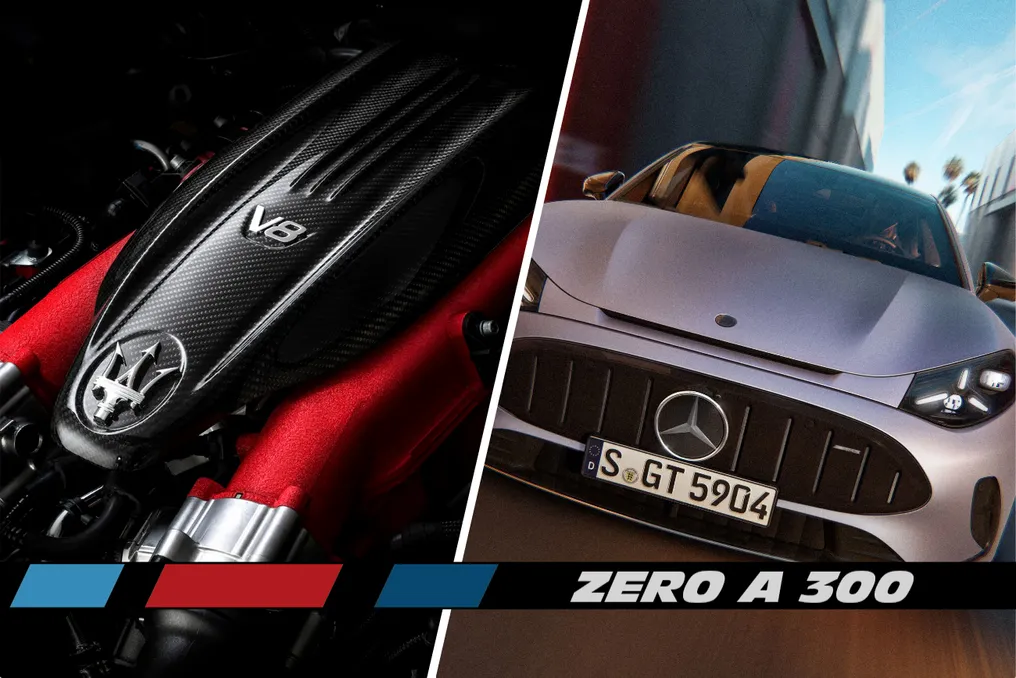
Maserati may return to V8 engines; details on the new AMG GT53 and Mercedes-Benz initiatives
Read more
flatout.com.br

Maserati may return to V8 engines; details on the new AMG GT53 and Mercedes-Benz initiatives

Maserati may reintroduce V8 engines in its vehicles. According to the brand's chief engineer, Davide Danesin, there is both customer interest and technical feasibility to equip some current models with a V8. However, there are currently no official plans for a new Maserati V8.

The models most likely to receive this powertrain would be the GranTurismo and the GranCabrio, as they were designed to accommodate various engine configurations. Danesin mentioned that even the Grecale could potentially be adapted for a V8, although this application in a compact SUV is considered less natural compared to the two GTs.

The final decision will depend on corporate strategy and demand volume. The engineer believes that Maserati would be capable of selling a V8 model, even in small quantities, and noted a growing market interest in larger engines. Despite this, Maserati itself does not view the V8 as essential for boosting its cars' performance, given that the current 3.0-liter biturbo V6 Nettuno achieves 590 hp in the GranTurismo and GranCabrio Trofeo, power sufficient to exceed 320 km/h.

It is believed that the discussion about the return of the V8 is more emotional than technical. Although a V8 would not change performance, it could be perceived as more consistent with the GranTurismo's identity, especially considering that this line built much of its image around Ferrari's V8s. There is still no information regarding the origin or specifications of this potential engine, which represents the biggest obstacle to the return of V8s. Some suggest that it would be wiser to leave this possibility to Ferrari and focus the new Maserati's identity on six-cylinder engines, keeping the brand between Ferrari and Alfa Romeo within the group.

Mercedes-AMG News

Mercedes-AMG has launched the GT53, the new entry-level version of the electric sports car. This model, with its striking design, differs from the top-of-the-line by not having the three-motor system, but it still delivers 543 hp and can reach 100 km/h in 3.5 seconds.

The new four-door AMG GT is fully electric and was unveiled in May with three axial flux motors developed by Yasa—one in the front axle and two in the rear. In the most powerful configuration, the GT63, the setup generates 1,170 hp and accelerates from 0 to 100 km/h in just over two seconds.

To create the GT53, AMG replaced the entire mechanical assembly, using two permanent magnet synchronous motors, one in each axle, instead of the triple axial flux system. The 543 hp represents only the peak maximum power, while the continuous power used is 367 hp. Furthermore, the top speed is electronically limited to 230 km/h.

Despite the lower power, the GT53 is closer to the grand tourer concept thanks to the 106 kWh battery, which promises a range of nearly 800 km in the WLTP cycle. Mercedes reports that it is possible to recover 480 km of range in ten minutes, but this requires a charging power of 600 kW, something almost unattainable at public chargers. In terms of driver experience, the GT53 features paddles that simulate gear shifts—a solution seen as less advanced than Ferrari Luce's—and the sound system reproduces the roar of the old AMG E53 Coupé's six cylinders. The suspension is pneumatic and offers a sport mode. The prices for the GT53 have not yet been disclosed, but it is expected to be positioned near the entry-level versions of the Porsche Taycan.

Mercedes-Benz Initiative for Classics

Many vehicles are seen merely as consumer goods, but others become collector's items. Recognizing this, Mercedes-Benz created the Mercedes-Benz Classic Birth Document, a type of 'birth certificate' for cars manufactured between January 1, 1986, and December 31, 2010.

This document compiles data extracted directly from the German manufacturer's historical archives. Detailed information includes the chassis number (VIN/FIN), date of issue and exact model, original paint color and interior trim code, original engine and transmission numbering, as well as a complete list of factory-installed options.

For those restoring a W124, R129 SL, or W140 S-Class, this document serves as a meticulous guide to ensure the restoration strictly adheres to original factory standards. The presentation follows the brand's standard, being printed on high-grade paper and kept in a special case with the company's embossed crest.

It is important to note that this paper does not constitute a certificate of authenticity; it only proves how the vehicle left the production line, without attesting to its current state of preservation, the originality of modern parts, or its market value. Unfortunately, the service is currently restricted to vehicles located in Germany. The brand plans to expand this novelty to other European markets in the future, but there is no forecast for arrival in the American continent. Additionally, AMG models, vans, and Smart brand vehicles were excluded from this initial program.

Aston Martin uses its name as loan collateral

Aston Martin executed an unusual transaction by ceding 50.1% of its intellectual property related to the name 'Aston Martin' to Authentic Brands, an American media, sports, and entertainment platform. This action, while seemingly extreme, was part of an agreement allowing Aston Martin to obtain debt financing of up to £550 million (approximately US$ 740 million) from the HPS fund, managed by BlackRock.

In practice, the manufacturer gave up a significant portion of royalties from future licensed products (such as watches, jackets, or perfumes) to gain immediate liquidity, refinance outstanding debts, and maintain operations. This demonstrates that, in the contemporary corporate landscape, even a name can serve as collateral to ensure business continuity.

However, this discreet maneuver provoked a corporate reaction. A group of former creditors sent a notification to the board of directors threatening legal action. The central allegation is that Aston Martin removed a valuable asset from the set of guarantees protecting previous loans without offering investors the opportunity to cover the offer and provide the new financing, which, according to the creditors, violated serious contractual clauses.

As a result, the legendary British manufacturer became a minority shareholder in the commercial use of the words 'Aston Martin' outside the automotive segment. The practice of fractionalizing its own name to inject capital into the cash flow has become recurrent; a few months ago, the brand raised £50 million by selling the name rights to its own Formula 1 team. While executives refuse to comment on the litigation threats, summarizing the agreement merely as 'vital for the company,' the impression persists that Aston Martin is risking parts of its essence to keep its engines running.

Porsche maintains plans for the electric 718 despite market uncertainties
Read more
flatout.com.br

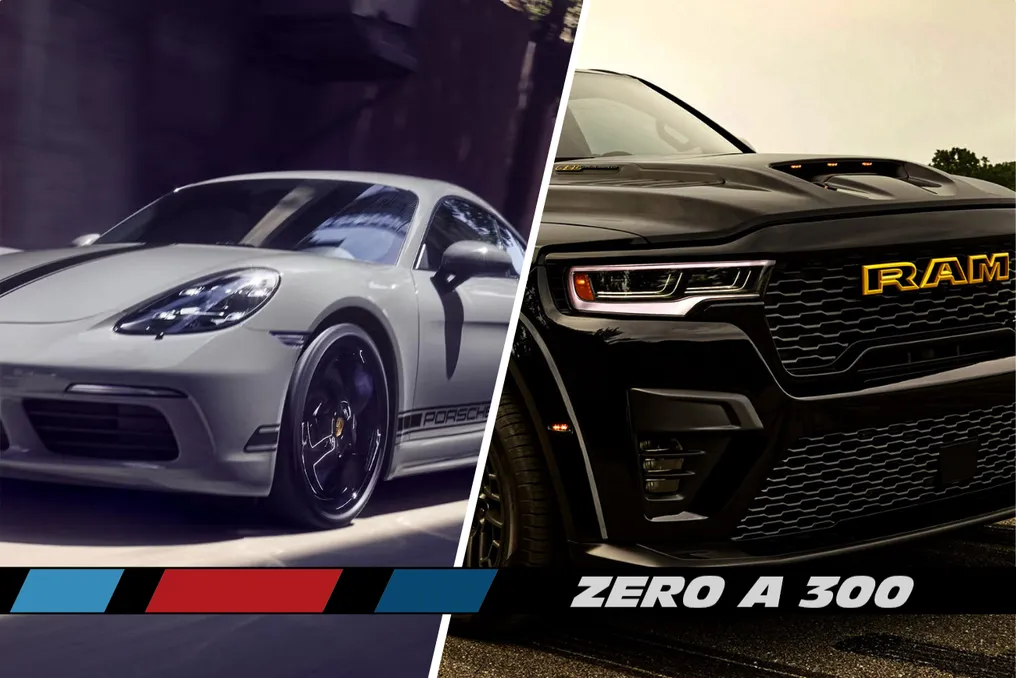
Porsche maintains plans for the electric 718 despite market uncertainties

Although the production of the Porsche 718 Boxster/Cayman was discontinued in 2025, the future of the model remained uncertain. Subsequently, the German automaker revealed that the next generation of this rear-engined sports car would be fully electric, news that was initially not well received by the public.

In response, Porsche informed the press, back in December of the previous year, that the PPE (Premium Platform Electric) platform would be adapted to accommodate combustion engines. This fueled speculation that only track-focused variants, such as the 718 GT4, would be gasoline-powered.

However, in recent months, rumors have surfaced that the launch of the electric 718 would be delayed or even canceled. Nevertheless, CEO Michael Leiters clarified the situation when speaking with the German publication Frankfurter Allgemeine Zeitung, stating that the original plan remains valid and the electric 718 will be launched.

The executive declared: 'Regarding the electric 718, we have concluded that we will produce this model,' adding that the choice is due both to economic viability and the fact that it is a 'fantastic car.'

The financial justification is supported by 2025 sales figures, when Porsche recorded 280,000 sales, with 22.2% being pure electric and 12.1% being plug-in hybrids. In Europe, the penetration of electrified vehicles was even higher, reaching 57.9% of Porsche sales that year.

Additionally, the development of the electric 718 was already quite advanced, and the delivery deadline was extended due to the rework of the platform to accept combustion engines. Canceling a project at this stage would represent a financial waste. Considering that Leiters took over from Oliver Blume with the goal of recovering Porsche's profitability, which faces difficulties related to the Volkswagen Group crisis, this would be an economically imprudent decision.

On the other hand, under Blume's management, Porsche saw its profit drop by $2.1 billion, a direct result of excessive investment in electric vehicles, which reinforces the strategy of adapting combustion engines onto the PPE platform.

Despite the lack of enthusiasm from enthusiasts for the electric 718, this has little impact on Porsche's decisions. If, ultimately, this change helps stabilize the company and ensure the survival of the 911, this reality must be accepted.

Meanwhile, in the United States, the Ram 1500 Rumble Bee received a power boost even before it started being sold. Its most extreme variant, the SRT, equipped with the 6.2-liter Hellcat V8 engine, already boasts 787 hp.

Ram announced that the pickup truck will also participate in the Direct Connection program, a Mopar performance parts catalog. This program allows for an upgrade of the 2.4-liter supercharger to 3 liters, increasing total power to over 900 hp while maintaining the warranty. This kit costs nearly $11,000.

The supercharger kit is available for other engine configurations: the 5.7-liter engine of the initial version goes up from 400 hp to about 600 hp, and the intermediate version's 392 V8 (6.4 liters) goes from 476 hp to approximately 700 hp. The SRT variant already exceeds 900 hp.

Those who purchase the supercharger kit can add a Magnaflow exhaust system. Furthermore, the Rumble Bee and Rumble Bee 392 versions can receive a suspension package with 24-position adjustable coilover shocks and stiffer springs, lowering the front by 2.5 cm and the rear by 7.5 cm, which, according to Ram, improves traction and cornering performance.

The manufacturer confirmed that these packages will be released alongside the trucks, scheduled for late 2026 for the Ram Rumble Bee and early 2027 for the 392 and SRT versions.

In another sector, GWM introduced a work version of the Poer P30 pickup, making it the most affordable double-cab mid-size pickup in Brazil, priced at R$ 205,000.

This new configuration is R$ 22,000 cheaper than the Poer P30 Trail (R$ 227,000) and R$ 42,000 cheaper than the Exclusive (R$ 247,000). Comparatively, the direct rival Fiat Titano Endurance costs R$ 238,490, showing a difference of R$ 33,490.

Entry options from competitors like Ford Ranger, Chevrolet S10, and Toyota Hilux cost between R$ 248,600 and R$ 256,390, but they are chassis-cab models, whereas the Poer P30 Pro already comes with a double cab and standard bed.

To achieve the R$ 205,000 price point, GWM simplified the trim: alloy wheels were replaced with 18-inch steel wheels, and details such as the grille, mirrors, and door handles were finished in matte black and dark gray.

Internally, the multimedia screen was reduced from 14.6 to 12.3 inches, and the digital instrument cluster decreased from 10.25 to seven inches. The Pro version also lost features such as 360-degree camera, front parking sensors, electric mirrors, inductive charging, connected services, and transparent vision system. The front seats no longer have electric adjustments, heating, or ventilation, and the interior is entirely black.

The mechanical assembly remains unchanged: it uses the 184 hp and 48.9 kgfm 2.4 turbo-diesel coupled with a nine-speed automatic transmission. The 4x4 traction offers 2H, 4H, and 4L modes, in addition to electronic rear differential lock. The safety package includes six airbags, adaptive cruise control, lane keeping assist, autonomous emergency braking with pedestrian and cyclist detection, frontal collision warning, and license plate recognition.

Volvo reiterated the warning to owners of the EX30 involved in the battery recall: they should not charge the vehicles above 70% capacity until the repair is performed. The manufacturer identified a production flaw in the high-voltage battery cells of some units of the electric SUV, which could cause short circuits, overheating, and fire risk.

The recall covers EX30s manufactured between September 6, 2024, and October 25, 2025, affecting over 40,000 cars globally, with about 5,600 in Brazil. As a precaution, Volvo instructed owners to limit charging to 70% via the car's system until the batteries are replaced at a dealership. In certain markets, avoiding charging in enclosed or unsupervised locations was recommended.

Luis Rezende, Volvo's president for the Americas, emphasized in an interview with CBN radio that exceeding this limit is unsafe, asking all owners to comply with the recall. He stated: 'We ask the owners of the EX30, please follow the recall. The battery limit is indeed 70%. Charging above that is not safe and can really cause accidents.'

The recall requires inspection and replacement of battery components. The alert gained prominence after a Volvo EX30 caught fire in Rio de Janeiro, although there is no confirmation yet of a link between this incident and the fault that motivated the recall. Until the repair is completed, the guidance is to keep the charge at 70% and visit a Volvo dealership.

To celebrate 30 years of the manga Initial D, Seiko launched the Keisuke Takahashi RX-7 FD3S chronograph, in collaboration with the retail chain Premico. The watch is inspired by the character Keisuke Takahashi, driver of the iconic yellow Mazda RX-7 FD. The color appears on the dial, and the secondary dials replicate the car's instruments. The 12 o'clock marker mimics the rotor of a Wankel engine, and the RedSuns emblem is at the 3 o'clock position.

This quartz watch features a stainless steel case and bracelet. The back cover is engraved with the franchise logo and the individual unit number. 1,995 units will be produced, referencing the serialization year of Initial D in the Japanese magazine Weekly Young.

This is the second Seiko watch inspired by Initial D; last year, there was a release based on Takumi Fujiwara's Toyota AE86. It is common for Japanese watchmakers to partner with anime and manga, attracting a community of horology collectors.

The Seiko Keisuke Takahashi RX-7 FD3S began selling on August 3rd at the official Premico store for 65,780 yen (equivalent to about R$ 2,140). Importers like Hobby Genki also offer pre-sales for ¥ 71,980 (approximately R$ 2,340), with international shipping expected in January 2027. Due to the limited edition, prices on the parallel market can be significantly higher, as seen in the Takumi Fujiwara version, which can cost almost R$ 20,000 in Brazil.

Finally, Ford continues the development of its next Le Mans car. After confirming the Coyote-derived V8 and performing the first engine ignition, the racing division announced that the assembly can reproduce a complete lap at La Sarthe on the dynamometer.
Popular