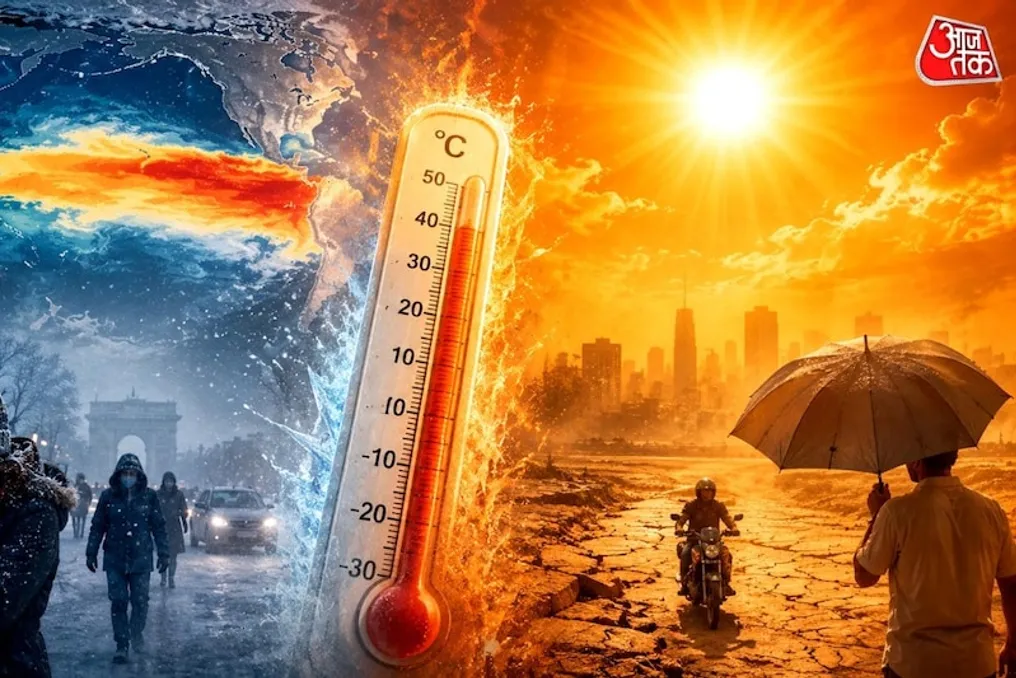
Despite the approach of the cold season, this year's winter may be less cold due to the strengthening of the El Niño phenomenon. According to meteorological services, waters in the central and eastern parts of the Pacific Ocean have warmed by more than 1 degree Celsius above normal. Scientists warn that if El Niño continues to strengthen, the winter of 2026–2027 could be warmer in several regions, and this may also affect the summer of 2027.
The El Niño phenomenon is characterized by rising sea surface temperatures in the Pacific Ocean, which causes climate changes in many parts of the world. In India, this can affect precipitation levels, the monsoon season, and temperature. Of particular concern is that El Niño is intensifying during a period when global temperatures are already elevated due to climate change.
It is important to understand that El Niño does not guarantee an equal temperature increase in all cities, as many other factors influence temperature. To illustrate this, consider an example: if the average temperature in Delhi during winter is 10 degrees Celsius, and the weather becomes 2 degrees warmer, the temperature could reach 12 degrees. Similarly, where the temperature usually is -3 degrees, it might rise to around -1 degree. However, these are only illustrative examples; it is currently difficult to predict the exact temperature increase in places like Delhi, Churru, Patna, Srinagar, or Ladakh, as cold winds, cloud cover, and other atmospheric systems play a role.
In plains areas such as Delhi and Patna, if temperatures are above normal, the feeling of coldness may decrease, especially at night. In regions like Churru in Rajasthan state, where temperatures drop very low in winter, some nights may be less cold than usual.
Even in cold regions like Srinagar and Ladakh, temperatures may remain above normal. Nevertheless, the exact scale of these changes remains unclear. Since the temperature in Ladakh varies greatly depending on altitude and terrain, providing a definitive temperature forecast at this time is inappropriate.
The impact of El Niño will not be limited to winter. According to scientists, the summer heat from March to May 2027 could become more intense. The strengthening of El Niño potentially could weaken the monsoon in India, leading to reduced or uneven distribution of rainfall. This increases the risk of water shortages and negative impacts on crops. Furthermore, higher temperatures may intensify heatwaves.
There is currently a possibility of further strengthening of El Niño, which will be most noticeable from October to December 2026. After this, it will gradually weaken in 2027. However, the exact impact of this phenomenon on India's weather will become clear in the coming months.