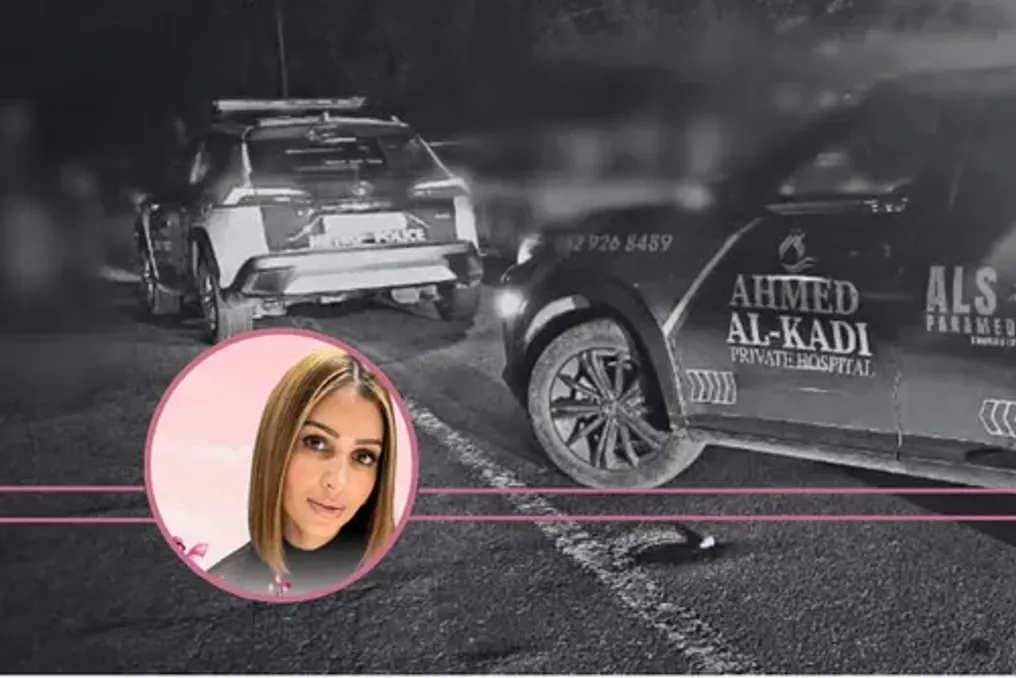
The murder of Bronwyn Heslop has triggered a renewed demand for measures against gender-based violence. Bronwyn Heslop was killed in the Derban North area. At the time paramedics arrived on Blackburn Road in Derban North, the woman had died from gunshot wounds. Two other people were also injured in the incident: a young boy and a delivery driver. The woman's funeral took place on Thursday, July 21. The shooter has not yet been arrested, although it is suspected that the victim knew her killer.
The woman, whose name was Bronwyn Heslop, was a wife, mother, sister, and friend. Following this, a TikTok account was created in social media with the hope that the Heslop murder case would be solved. Many messages of condolence have been received. An acquaintance who spoke to IOL described Heslop as 'a kind, caring person with a big heart.' He added: 'We weren't close, but when we met, she gave such beautiful, loving hugs. She was a light and did not deserve what happened to her. I pray she rests in the Lord's light.'
Heslop's brutal murder has once again intensified calls for more decisive action against perpetrators of gender-based violence.
The issue of gender-based violence
Benedicta van Minnen from the Women's Network DA (DAWN) also expressed concern over Heslop's death, noting that ongoing acts of violence raise serious questions about the ability of law enforcement agencies to prevent such crimes. Van Minnen stated: 'It is terribly tragic that we continue to see these shootings. The fact that they continue shows that SAPS apparently cannot prevent them. Clearly, they are not fulfilling their constitutional mandate to ensure people's safety.'
She emphasized that the focus must now be on ensuring accountability and justice for Heslop and her family. 'My thoughts are with the family, and I hope that the perpetrator will not only be arrested but also successfully convicted, because justice is achieved only with a guilty verdict.'
Minister in the President for Women, Youth and Persons with Disabilities, Cindy Sive Chikunga, noted that the scale of gender-based violence and femicide (GBVF) cannot be reduced to statistics, as every number represents a life lost to violence. She said: 'The statistics on GBVF are staggering, and every number represents a person. These figures reflect lives disrupted, dreams postponed, and futures dimmed by violence.'
Chikunga called on men to take responsibility for ending violence against women and children, strongly advising society to oppose harmful attitudes and behaviors that contribute to violence. 'We unequivocally call on all men, as the primary perpetrators, to promise to end GBVF, recognizing it as a human rights violation and committing to challenge harmful norms and toxic masculinity.'
The South African Medical Research Council confirmed that South Africa remains among the countries with one of the highest rates of femicide globally. Roughly six times higher than the global average, a woman is killed every few hours in South Africa, most often by someone who once professed love for her. These cases are not impersonal figures, but daughters, mothers, and sisters whose lives are stolen within the context of an ongoing national emergency that continues to destroy families and leave communities in fear. In December last year, GBV was classified as a national disaster.
Where to seek help
The article also provides contact details for assistance, including the South African Government's GBV Command Centre, the Department of Social Development's GBV Centre, and helplines from organizations such as People Opposing Woman Abuse (POWA), Action Breaks Silence, Lifeline, and SA Depression & Anxiety Group.