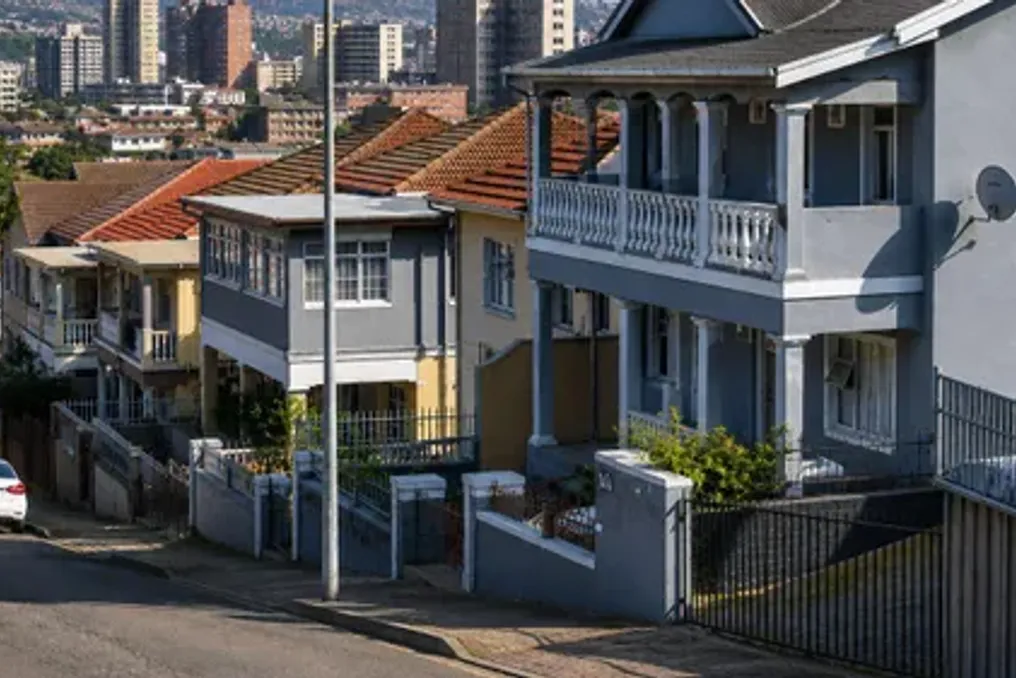
Residential areas in Durban are facing growing concern over the conversion of private homes into student accommodation, prompting calls for stricter regulation and control. According to Problem Properties, the emergence of such properties has become a real problem.
Niki Moore, manager of the non-profit organization Problem Properties (NPO), noted that in some parts of Durban, every sold house is being converted, and if student demand is not met, owners rent the housing to other residents.
Her petition addresses the eThekwini municipality, demanding an immediate moratorium on approving any new student hostels in the affected areas until a formal feasibility study is conducted to determine the actual need for such housing.
Furthermore, the petition insists on an investigation of all existing student hostels in the Glenwood, Umhlanga, Carrington Heights, Glenmore, Manor Gardens, and Westridge areas, which fall within the 33rd and 101st wards. The goal of this investigation is to ensure compliance with zoning, building, health, and safety requirements.
The petition also calls on the municipality to take appropriate enforcement measures, including closing non-compliant student hostels if legally justified. Moore believes that new student housing cannot be approved until the municipality assesses the needs, impact, and capacity of these residential areas and resolves existing non-compliance issues.
Moore calls for urgent municipal intervention to protect the character, safety, and quality of life in residential communities.
Cost of Living
In July, Tebogo Letsi, chairperson of the Higher Education and Training Committee, reported that some university Student Representative Councils (SRCs) are calling for the removal of the National Student Financial Aid Scheme (NSFAS) cap on living costs. This limit is currently around 52,000 rand per student. NSFAS introduced this limit in 2023 to prevent unjustified price increases by private housing providers.
Letsi mentioned that a colloquium on student housing will take place on August 28, 2026, inviting national student organizations, including the South African Students Union (SAUS) and the South African Technical and Vocational Education and Training Students Association, to present student views, particularly regarding the cost of living restriction.
Letsi added that most committee members support the NSFAS cap on living costs as a measure to regulate pricing in the Post-School Education and Training (PSET) sector and promote greater affordability and equity for students.
Government Works
Meanwhile, Deputy Minister of the Department of Public Works and Infrastructure (DPWI), Sile Zikalala, spoke at the SAUS Indeb Student Housing event at Edgewood University, KwaZulu-Natal, in July 2026. He emphasized that student housing is one of the most strategically important forms of social infrastructure in higher education, as it directly affects student success, economic participation, and long-term national development.
He noted that the historical Strategic Integrated Project (SIP) 14, approved by the DPWI Infrastructure South Africa (ISA) structure, recognized educational infrastructure, including student housing, as a priority national strategic infrastructure. The program aims to provide approximately 300,000 places in public universities and TVET colleges nationwide by 2030. The first phase has already provided over 12,219 places, and about 4,000 places are currently under construction, while the second phase plans to add another 24,400 places with investments estimated at 7.2 billion rand.
A representative from the eThekwini municipality, Gugugu Sisilana, previously commenting on general illegal building practices, stated that the municipality continues to take enforcement action when unauthorized construction is identified. These measures include issuing violation notices, initiating tariff changes, and, where necessary, recommending referral of certain matters to the High Court.
Sisilana reported that the municipality currently employs 60 building inspectors organized into 16 groups across five regions of the city. He also noted that inspectors face several difficulties in ensuring compliance, including occupied properties, lack of cooperation or indifference from some property owners, and challenges accessing certain sites.
According to Sisilana, municipal surveys indicate that illegal construction activity is often caused by the refusal to submit plans due to zoning or planning norm non-compliance, as well as misinformation about excessively long plan approval times. The municipality urges residents to help by checking the approval of building plans and reporting suspicious construction activity in their areas.