During the 17th round of the Uzbekistan Super League, spectators attended matches at stadiums, and the total number of fans amounted to 77,924 people.
During the 17th round of the Uzbekistan Super League, spectators attended matches at stadiums, and the total number of fans amounted to 77,924 people.
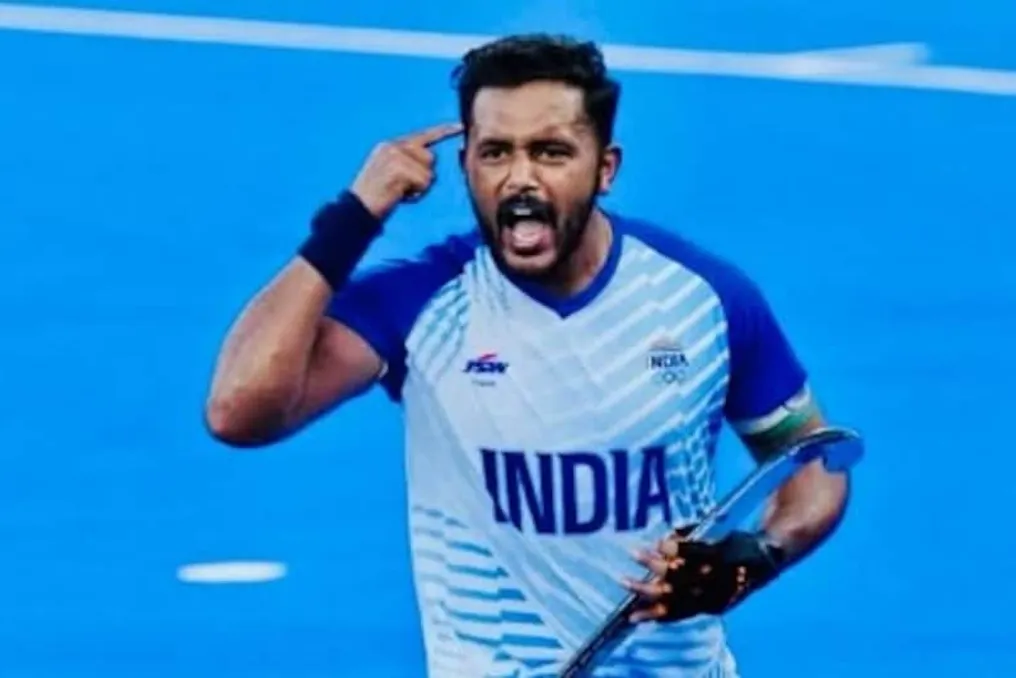
The Indian national team suffered a defeat against England at the Hockey World Cup. Despite an initial advantage and an impressive comeback, India lost to England with a score of 4:2. This match, which lasted a full 60 minutes, resembled an exciting film where the situation constantly changed. However, in the end, England secured the victory by scoring two consecutive goals.
In the first quarter, the Indian team controlled the ball, but England scored the first goal. Rashmier brilliantly dealt with a long cross from Hooper and passed the ball to Bandurak, who scored the goal, giving England a 1:0 lead.
At halftime, India's chances seemed higher. In the second quarter, the Indians started playing more aggressively. Upon receiving the first corner kick, captain Harmanpreet Singh scored his signature drag-flick goal, preventing the opponent's goalkeeper from reacting, and equalized the score at 1:1.
During the game, there was intense excitement when Hardik Singh and Abhishek created a magnificent attack from the left. Thanks to Abhishek's excellent pass, Dilpreet Singh sent the ball into the net, putting India ahead 2:1. By the end of the half, the Indian team looked dominant and confident of victory. However, after the break, England scored three goals, significantly distancing India from victory.
In the third quarter, England raised the level of its play. Stuart Rashmier leveled the score at 2:2 with a brilliant deflection. Although England missed several corners that were awarded to them, they continued to put pressure on India. During this period, Henry Croft scored a goal, giving England a decisive 3:2 lead. The Indian defense could not respond to this strike. With two excellent goals from Stuart Rashmier and Henry Croft, England took a 3:2 lead and ultimately won against India with a score of 4:2.
Now the Indian team must play its next match against Pakistan on August 19, Wednesday. After the loss to England, it is extremely important for India to win against Pakistan.
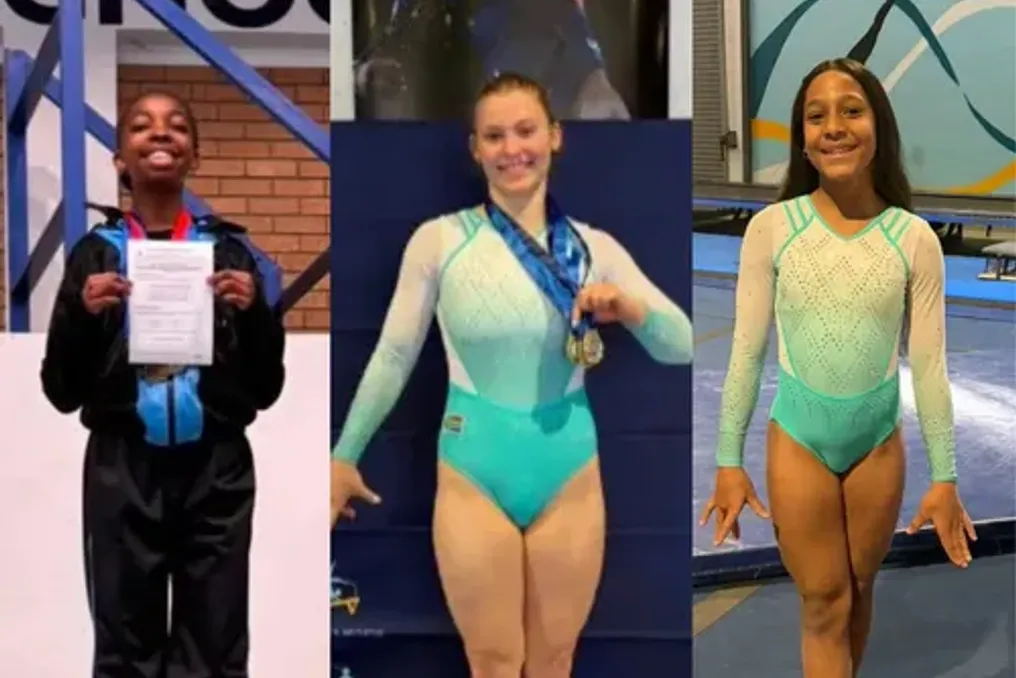
Three young gymnasts—Kutlvano Kumalo, Kylie Maltz, and Taskeen Brenner—are preparing to represent South Africa at the Pharaohs Cup in artistic gymnastics, which will take place from September 17 to 20 this year.
Over forty years ago, three mothers—Marlene Pretorius, Eleonora Lombard, and Gail Matty—set a simple goal: to create a specialized space for their children's gymnastics training. Through this, they laid the foundation for one of South Africa's most enduring sporting legacies—Mega Gymnastics in Cape Town.
Following in the footsteps of past women, the three athletes are ushering in a new era in South African gymnastics. Kutlvano Kumalo (13 years old), Kylie Maltz (17 years old), and Taskeen Brenner (14 years old) are ready to compete for South Africa at the Pharaohs Cup in artistic gymnastics.
The Pharaohs Cup is recognized by the International Gymnastics Federation (FIG) as an official international tournament and is held at the Cairo International Stadium. It has quickly become a prestigious event on the global gymnastics calendar.
Elite athletes from Europe, Asia, and Africa travel to the tournament, making it an important platform for young talents and experienced Olympians. To meet these international standards, the tournament uses highly regulated equipment supplied by Taishan.
Kutlvano Kumalo, being the youngest in the team at 13 years old, is preparing for her debut in the national youth squad. She balances attending the 8th grade with elite sports training. Kumalo started gymnastics at age six after a friend invited her to a lesson.
Kumalo noted that she was inspired by the opportunity to be part of something significant. Although her main competitive focus is the uneven bars, which she will master in Cairo on an FIG-certified balance beam supplied by Taishan, her floor routine demonstrates a unique style. Her choreography on the standard floor exercise mat includes explosive acrobatic elements and sharp dance movements, highlighting her flexibility and musicality.
For Kumalo, attending the gym is a therapeutic process. She shared that sometimes, when having a bad day at school, she vents anger and sadness through gymnastics. After the results of the national trials were published, Kumalo learned that she had made the youth squad for participation in Cairo, which brought her great joy as it was her first experience in a youth program.
Kylie Maltz is the senior Olympian on the team, balancing training with 12th-grade exams. She has 14 years of experience in gymnastics. Maltz specializes in vault and uneven bars, where her performances demand immense physical endurance, including transitions over handstands, pirouettes, and high-level elements between the rails.
She has suffered serious physical injuries in her career. Maltz sustained three ankle fractures—two on one leg and one on the other—as well as a severe traumatic brain injury during training, which required emergency medical attention. Maltz admitted that the head injury was the hardest to overcome due to its severity. After three weeks of rest on a doctor's advice, she traveled to England to represent her country again.
She emphasized that gymnastics is not only a physical but also a psychological battle. Maltz explained that sometimes 'blocks' occur on certain apparatuses, where the mind prevents the execution of an element, and these difficulties must be overcome.
14-year-old Taskeen Brenner is preparing for a major milestone: Cairo will be the arena for her first international competition. Brenner brings a strong competitive spirit and exceptional concentration to the team. Her journey in gymnastics began at five years old as a parental decision to channel her energy. However, over the last two years, childhood energy has transformed into elite athletic power.
Her technical execution and physical strength have increased sharply, turning her into a formidable competitor. Brenner admitted to feeling nervous about her upcoming first performance for the country. She wants to demonstrate her progress and show that South Africa is capable of winning.
Brenner spends an hour daily traveling to the gym, and her father accompanies her, waiting in the car for three hours during training sessions. She notes that her father supports her passion, which brings her happiness. On the mat, she allows no distractions, understanding how rigorous elite gymnastics can be. She says that on the floor or on an apparatus, one must only think about avoiding a fall, and if a fall occurs, one must immediately get up, learn the lesson, and not let the mistake spoil the rest of the performance.
The trio competes in women's artistic gymnastics, a discipline that requires athletes to master four main apparatuses.
This element requires explosive sprint power and spatial awareness for jumping over the table.
It demands high upper body strength and precise timing when transitioning between high and low bars.
Extreme mental concentration is required to perform acrobatic elements and jumps on a 10-centimeter wide surface.
It combines endurance, acrobatics, and artistic dance within a performance lasting from 45 to 90 seconds.
The modern scoring system is open. The gymnast's final score is divided into two parts:
This reflects the technical value, combinations, and complexity of the executed elements, and has no upper limit.
It assesses form, artistry, and technique, starting from 10.0. Strict deductions are applied for errors: from 0.1 for bent feet or slight knee bends to a critical deduction of 1.0 point for even a minor loss of balance upon landing on 10 or 20-centimeter mats.
Mega Gymnastics, based in Montagu Gardens in Cape Town, now has a fully equipped complex, including a spring floor, foam pits, and specialized apparatus. Lindsey Buckley, a former South African national team gymnast and international judge, leads Mega Gymnastics along with her daughter Georgia Buckley. Coaches Megan Park and Warren Buchanan joined the club in childhood and continue to ensure its success. Even Megan's mother, Jenny Park, handles administrative matters after many years of organizing bake sales and fundraising.
Although Mega prepares elite, high-performing athletes like Kumalo, Maltz, and Brenner, they understand that their coaches measure success not only by international medals. A BackaBuddy campaign is currently underway to cover travel and competition expenses, providing a way to directly support the athletes in Egypt in September.
3.Pitsso Mosimane, who is preparing to lead the South African national team Bafana Bafana, has stated his vision for strengthening football in the country, aiming to start changes from the very basics. He emphasized that to achieve this goal, he needs the support of all South Africans.
Mosimane stated that football unites people regardless of skin color, origin, or fatherhood: 'Football is one place where it doesn't matter what color you are, where you are from, or who your father is; if you can play football, you will play.'
The 62-year-old specialist, whose appointment was approved by NEC Safa last week, is ready to make every effort to achieve national excellence. This may include visiting the best rugby schools in South Africa with the aim of 'introducing football.'
Speaking on the CheckPoint Podcast on eNCA, Mosimane discussed the recently released book 'Youth Football Coaching Manual.' He noted that coaches have long worked with players without structured materials or a curriculum.
He explained that he decided to write the manual so that knowledge could be systematized, similar to how academics do it: 'I decided to write a manual so we can break down, as academics say, before reading, you must know your alphabet; then you can read.'
Mosimane highly values the successes achieved in rugby and wishes to replicate this success in South Africa. He observed that in any town or village, there are more rugby posts than football goals.
'I respect rugby, and I even have a Springboks jersey because it is our national team... We need to see what the Bokke did, where they started? Which schools do they attend and what is their program?'
The podcast host, Nkepile Mabuse, suggested that Mosimane collaborate with leading schools such as Paul Roos, St Alban’s College, and Paarl Boys. Mosimane responded to this by acknowledging that some local schools are not interested in football.
However, when asked to change this situation, Mosimane did not hesitate. He stated: 'Give me the challenge; it is a good challenge.' He mentioned that the Minister of Basic Education visited the presentation of his book and said that 'coaching is necessary in this.'
In this regard, Mosimane proposed the next step: 'I think we now need to move to the next stage and say: Minister, could you accompany me to talk to Paul Roos, Paarl Gym, and all these schools so we can present the program [to them] and help children play football—especially, we need white footballers.'
He insisted on the need to involve white footballers in Bafana Bafana, arguing that they play at the youth level but then disappear. His goal is to demonstrate their potential in the national team to show that 'they can play there.'
For Mosimane, this goes beyond simply finding players. He is convinced that football has the power to unite South Africans in a way few things can. He cites the example of Europe, where many Africans are in France, and states: 'As long as you can play football, we will let you play.'
He stressed that football does not discriminate: 'Football does not choose; it doesn't care if you live in a shack. As long as you can play football, we will give you a chance. We don't care about connections, we don't care who you are...'
In Mosimane's view, the task is not only to create the best Bafana Bafana team but also to change South Africa's perception of football—from school grounds to the national team—ensuring that the next generation of talents, regardless of their background, is not lost along the way.