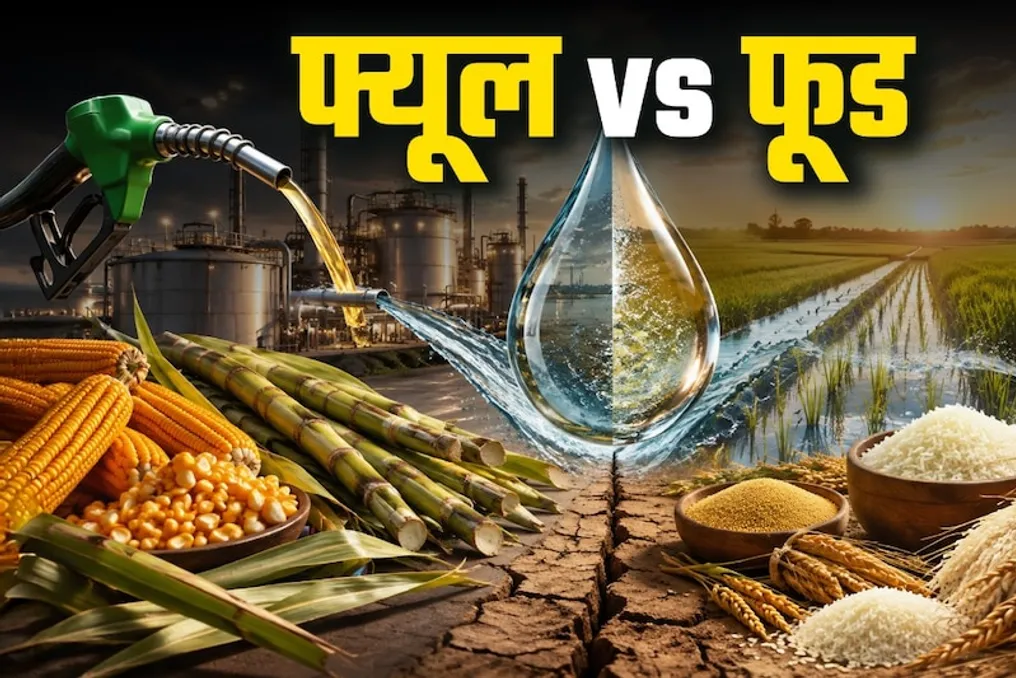
As India's goal to blend ethanol into gasoline has reached the E20 level (20 percent ethanol in gasoline), discussions are underway regarding further blending options such as E27 or E30. However, the issue extends beyond just gasoline and automobiles, as ethanol production requires crops like corn, sugarcane, and other agricultural products. Consequently, the impact on agriculture, water resources, and food prices must be considered.
An advantage of ethanol is its help in reducing the need for crude oil and decreasing oil imports. Furthermore, it creates an additional market for farmers. Nevertheless, if the demand for agricultural crops for fuel increases significantly, the same land, grain, and water will be needed for human consumption. This is why, after reaching E20, the question arises about the balance between 'food and fuel' as the blending ratio increases further.
With further increases in demand beyond E20, the need for ethanol and, consequently, for crops, will rise. It is important to study where the harvest will come from and how this will affect other needs. Corn is used not only for ethanol production; it is also used to produce food and animal feed. Therefore, increased demand for corn can affect its price and availability.
Pressure may also increase on sugarcane, which is the second major source of ethanol. Sugarcane is used to produce both sugar and ethanol. If a large portion of sugarcane is used for ethanol, it could affect sugar production and cost. Meanwhile, the grain remaining after ethanol production can be used as animal feed.
Water is required to grow crops, and the ethanol production process itself also demands water resources. Thus, increasing the blending ratio will affect more than just gasoline. This issue is particularly relevant in regions where there is already a water shortage for agricultural practices. In states such as Maharashtra and Karnataka, sugarcane cultivation is widespread. Under these conditions, it is necessary to assess how much water will be needed to increase the harvest and where this water will come from.
The relationship between fuel and nutrition must also be taken into account. Although increasing ethanol can help reduce oil imports, the decision cannot be based solely on gasoline requirements. The condition of the land, water, corn, sugarcane, and food prices must be considered. Before moving forward beyond E20, it is crucial to ensure that meeting fuel needs does not place excessive pressure on food and water resources.