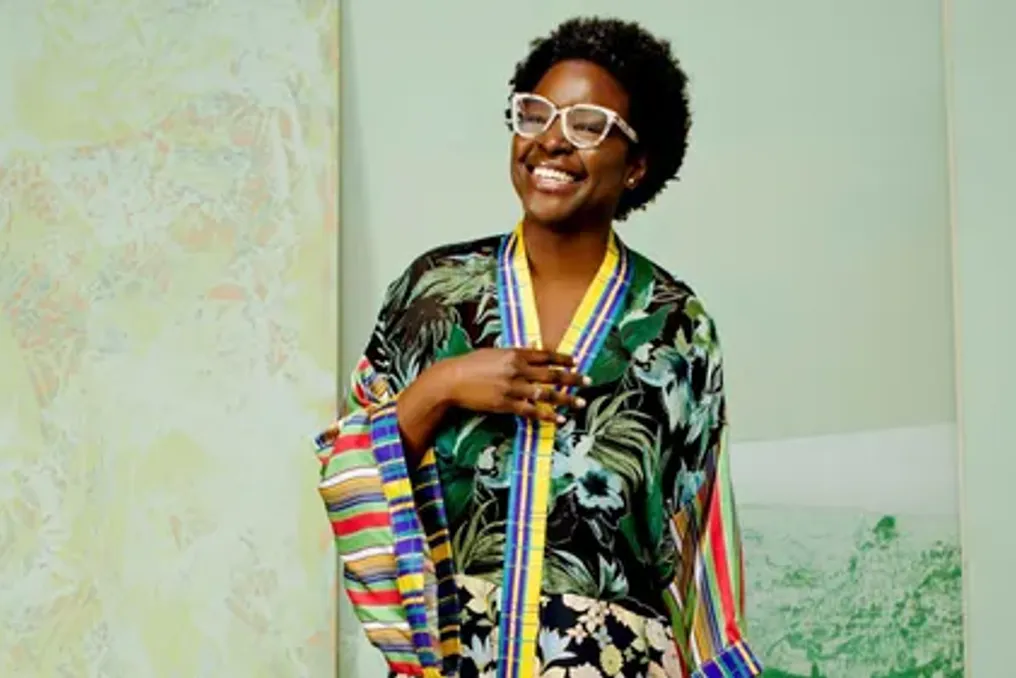
The Zeitz MOCAA Museum of Contemporary African Art has appointed Elvira Diangani Ose as its new artistic director. This move brings a veteran of European state museums to lead the continent's largest contemporary art institution.
She will begin her work on October 1, 2026. Diangani Ose's arrival comes as the institution approaches its tenth anniversary, and she takes over management of the structure established by the late Kojo Kuah.
Following a thorough local and international search, the Zeitz board welcomed Elvira Diangani Ose. Co-founder and co-chair David Green noted that her appointment reflects the essence of the institution, which is rooted in Africa yet connected to the world. He added that she will oversee the Museum's vision and direction, guiding it into its next chapter.
Diangani Ose was born in Spain to parents from Equatorial Guinea. She holds an art history degree from the Autonomous University of Barcelona, a postgraduate diploma in art and architectural theory from the Polytechnic University of Catalonia, and is currently a doctoral candidate at Cornell University in New York.
Her understanding of architectural theory influences her curatorial practice: she views museums as spatial structures that determine the distribution of cultural authority. This approach was demonstrated during her time as curator of international art at Tate Modern in London from 2011 to 2014.
She did not merely curate exhibitions; she developed Tate's first formal acquisition strategy for art from Africa and the diaspora, compelling the institution to systematically allocate budgets and acquire African modernism. Recently, Diangani Ose served as the director of the Museu d'Art Contemporani de Barcelona (MACBA) from 2021 to April 2026, becoming the first Black woman to head a major European contemporary art museum.
The Silo Instability
To understand the specific operational requirements of Zeitz MOCAA, one must consider the physical and historical context of the institution. The museum is located in a complex of grain silos in Victoria and Alfred Waterfront, originally built by workers in the 1920s to facilitate the mass export of South African agricultural products.
The $500 million museum opened in September 2017 after British architect Thomas Heatherwick cleared the interior space from the historic concrete pipes. However, this architectural marvel immediately faced skepticism regarding its true commitment to being an inclusive, pan-African space.
In 2019, when Kojo Kuah was appointed to the board, a turning point occurred as she directly addressed this structural tension by reorienting the museum's focus from top-down display to a rigorous pan-African research center. She founded the Kojo Kuah Atelier residency, expanded the BMW Art Education Center, and insisted that the museum conduct fundamental research on African soil rather than relying on the approval of Western institutions during her tenure before her death last year.
In memory of the late Executive Director and Chief Curator of Zeitz MOCAA, Kojo Kuah (1967–2025), who transformed the museum into a leading pan-African research center.
Under Kuah's leadership, Zeitz MOCAA proved it possessed the infrastructure and intellectual weight to host global blockbusters. Outstanding exhibitions defined the museum's trajectory over the past few years.
William Kentridge's retrospective 'Why Should I Hesitate' in 2019, held in collaboration with another institution, showed the museum's capacity to handle large-scale, site-specific installations. Tracey Rose's retrospective 'Shooting Down Babylon' in 2022 offered an uncompromising and comprehensive view of post-apartheid radicalism. Most significant was the museum hosting the exhibition 'When We See Us: A Century of Black Figuration in Painting' (2022–2023).
This extensive exhibition brought together over 200 works by global Black artists, successfully replacing the traumatic focus often applied to African art by critics with an emphasis on the joy, leisure, and daily life of Black people. According to Zeitz MOCAA co-founder Johan Zeititz, the arrival of Diangani Ose marks a 'defining moment' for the museum, bringing the leadership necessary to expand its scope in research, collections, and public programs.
Vision for the New Decade
Although much of her career has been tied to European institutions, Diangani Ose has deep, pre-existing ties to the South African curatorial landscape. Exactly twenty years ago, she co-curated the exhibition 'Olvida Quien Soy / Erase from who I Am' in 2006 at the Centro Atlántico de Arte Moderno in Las Palmas, Spain.
She worked directly with renowned South African curators Gaby Ngcobo, Tracey Murinic, and Khwezi Guli, studying how 14 young artists shaped new modes of self-representation after apartheid. This was a meticulous, direct engagement with contemporary South African art during a critical transitional period; it also became a formative stage in Diangani Ose's career, shaping her vision of African narrative and representation.
Diangani Ose stated: 'It is a great honor for me to join Zeitz MOCAA. I am delighted to join at this moment to continue its path as a leading African institution with a global reach.' She added: 'I look forward to working with the museum's wonderful team, artists, supporters, as well as local and global communities, building upon its outstanding foundation by fostering meaningful collaboration and artistic exchange between cultures and geographies.'