According to UzDaily.uz, Urgench International Airport plans to increase its capacity from 300 to 1300 passengers per hour as part of a modernization and expansion project valued at 264 million US dollars.
According to UzDaily.uz, Urgench International Airport plans to increase its capacity from 300 to 1300 passengers per hour as part of a modernization and expansion project valued at 264 million US dollars.
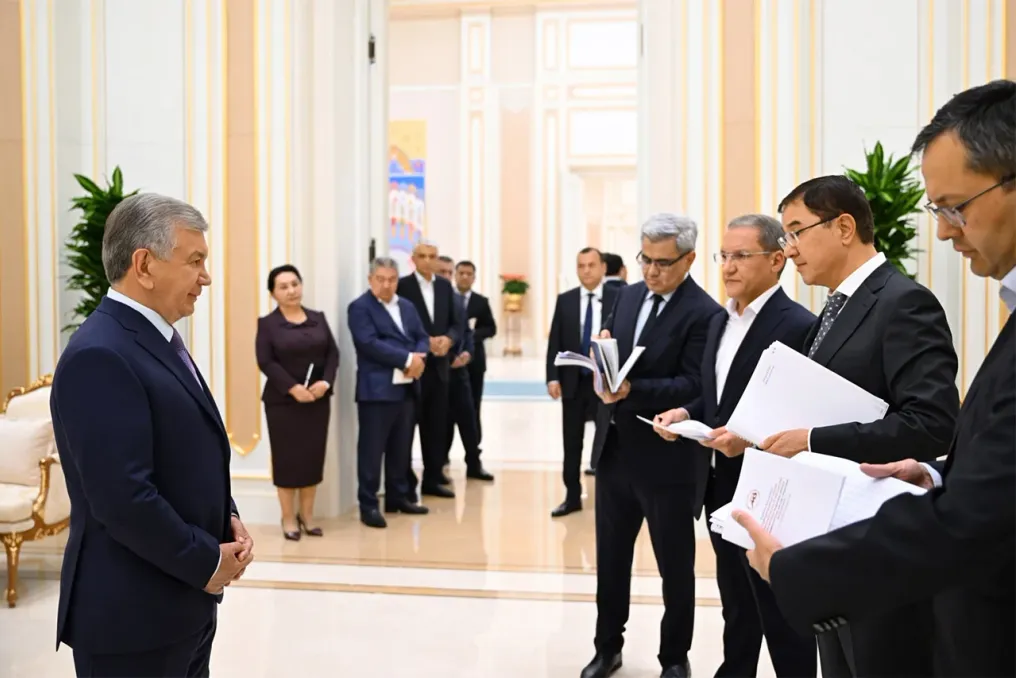
This project is being implemented through a public-private partnership involving Incheon International Airport Corporation from South Korea, which manages Incheon Airport. Uzbekistan President Shavkat Mirziyoyev visited the Khorezm region, where reviewing projects for the development of transport and logistics infrastructure was one of the first items on his itinerary.
Currently, the airport has a terminal built for official delegations, and the reconstruction of the new aviation complex is proceeding at an accelerated pace. The complex, which was commissioned in 1960 and gained international status in 1992, covers an area of over 285 hectares and serves about ten leading airlines.
In 2026, the airport provided services worth 126 billion soms, which is 31 percent higher than the figures for the same period in 2025. Investments amounting to 264 million US dollars were attracted to meet the growing tourist flow and expand international cooperation.
After the reconstruction is complete, the airport will be able to accommodate wide-body aircraft, including Boeing 747 and Airbus A350, allowing for direct long-haul flights to Khorezm from various continents. The first phase of the project includes the construction of parking space for 18 aircraft and a new runway.
Furthermore, the airport will be equipped with modern border and visa control points, a business lounge, commercial and catering areas, a 24-hour medical point, and a duty-free trade zone featuring global brands.
Mirziyoyev noted that Khiva and Urgench are becoming venues for major international summits, high-level meetings, and economic and cultural forums. He emphasized the importance of ensuring comfort and safety for foreign delegations, which contributes to strengthening the country's international prestige. After the entire project is realized, the airport's capacity will increase more than fourfold.
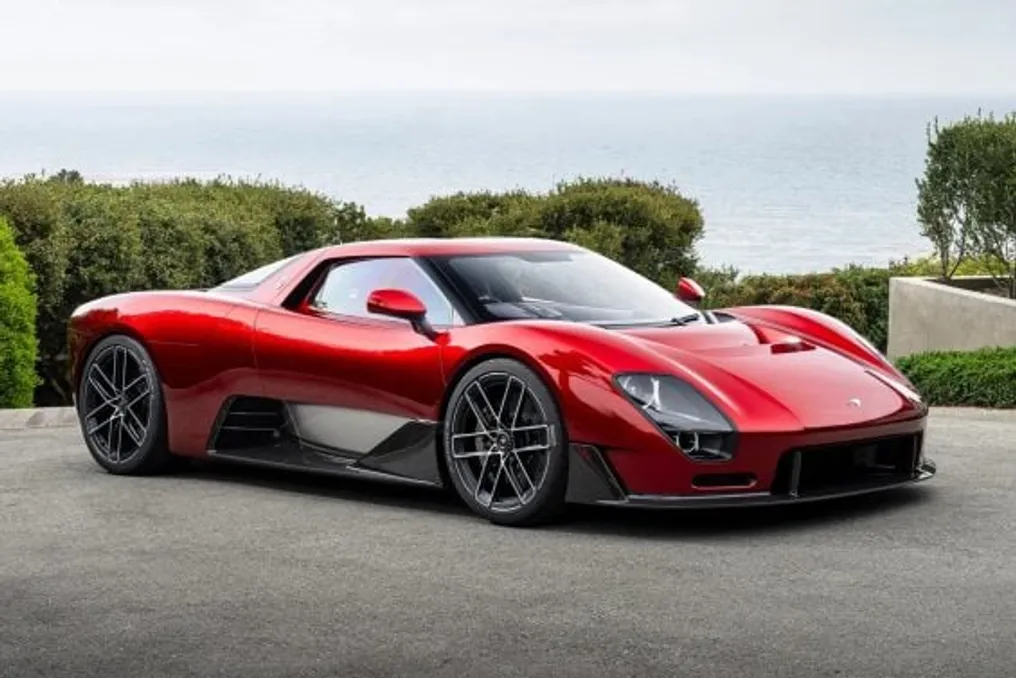
McLaren launched the McL 6GT last Friday, the 14th, during the Monterey Car Week event. This vehicle represents the British manufacturer's first supercar equipped with a manual gearbox since the launch of the McLaren F1 in 1992. Although the model is presented as a concept, the automaker plans to put it into production in 2028, retaining features such as the gear lever and three pedals.
This announcement fits into a trend of returning to manual transmissions in high-performance brands, albeit through different approaches. Ferrari recently reintroduced the articulated lever on the 12Cilindri Manuale through the Manuale by-wire system, where the pedals and lever are physical, but the transmission remains an automated eight-speed dual-clutch, functioning as a simulation. In parallel, Porsche confirmed the return of the manual gearbox to the 911 Carrera S 2027, and Koenigsegg exhibited the CCGT1 at Monterey, which also allows the driver to shift gears.
Unlike contemporary McLaren models, which share design traits such as roof silhouette, streamlined nose with logo, and open rear for ventilation, the McL 6GT has unique elements, which could make it the most distinct project from the brand since the resurgence of road cars fifteen years ago.
The vehicle's name is a combination of references: 'McL' derives from the nomenclature of the chassis used by McLaren in current Formula 1, while '6GT' alludes to the M6 GT, which was developed from team prototypes in Can-Am. Details such as vertical headlights, Kamm-style rear, and simple ducts refer to supercars from the 1990s and 2000s.
This tribute is not accidental. A few weeks earlier, at the Goodwood Festival of Speed, McLaren displayed the restored personal M6 GT of Bruce McLaren. This Can-Am car was renamed and adapted with a closed cockpit for long-distance racing, later being converted into a road car by the founder of the brand himself.
Regarding mechanical aspects, McLaren released little information. A V8 engine is positioned behind the cabin, but the company did not specify whether it is turbocharged or naturally aspirated. There will be no hybrid assistance, and the promise is an experience described as 'tactile, analog, and deeply mechanical.' Both the monocoque and the body will be constructed from carbon fiber.
In the interior, the lever was designed as a highlight piece, with visible metallic articulations that catch the natural light in an environment dominated by black and carbon. McLaren categorizes the McL 6GT as a new type of supercar, outside its main portfolio. According to The Drive's assessment, this suggests that the manual gearbox will not be widely distributed in the product line, indicating that the brand seeks to expand beyond the Sports, Super, and Ultimate categories with more exclusive items.
In Tehran, there is an opinion that the recent statements by the US Secretary of the Treasury and the attempt to portray Iran's economy as being in 'unprecedented isolation' are more a sign of policy frustration than a demonstration of strength, since the intended goals against the Iranian people have not been achieved.
When successive tools of economic pressure are applied without achieving expected results, repeating economic threats in broader terms does not change the actual situation on the ground. The Iranian people are accustomed to such rhetoric and repeated assertions of unprecedented pressure.
The state does not deny or downplay the economic impact of external pressure. The government's responsibility is to mitigate the consequences of any external pressure through competent economic policies, structural reforms, and support for production and livelihoods of the population. However, today the Iranian economy is increasingly focusing on enhancing internal potential, diversifying its base of trading partners, more actively utilizing regional economic opportunities, and reducing vulnerability to external pressure.
The United States must realize that the same nation that defended its country with solidarity and resilience on the battlefield and in the streets will not surrender to economic pressure and threats. The government and the people are not two separate fronts in this struggle. The government's task is to build a stronger economy and protect the welfare of people and businesses, while public trust and support remain the main source of strength for these efforts.
Iran's reaction to economic threats is not a verbal war or retaliatory threats. It is a process of building an economy that becomes less susceptible to sanctions every day. The stronger the external pressure, the more urgent it is for Iran to implement economic reforms, strengthen domestic production, expand regional trade, develop financial and commercial channels, and more actively utilize the country's internal capabilities.
Another fact cannot be ignored: attempts to disrupt trade and energy flows in one of the world's most strategically important economic regions entail costs for the global economy. Those who speak of Iran's 'economic isolation' must also be prepared to explain the consequences of their policies for global markets, international trade, and energy security.
The future of the Iranian economy, according to the author, lies not in Washington, but in Iranian factories, Iranian businesses, the opportunities of the country's youth, economic ties with neighboring states and trading partners, and internal structural reforms.
The Iranian people are not tired of constant threats; they are accustomed to them. It is important to demonstrate through economic activity, reforms, and strengthening national economic potential that the era when such rhetoric could influence the decisions and resolve of the Iranian people has passed.