A team led by Rohan Naidu from Hyderabad, utilizing data from the James Webb Space Telescope, has identified an unusual object dubbed a 'black hole star' (MoM-BH-1) located in the early Universe. This object is situated billions of light-years away and dates back to a period when only about 660 million years had passed since the Big Bang.
According to scientists, this object shines differently from ordinary stars. Its radiation likely originates from gas surrounding a black hole. Rohan Naidu, who has roots in Hyderabad, left engineering studies at age 18 before continuing his education and research in Singapore and the USA, collaborating with the Kavli Institute at MIT.
This discovery may contribute to understanding the process of black hole formation in the initial stages of the Universe's development. It is particularly significant because the James Webb Space Telescope has found numerous small, reddish sources in the early cosmos, which scientists call 'small red dots,' and their nature has long been unexplained.
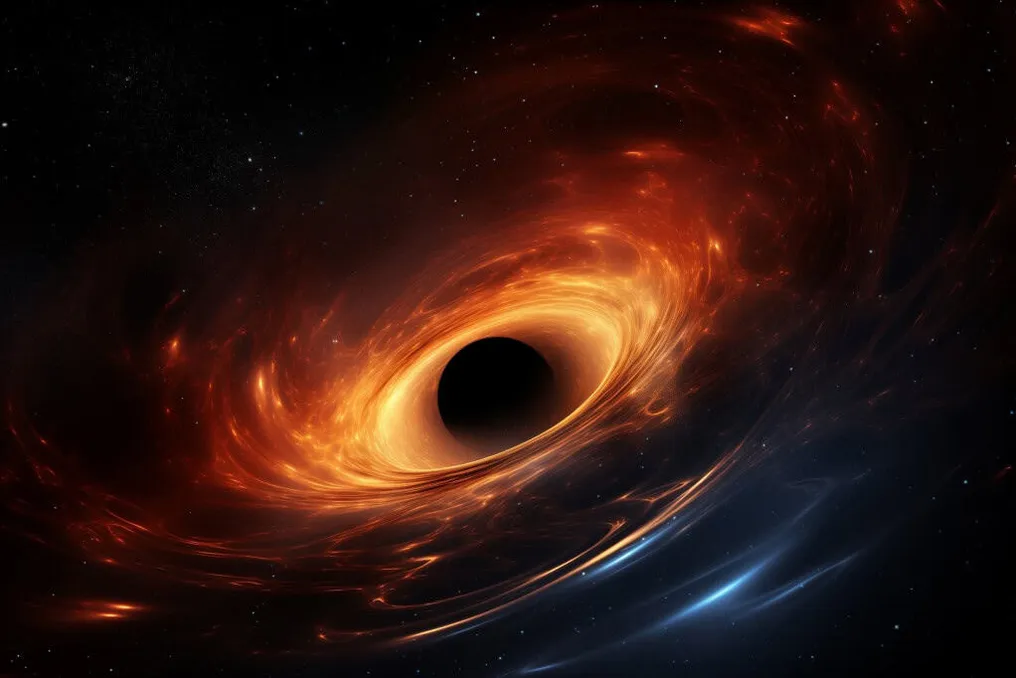
Ordinary stars emit light through nuclear fusion, such as the conversion of hydrogen to helium in our Sun, releasing energy. However, the situation is different for the 'black hole star': a black hole is located at its center, surrounded by a significant amount of gas. The black hole attracts this gas, leading to its intense heating and bright emission of light, causing the object to appear as a luminous star from a distance.
The MoM-BH-1 object was recorded when the Universe was approximately 660 million years old. This means that the light we observe through the James Webb Space Telescope was emitted billions of years ago. Analysis of this light showed very few traces of heavy elements, consistent with the state of the early Universe, where hydrogen and helium predominated, and heavy elements form only after the birth of many generations of stars.
Previously, Rohan Naidu conducted research on distant galaxies discovered by James Webb, focusing specifically on how galaxies and supermassive black holes formed in the early cosmos.
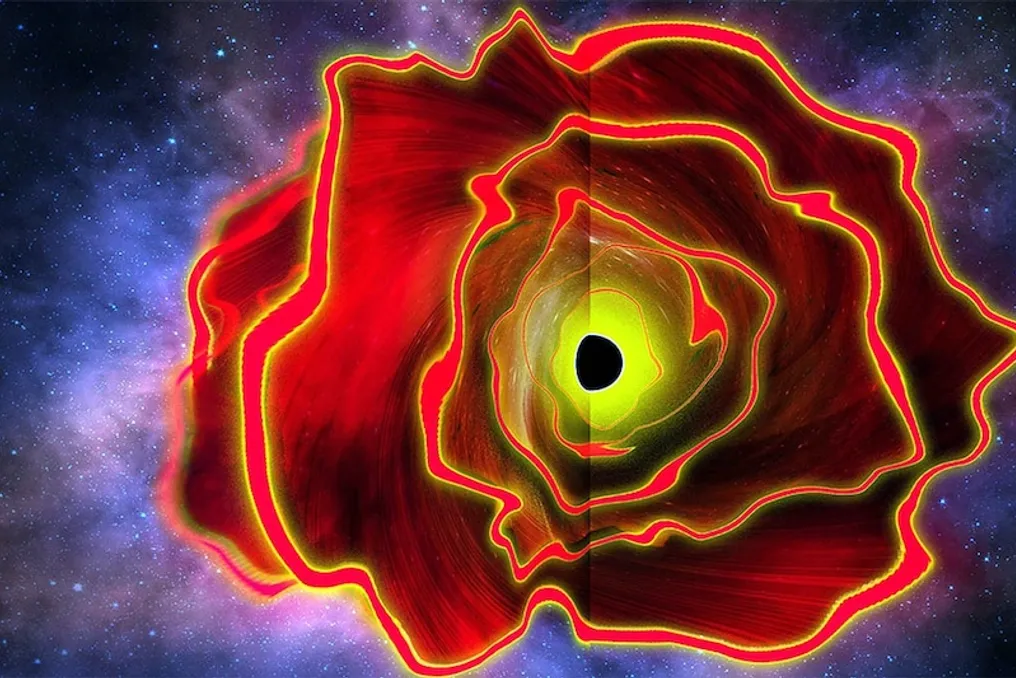
After obtaining images of the early Universe from James Webb, scientists noticed many small, reddish sources, named 'small red dots.' What exactly these objects represent remains unclear. One hypothesis suggests they might contain black holes surrounded by hot gas. The discovery of MoM-BH-1 could provide crucial clues to test this theory.
In Rohan Naidu's team's view, if further research confirms the existence of a large number of such 'black hole stars,' it will help understand how black holes of such immense size could have formed so rapidly in the early Universe. It may also provide a key to understanding the genesis of supermassive black holes at the center of the Milky Way.
Despite compelling evidence, scientists have not yet proven that all 'small red dots' are black holes. Additional data collection using the James Webb Space Telescope is required for final confirmation. Thus, Rohan Naidu's journey from Hyderabad has led him to investigate one of the fundamental questions about the very earliest stage of the Universe's existence.